The Morning the Car and the Door Both Broke
The repair request reached my desk at 8:30 on a Tuesday. Our maintenance tech said warehouse door No. 2 was stuck halfway, and the shop we use for fleet repairs had a question about the 2007 Scion tC that we keep for parts runs.
I'm an office administrator, not a mechanic. Since 2020 I've handled purchasing for a 90-person company—roughly $65,000 a year across eight vendors. That usually means office supplies, IT equipment, cleaning contracts, and renewal paperwork. On that Tuesday, it meant alternators and garage door openers.
The Alternator Misstep
Our fleet mechanic said the battery was low, but he didn't push a battery or alternator on me. Instead, he asked for one hour of diagnostic time so he could run differential voltage tests on the charging circuit. I approved it. That's the kind of expense I normally question, but it turned out to be the right call.
The test showed the alternator was intermittently failing. I did the natural thing and ordered a 2007 scion tc alternator based only on the model year. The first unit had the wrong connector for the vehicle's build date. It would have bolted on, but it would not have plugged in properly without a harness modification. We sent it back.
I still kick myself for not checking the VIN first. The 2007 model had running changes, and parts stores can't always see them from a year-only search.
People think a charging problem is about the battery; on this car, the battery was a victim, not the cause. The alternator was the source. Run the diagnostic before you run the part.
Brake Rotors and a $15 Vibration Fix
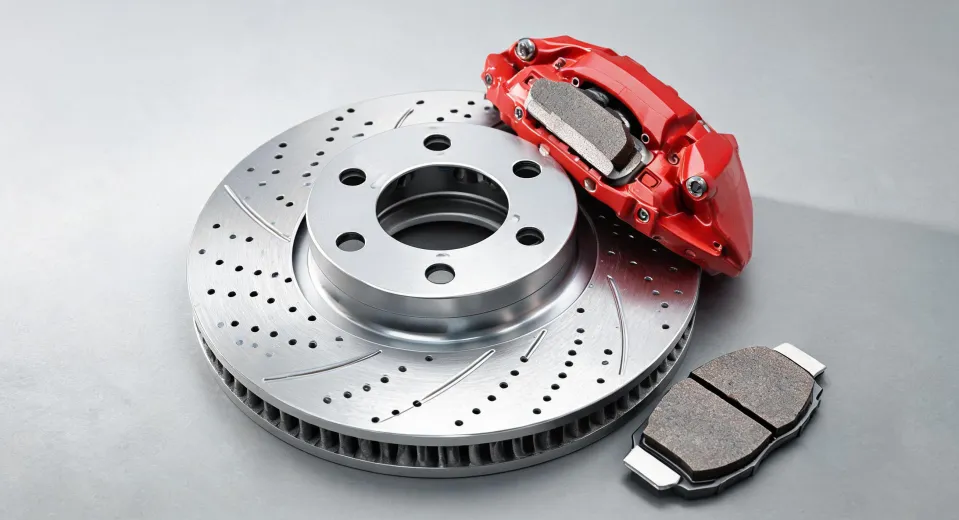
While the tC was in the shop, the technician noted that the front rotors were worn below minimum. I chose a centric premium disc brake rotor for the replacement pair. I wanted a quality blank rotor with straight runout, not a cheap no-name part or a drilled and slotted part we don't need on a delivery car.
That part was fine. But the real surprise came after the rotors were off. The car had aftermarket wheels that looked fine, yet it had a small steering-wheel shake under braking. The center bore of those wheels was larger than the hub on the car. The wheel was technically lug-centric, not hub-centric.
The technician said I didn't need different wheels. I needed hub centric rings for aftermarket wheels—plastic or aluminum rings that fill the gap so the wheel seats on the hub, not on the lug nuts.
The rings cost about $15. If I remember correctly, the total parts order was around $380, not counting the replacement alternator or labor. The surprise wasn't the rotor quality or the brake cost. It was the fact that a $15 pair of rings fixed a vibration that no premium rotor would have solved on its own.
Door No. 2: Belt Drive vs Chain Drive Garage Door Openers
Door No. 2 wasn't that hard to repair mechanically. The real decision was which replacement opener to approve. The vendor gave me a choice between belt drive and chain drive. That led me down the belt drive vs chain drive garage door openers debate.
My first instinct was to choose the belt drive because it's quieter. That's true, but it is only part of the story. Chain drives use a metal chain to pull the carriage; they're cheaper and can handle harsher use, but they transmit more noise and vibration through the rail. Belt drives run smoother and quieter, but they cost a bit more and may not be the first choice for a very heavy, high-cycle commercial door.
The deciding issue for us was noise exposure. Door No. 2 is directly under the break room. A chain drive would have worked, but the rattle would have annoyed everyone eating lunch. We ordered a belt-drive unit rated for the door's size and spring weight.
That doesn't mean belt is better. If the same vendor were replacing the large warehouse doors that cycle 20 times a day, I'd pick chain drive and get the extra durability for the money. The honest answer is: it depends on the door, the location, and the duty cycle.
What This Taught Me as an Admin Buyer
The connecting lesson wasn't about car parts or garage door parts. It was about assumptions.
Assumption #1: A model-year search is enough. Wrong. The alternator needed a VIN-level check.
Assumption #2: If the wheel looks right, it's centered correctly. Wrong. It needs a hub bore match or hub centric rings.
Assumption #3: A quieter opener is a better opener. Wrong again. It's only better when noise is your main problem.
I don't pretend to have a universal answer for every purchasing scenario. That would be dishonest. What I can tell you is this: a good product is only good when it matches the application. A premium rotor from a reputable brand is still a great part for a street-driven car with stock-style hub bores. It just won't fix a wheel center-bore gap.
The best part of this whole project wasn't the money we saved by avoiding a second repair. It was the change in how I order. Now I ask for the VIN, door size, serial number, and other fit details before I approve any maintenance part. I don't need to know how to install it. I just need to know the difference between guessing and specifying.
That's the part I think other administrators miss.