-
Centric Coated Rotors vs. Plain Rotors
-
A Realistic Centric Brake Pads Review
-
Chevy 350 Timing Chain: Stock Replacement vs. Hardcore Upgrade
-
Valley Muffler and the Diagnosis-First Exhaust Comparison
-
How to Check Spark Plug Wires: The Test That Catches What Visual Inspection Misses
-
What I Would Choose Tomorrow
I work in a three-bay independent garage. Since 2016 I have handled brake, ignition, and exhaust repairs for our customers, which means I am also the person responsible for the wrong parts that come back. In that time I have personally made and documented enough mistakes to total about $4,300 in wasted parts and rework. I keep our pre-repair checklist now, so this article is the comparison side of that checklist.
Most mistakes did not start with a bad brand. They started with a bad assumption. The plain rotor looked like the same rotor. The cheapest brake pads had decent reviews. The timing chain was described as stock replacement. None of those parts looked like a problem until they were bolted to a car.
Here are the comparisons I wish someone had forced me to make.
Centric Coated Rotors vs. Plain Rotors
Brake pulsation is the fastest way to turn a low-dollar brake job into a high-dollar comeback. I learned this in March 2023, when I installed plain front rotors on a customer's daily driver. The rotor price was about $30 less per side, and the car stopped fine for a few months.
Then the customer came back with a shimmy. What I found did not look like a rotor warp; it looked like rust and uneven pad transfer on the friction surface. The car had sat outside through a damp week, and the plain rotors developed enough surface corrosion to create a rough contact pattern. That rough pattern slowly glazed the new pads. The fix meant new rotors, fresh pads, and a free hour of labor.
(Should mention: this does not happen on every car. A vehicle that is driven daily, kept in a dry garage, and braked hard on the way to the highway may never have the problem.)
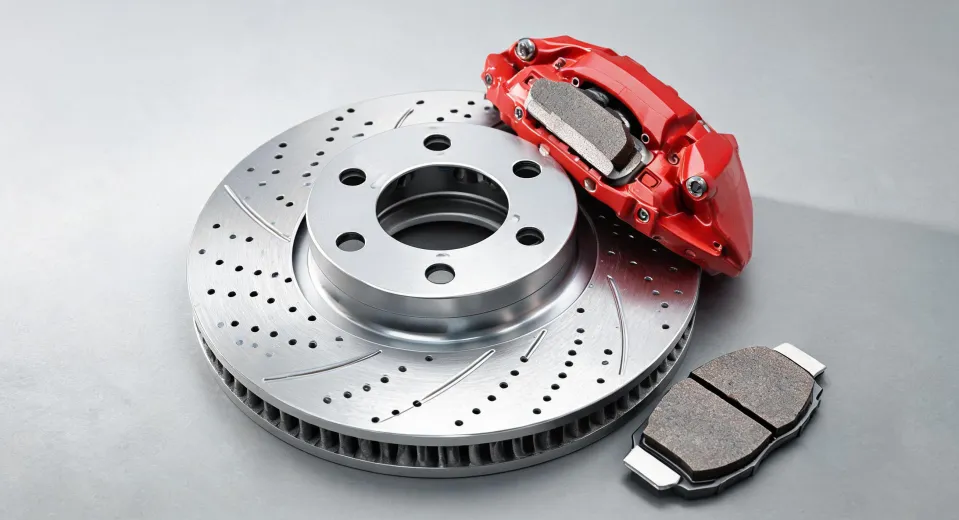
Centric coated rotors are not a stopping-power upgrade. They do not add grip. What the coating does is stop rust from forming on the non-friction surfaces and reduce the chance of the rotor face developing that patchy rust. That makes them an anti-comeback part, not a performance part.
My conclusion: for a car the customer plans to keep for more than two years, coated rotors are worth the extra cost. For a car that will be sold next spring, plain rotors are not a sin. Compare the expected ownership time, not just the box price.
A Realistic Centric Brake Pads Review
I use Centric pads often enough to write this realistic Centric brake pads review. It is not a test-track review. It is a review from the shop floor, after installs on commuter cars and a heavy Chevy 350 truck.
The important thing to know is that Centric offers different pad compounds for different applications. That sounds obvious, but cheap aftermarket pads are often sold with one compound for everything. That one-size-fits-all approach created my mistake: I installed a set of budget semi-metallic pads on a light sedan and skipped the break-in procedure.
I knew I should bed them in. I thought, what are the odds that 10 minutes of stops matter? The odds caught up with me. The pads glazed within a few miles, the rotors got uneven deposits, and the brake pedal felt like a gravel driveway. The pad brand did not do that; my shortcut did.
With Centric pads, I have had better luck because our supplier supports application-specific matching. On the Chevy 350 truck, the correct Centric compound gave a moderate initial bite, low dust, and no squeal. After about 20,000 miles the pads still had material left, and the customer did not need a brake job. That is the real measure of a brake pad: not whether it stops hard on a test sheet, but whether it comes back for the right reason.
One surprising conclusion: a more aggressive metallic pad can stop shorter on the first grab, but it can make a street truck miserable to drive in traffic. The better comparison is not expensive vs cheap; it is correct compound vs convenience compound.
Chevy 350 Timing Chain: Stock Replacement vs. Hardcore Upgrade
Now to the engine side. If you are searching for a Chevy 350 timing chain, you will probably see two price tiers: a stock-style timing set and a stronger double-roller set. The temptation is to buy the double-roller because 'stronger' sounds like 'better.'
In my experience, a nearly stock 350 does not need a racing timing chain. The crankshaft and camshaft are not fighting a huge valve spring load. A good stock replacement timing set with steel sprockets can run for many miles without a problem, provided it is installed with the timing marks aligned and the chain tension checked before the cover goes on.
That said, if the engine already has the front cover off and the cam is being upgraded, a quality double-roller is a reasonable choice. The extra durability may not add horsepower, but it can make cold-start rattle less likely many years later.
What I really want to compare is diagnosis vs assumption. In 2022, I drove a customer's pickup to a local exhaust shop because I was convinced the noise was an exhaust leak. It turned out that the engine had a stretched factory timing chain, and I almost missed it by replacing the wrong part first. That experience changed my rule: listen before you order parts.
Valley Muffler and the Diagnosis-First Exhaust Comparison
Valley Muffler is the small local exhaust shop I send difficult work to. They are not the cheapest shop in town, and they do not pretend to be. What they do is look first and replace second.
One of our customers had a loud Chevy 350 truck that sounded like a destroyed muffler. A national replacement center had quoted a complete exhaust system from the catalytic converters back. Valley Muffler found a cracked manifold gasket and a dented tailpipe. The customer paid about a third of the quoted price, and we kept a regular customer.
Comparing exhaust shops is not just about choosing a muffler. It is about whether the shop tries to sell a system or tries to solve the problem. Valley Muffler is diagnosis-first. That is also the way I try to run our brake and ignition work. When you treat a small repair with the same care as a big job, customers come back. Same for parts suppliers: the ones that answered questions when our orders were small are the ones we trust now.
How to Check Spark Plug Wires: The Test That Catches What Visual Inspection Misses
Here is the honest answer to the question, how to check spark plug wires: you cannot do it with your eyes alone, and you cannot do it with only an ohmmeter either.
I learned this on a Chevy 350-powered pickup with an intermittent miss. The wires looked new. No cracked boots, no burn marks, no oil contamination. I measured resistance and every wire was within spec. I assumed the wires could not be the problem. That was an assumption failure.
The miss happened when the engine was fully warmed, and it did not show up until about 2,500 rpm. The cause was a tiny arc through the insulation in a section hidden under the wire loom. The wire looked perfect, tested okay, and failed under load.
So here is my quick comparison for checking spark plug wires:
- Visual check: look for carbon tracking, melted insulation, soft or swollen boots, and signs of exhaust heat damage. This catches the obvious failures.
- Resistance check: measure each wire from end to end and compare all cylinders on the same engine. Big differences matter more than one perfect number.
- Load check: use a spark tester or run the engine in a dark bay and look for arcing. If a wire will not jump a calibrated gap under load, replace it.
- Swap check: on many engines, moving the suspected wire to another cylinder and watching the misfire move is the most practical test.
If I remember correctly, older carbon-core wires often stay below about 30,000 ohms per wire, but modern spiral core wires read much lower. The important number is the comparison between wires on the same engine, as well as whether the wire can handle load without leaking spark.
So the next time someone asks me how to check spark plug wires, I do not say inspect them. I say compare them, load-test them, and replace them in full sets when one fails. A shop that sells individual plug wires is customer-friendly, but most vehicles are healthier with a fresh matching set.
What I Would Choose Tomorrow
If you want the quick version, here is what my comparison list looks like now:
- Centric coated rotors when the customer will keep the car at least two years. Plain rotors only for cheap flips or immediate trade-ins.
- Centric brake pads when I can match the correct compound for the vehicle. The best compound in the world still needs a proper bed-in.
- A stock-style Chevy 350 timing chain for a near-stock engine. A double-roller when the engine is built for more rpm or the cam is already being replaced.
- Valley Muffler for exhaust work because they diagnose before they quote.
- A spark plug wire check that includes a visual pass, an ohm reading for comparison, and a load test. The question how to check spark plug wires stops being mysterious once you have watched a wire that tested fine fail in the dark.
None of these choices make a great technician look smart. They make a boring, repeatable brake and tune-up process look boring. After 22,000 shop hours and $4,300 of my own mistakes, boring is exactly what I want.