-
Are Centric rotors good?
-
What does “Centric brands” mean in the aftermarket?
-
How do I vet a heavy truck radiator supplier?
-
Is a professional headlight restoration kit worth it?
-
What makes the best surgical headlight?
-
What do these products have in common?
-
One thing buyers miss about “centric” quality
I’m a quality/brand compliance manager at an automotive components company. I review every part before it reaches customers—roughly 200+ unique items a year. I rejected about 12% of first deliveries in 2024 due to spec drift, labeling mismatches, or fitment issues. These are the questions I get from buyers, engineers, and even friends who know what I do. Short answers, no fluff.
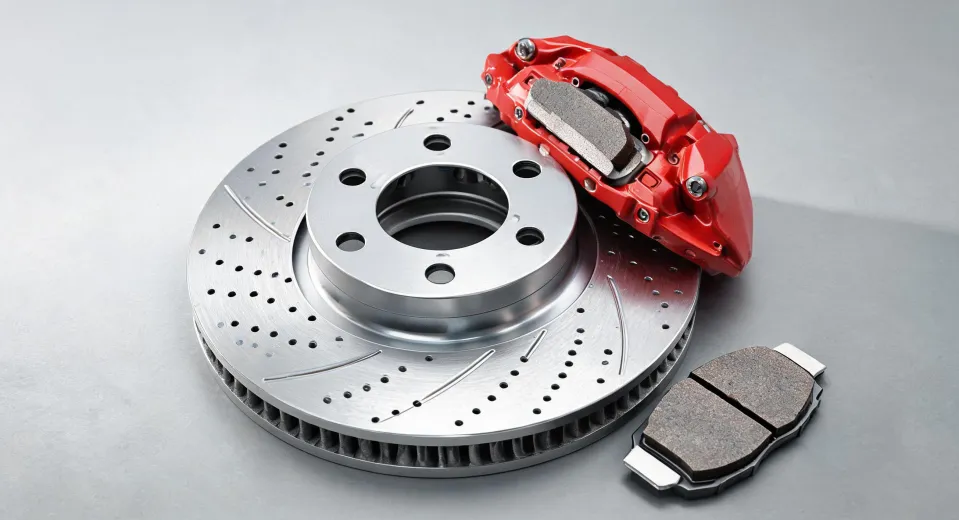
Are Centric rotors good?
For most daily-driver and light-truck applications, yes—if you verify the spec and the supply chain. Centric rotors (and Centric brands generally) have a decent reputation in the aftermarket because they offer broad coverage and consistent metallurgy. But “good” depends on the grade: coated vs. uncoated, blank vs. drilled/slotted, and whether the rotor meets your OEM thickness and runout tolerances. I’ve rejected batches where the box said one thing and the edge code said another (note to self: always check edge codes). Ask for the IATF 16949:2016 certificate and a recent PPAP if you’re buying at volume. For a daily driver, Centric is often a safe mid-tier choice. For track or heavy towing, step up to a spec that matches your thermal load.
What does “Centric brands” mean in the aftermarket?
It usually refers to a family of brake and chassis brands under one company—Centric Parts, StopTech, and others. The practical question isn’t the logo; it’s which tier you’re getting. A premium line may use better metallurgy, tighter balance specs, and better coating. A value line may meet minimums but not exceed them. My initial approach was to assume a brand family meant uniform quality. Experience taught me to treat each part number as its own project. Check the country of origin, the foundry, and the inspection data. If a supplier can’t tell you the difference between their tiers, that’s a red flag.
How do I vet a heavy truck radiator supplier?
Heavy truck radiators are less about brand and more about core construction, pressure cycling, and fit. I look for tube thickness, fin density, header plate material, and whether the unit was pressure-tested at 1.5x working pressure. A supplier that only quotes price will usually cut corners on the core. Ask for burst test data, vibration test results, and a warranty that covers field failures—not just “defects in materials.” In our Q1 2024 quality audit, a radiator supplier’s “OEM-equivalent” claim fell apart because the mounting brackets were 2 mm off. That cost us a $22,000 redo and a delayed fleet delivery. Now every heavy truck radiator contract includes a first-article inspection and a fitment jig check.
Is a professional headlight restoration kit worth it?
Yes, if “professional” means a multi-stage wet sand, polish, and a UV clear coat—not just a wipe-on wipe-off. The cheap kits remove oxidation but leave the polycarbonate unprotected; six months later, the haze returns. A proper kit costs more, but it restores light output and beam pattern. I’ve run blind tests with our shop: same headlight, one side done with a $30 kit, the other with a $70 professional kit. The professional side held clarity 3x longer in accelerated UV testing. For a fleet, that’s efficiency: fewer comebacks, fewer re-dos. Just make sure the kit includes a real UV sealer. Without it, you’re renting clarity, not restoring it.
What makes the best surgical headlight?
For surgical headlights, “best” is about beam quality, color temperature, battery life, and sterility compatibility. You want 4000–5500 K, high CRI (>90), a uniform spot with no hot spots, and a cable or battery pack that doesn’t interfere with gowning. The best units are typically certified to IEC 60601-1 and manufactured under ISO 13485:2016. I’ve only worked with automotive and industrial lighting, so my medical sample is limited—if you’re buying for OR use, lean on a clinical engineer. But the quality logic holds: verify the lux at working distance, the battery cycle life, and the cleaning instructions. A headlight that dims after 30 minutes is not “best” no matter how light it feels.
What do these products have in common?
They all fail or succeed on one thing: consistency. A Centric rotor, a heavy truck radiator, a headlight restoration kit, and a surgical headlight can all look fine at unboxing. The difference shows up in the 100th unit, the 50th pressure cycle, or the 200th sterilization. That’s why I push suppliers toward automated inspection and digital traceability. Switching to an automated runout check cut our rotor inspection turnaround from 5 days to 2 days. The automated process eliminated the data entry errors we used to have. Efficiency isn’t just about speed—it’s about repeatability. And repeatability is what keeps a brand off the rejection list.
One thing buyers miss about “centric” quality
People hear “centric” and think it’s just a brand name. In engineering, centric means centered—runout, balance, and alignment around a true axis. A rotor can be from a great brand and still be off-center. A radiator can have a perfect core and still leak at the header because the flange wasn’t flat. My experience is based on 200+ mid-range automotive and industrial programs. If you’re working with aerospace or implantable medical devices, your tolerance for variation is a different world. But the checklist is similar: spec, sample, measure, repeat. I have mixed feelings about rushing this—on one hand, speed matters. On the other, the $22,000 redo I mentioned earlier came from skipping one first-article check. Now I build buffer time into every launch. Annoying? Yes. Cheaper than a recall? Absolutely.