Bottom line: the part number is not the application
Before you order Centric Premium Rotors, Centric Posi Quiet brake pads, a truck leaf spring, an outside furnace exhaust pipe, or a house air filter, spend five minutes confirming three things: exact application, operating environment, and replacement interval. That five minutes is the cheapest insurance you will buy all year. The wrong rotor, pad, spring, pipe, or filter is never a bargain—it is a redo waiting to happen.
For a house air filter, the common question is how often should you change your house air filter. The U.S. EPA recommends checking it monthly and changing it at least every 60 to 90 days. If you have pets, allergies, or recent construction, 30 to 45 days is a better ballpark. If you are buying a Centric Premium Rotor or Posi Quiet pad, the equivalent question is not “what fits this year?” but “what fits this VIN, caliper code, and duty cycle?”
Why you should trust a guy who has screwed this up
I have been handling automotive parts and maintenance orders for 9 years. I have personally made—and documented—23 significant mistakes, totaling roughly $14,700 in wasted budget. That number is not a badge. It is why I now keep our team’s pre-order checklist on the wall.
In my first year, 2017, I made the classic same-year, same-part mistake. In September 2022, a leaf spring disaster cost us $3,200 and a week of downtime. After the third rejection in Q1 2024, I created the checklist. We have caught 47 potential errors with it in the past 18 months. Saved around $8,000 in potential rework, give or take a few hundred.
The most frustrating part of parts ordering: the same fitment issues recur even when you think the catalog has improved. You would think VIN tools would solve it, but trim packages still hide differences.
Where the obvious answer breaks
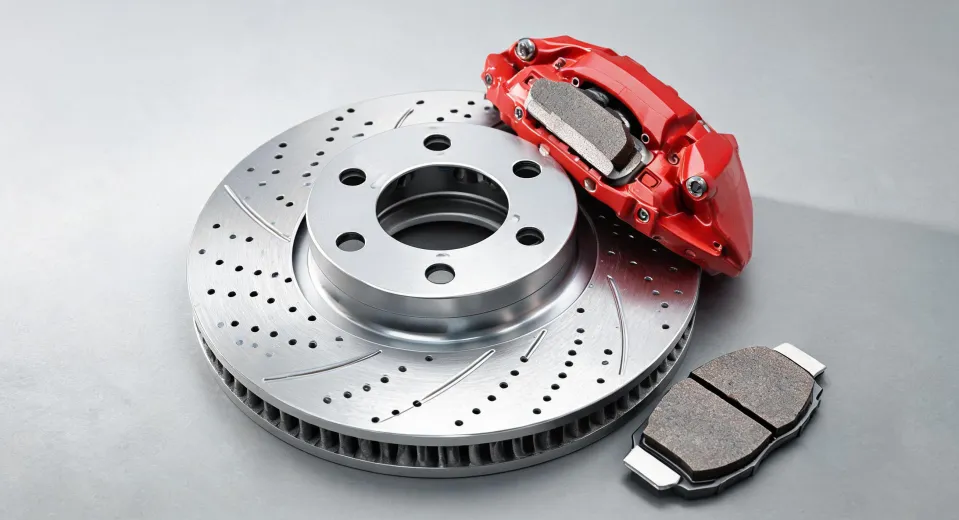
Centric Premium Rotors and Posi Quiet Pads: the same-size trap
In March 2022, I ordered 24 Centric Premium Rotors and 24 sets of Centric Posi Quiet brake pads for a mixed fleet. The spreadsheet said 2019–2021 trucks. It looked clean. What I missed: one truck had a heavy-duty towing package with a different rotor hat height and caliper bracket. The pads were the right family, but the hardware and shims did not match the caliper.
The result was $1,260 in returns, restocking, and expedited replacement, plus a four-day delay. That is when I learned that Centric Premium Rotors are not a single universal shape, and Posi Quiet pads can have multiple application-specific backing plates and shim designs. The catalog is a guide, not a substitute for the VIN or caliper code. Trust me on this one.
From the outside, it looks like brake parts are commodities. The reality is that a coated rotor and a quiet pad only help if the dimensions, caliper interface, and hardware are right. A red flag: if the listing says “fits all trims,” it probably fits none perfectly.
Truck leaf springs: load rating is not the whole story
In September 2022, I ordered 12 truck leaf springs by capacity only. The vendor asked for eye-to-eye length and arch. I did not have those numbers, so I guessed. The springs bolted in. Six months later, two were sagging, and one had a broken leaf. The final bill was $3,200 in parts, labor, and roadside service.
Leaf springs are a deal-breaker category for simplification. The “1-ton spring” label ignores spring rate, eye diameter, bushing type, arch, and overload configuration. It is tempting to think you can compare by capacity alone. But a truck leaf spring is an engineered assembly. If you do not measure the old spring or pull the OEM spec, you are rolling dice.
Furnace exhaust pipe outside: material and slope matter
From the outside, a furnace exhaust pipe outside looks like any other pipe. The reality is that the material, temperature rating, slope, and termination are code items, not cosmetic choices. In January 2023, a homeowner replaced a failed outside furnace exhaust pipe with standard PVC and no return slope. Condensate pooled, froze, and blocked the flue. The furnace locked out on a cold Friday. The repair was $600, and the no-heat call was avoidable.
I am not 100% sure every jurisdiction treats condensing furnace venting the same way. In my opinion, you should check the furnace manufacturer’s venting table and local mechanical code before buying pipe. PVC, CPVC, ABS, and polypropylene are not interchangeable in every application. The outside termination also needs to be screened, supported, and sloped back to the furnace, not away from it.
House air filters: the cheap part with the expensive mistake
People assume you change a house air filter when it looks dirty. What they do not see is that airflow restriction can damage a system before the filter looks bad. I once put a MERV 13 filter in an older system because a big-box store clerk called it hospital grade. Two months later, the coil iced up. $450 in service and a lesson: higher MERV is not automatically better.
So how often should you change your house air filter? EPA says at least every 60 to 90 days. I would argue monthly checking is the no-brainer part. For many homes, a MERV 8 to 11 filter is the practical ballpark. If you have pets, smoke, or allergies, change closer to 30–45 days. If your system is older or has a restrictive return, ask an HVAC tech before going higher.
The checklist I use now
I keep this short because nobody reads a 40-line checklist under pressure:
- Pull the VIN, model, or equipment serial number—not just year/make/model.
- Measure the critical dimensions: rotor hat height, pad shape, spring eye-to-eye, pipe diameter, filter size.
- Check the environment: towing duty, road salt, outdoor exhaust termination, pets, construction dust.
- Confirm the replacement interval from a primary source, not a product label.
- Write down the return policy and restocking fee before you click order.
- Photograph the old part and the nameplate. (Should mention: this has saved me twice in 2024 alone.)
When this advice does not apply
If you are an OEM engineer working from a released drawing, you already have better controls than my checklist. If you are in an emergency repair and the correct part is three days away, you may have to use what is in stock. In that case, document the compromise and replace it as soon as possible.
For furnace exhaust work, if local code requires a licensed HVAC contractor, hire one. For brake or suspension work, if you do not have a torque wrench and safe lift, do not DIY. And no brand—Centric included—can make a wrong application right. The goal is not brand loyalty. The goal is fitment, material, and interval.
Bottom line: five minutes of verification beats five days of correction. Check first. Order second.