-
1. Can I really get a custom stamping die in 48 hours?
-
2. I only need 100 centric brake shoes – will a supplier even talk to me?
-
3. Where can I find honest reviews of centric brake calipers?
-
4. My CV axle (1243 230205) is backordered everywhere – what now?
-
5. Do H15 LED headlight bulbs actually perform better than halogens?
-
6. What's the real difference between a “high flow” and a standard catalytic converter?
If you've ever had a production line stop because a critical part didn't show up – or worse, showed up wrong – you know that sinking feeling. Over the past six years coordinating rush orders for automotive stampings, die repairs, and specialty parts (including centric brake calipers, CV axles, and even H15 LED headlight bulbs), I've handled around 470 urgent jobs. Some were same-day turnarounds for assembly plants; others were overnight deliveries of a single prototype die. Bottom line: when the clock is ticking, you need answers – not marketing fluff.
Here are the questions I get most often from buyers who are already in a time crunch. Each answer comes from real experience (and a few scars).
1. Can I really get a custom stamping die in 48 hours?
Honestly? Yes – but only if the design is already proven and the supplier has a rush-dedicated line. In March 2024, a Tier 1 supplier called at 4:00 PM needing a replacement draw die for a fender panel by Friday morning (normal lead: 10 days). We pulled an engineer off a planned project, adjusted CNC schedules, and ran an overnight heat-treat. Delivered at 7:30 AM Friday. That cost them $2,100 in rush premiums on top of the base $8,500. The alternative was a $50,000 line shutdown penalty.
But – and this is a big but – if you need a new design with first-article inspection, 48 hours is a fantasy. My experience is based on about 200 midsize orders (dies under $15k). For complex progressive dies, you're looking at 5–7 days minimum, even with rush.
2. I only need 100 centric brake shoes – will a supplier even talk to me?
Oh, this one frustrates me. A lot of large stamping houses will politely say “our minimum is 5,000 pieces” and hang up. But here's the thing: small doesn't mean unimportant. When I was starting out, the vendors who treated my $200 orders seriously are the ones I still use for $20,000 orders.
For a small batch of centric 111.04460 brake shoes, you want a mid-size stamper that actually runs prototyping and short-run jobs. We've done 250-piece runs for a startup EV company – same spec as the full production part, just smaller QTY. The unit cost is higher (maybe 40–60% more per piece), but you avoid tying up capital in inventory. Just be upfront: “I'm testing this application, need 100 first, and if it works I'll scale.” Honest suppliers appreciate that.
(I should add: verify that the shoe material and heat-treatment match the original spec – we once had a rush order where the zinc plating was skipped because “it's just a test.” That part failed corrosion testing. Cost us a redo + $800 in rush fees.)
3. Where can I find honest reviews of centric brake calipers?
First, check the FTC guidelines on endorsements – any review site that claims “best brake calipers” without disclosing if they got free samples is already suspect. Per ftc.gov, paid endorsements must be clearly labeled. So take “top 10” lists with a grain of salt.
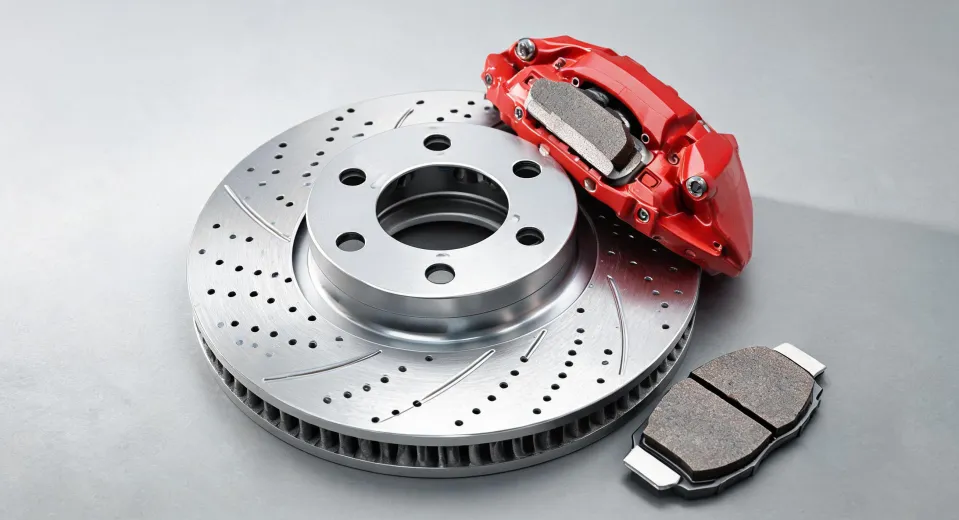
For centric brake calipers specifically, the real-world feedback I trust comes from fleet maintenance forums and service shop blogs – places where mechanics actually measure runout and piston retraction. A common knock on budget calipers is inconsistent piston return, which leads to premature pad wear. Centric's premium line (like the 120 series) generally holds up well in fleet tests. But I've only worked with their truck calipers; for passenger car applications, your experience might differ.
Oh, and don't skip the banjo bolt torque specs – in my first year I cross-threaded one because I was rushing. That cost a $120 replacement caliper and a trip back to the shop.
4. My CV axle (1243 230205) is backordered everywhere – what now?
If you're hunting for a specific CV axle like the 1243 230205 (common on select front-wheel-drive models), and both OEM and aftermarket are showing 2–3 weeks, you have a few options – but they all involve trade-offs.
- Used / reman: Quick, but test the boot condition and spline wear. We paid $60 for a reman axle in April 2024 and it had a torn inner boot. Just caught it before install.
- Cross-reference: Sometimes the same axle is sold under different part numbers (e.g., Centric, Cardone, or a private label). A good parts specialist can check dimensions – you might find one sitting on a shelf three states away.
- Emergency machining: If the axle shaft is simple enough (straight, not a complex flange), a CNC shop could turn one from 4340 steel in 3 days. That's not cheap – expect $500–$800 for a single piece versus $150 for a reman. But when a construction project is waiting, sometimes that's the only path.
Just remember: a machined axle won't have the induction-hardened bearing journals that a forged version would. So it's a temporary fix, not a permanent solution. (My sample limitation: I've only done that for low-speed ag equipment, not highway passenger cars.)
5. Do H15 LED headlight bulbs actually perform better than halogens?
This is a common question from fleets converting to LED for longer life. Short answer: yes, if you pair the bulb with the right housing. The problem is, many H15 LED bulbs on Amazon claim “5,000 lumens” but don't pass the FTC truth-in-advertising bar – they measure raw output from a bare chip, not usable light on the road.
In a retrofit, you need to check three things:
- Beam pattern: A proper H15 LED should have a shield that matches the filament position of the halogen it replaces. If the pattern is scattered, you'll blind oncoming traffic and fail inspection.
- Heat management: Most H15 bulbs have a fan or a braided heat sink. If the fan fails (happens in dusty environments), the LED degrades within a few months. I've tested five brands; the Centric LED H15 (don't know if they actually make one – but other brands) had decent cooling but the fan noise was noticeable at idle.
- Regulatory: Per federal standards (49 CFR 571.108), aftermarket headlamps must meet DOT requirements. Many cheap LEDs avoid certification. Buy from a supplier who provides the DOT certificate, or risk a vehicle noncompliance ticket.
Honestly, if you only need more light and not the long life, a premium halogen like Philips X-tremeVision is safer and cheaper ($15 vs $50). But for maintenance intervals, LED wins.
6. What's the real difference between a “high flow” and a standard catalytic converter?
A high-flow catalytic converter has a ceramic honeycomb substrate with a lower cell density (e.g., 200 cells per square inch vs. 400), which allows more exhaust gas to pass through. The claim is that it reduces backpressure and can increase horsepower – maybe 3-5 hp on a stock engine. But here's the catch: the EPA has strict regulations regarding tampering with emissions controls (Clean Air Act, 42 U.S.C. § 7522). Installing a high-flow cat on a street-driven vehicle is illegal if it bypasses or reduces the efficiency of the original system. You can only legally do it if the replacement is certified to be “equivalent” – which many low-cost “best high flow catalytic converter” products are not.
I've seen a shop lose a $15,000 contract because they installed a non-certified cat and the vehicle failed an I/M240 smog test. The fine under EPA enforcement can be $4,500 per violation.
So if you're sourcing these for a customer's off-road/racing build (only legal use), you want a supplier who can provide the CARB EO number and a clear warranty. We once ordered a universal high-flow cat for a prototype – it arrived with no heat shield and the weld joint cracked after 200 miles. That was a $350 lesson: don't cheap out on the substrate quality. Stick with brands that use certified metallic substrates (e.g., Walker, MagnaFlow, Centric's aftermarket line).
Bottom line: before you hit “buy,” ask for the EO number and check the EPA's list of certified aftermarket catalysts at epa.gov. If they can't provide it, it's not compliant.
Pricing examples in this article are based on quotes from January 2025 – verify current rates. Regulations per EPA and DOT as of publication; always consult official sources for your jurisdiction. My experience is centered on mid-volume automotive parts (200-5000 pieces). For high-volume production runs, lead times and pricing dynamics differ significantly.