-
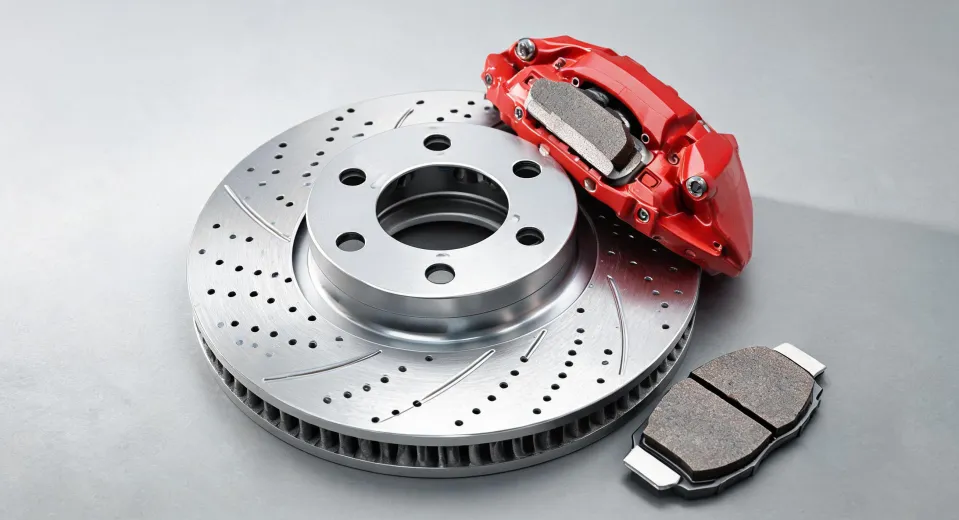
1. Are Centric Brake Rotors Good?
-
2. Centric Premium High Carbon Brake Rotor Reviews: Do They Live Up to the Hype?
-
3. Car Control Arm Diagram: Why It Matters Before You Order
-
4. Truck Differential Price: What Should You Budget in 2025?
-
5. What Does a Throttle Body Look Like?
-
6. The Question Nobody Asks: "What Makes a Part Order Go Wrong?"
I'm the office administrator for a 40-person auto repair chain with three locations. I manage all parts ordering—roughly $250,000 annually across 12 vendors. I report to both operations and finance. After six years in this role, I've processed a lot of part orders and heard every question customers can come up with.
The questions below are the ones we get asked most at the parts desk, answered from my purchasing perspective. I'm not a master mechanic, and I'll flag where I step outside my lane. But when it comes to what parts cost, which brands hold up, and how to avoid ordering the wrong one—that's my territory.
Here's what we're covering:
- Are Centric brake rotors good?
- Centric Premium High Carbon brake rotor reviews: worth the upgrade?
- Car control arm diagram basics
- Truck differential price ranges in 2025
- What a throttle body looks like
- Why so many parts get ordered wrong (and how to avoid it)
1. Are Centric Brake Rotors Good?
That's the first question we hear when a customer sees "Centric" on a quote. After six years of ordering these rotors, my answer is yes—pretty reliably.
From a purchasing standpoint, what I track is warranty claims, returns, and fitment complaints. Centric's claim rate on rotors sits below our average for mid-priced brands. Over the past 18 months, we've had roughly 3 problem units out of about 200 Centric rotors ordered. (Not a scientific sample, but enough for me.)
The other thing I value is consistency. The same part number arrives the same way every time—coated, boxed, labeled correctly. When you're processing 60-80 orders annually across three locations, that consistency saves hours.
Are there cheaper rotors? Sure. Will they stop the car? Probably. But we recommend Centric for daily drivers and fleet vehicles because the replacement cycle is predictable and the warranty line between customer and shop stays calm.
2. Centric Premium High Carbon Brake Rotor Reviews: Do They Live Up to the Hype?
This one comes up a lot because the Premium High Carbon line costs about $30-40 more per rotor than the standard Centric line. As of January 2025, our distributor pricing is roughly $45-55 per standard rotor and $80-90 per Premium High Carbon rotor for most light vehicles. Verify current pricing with your own supplier—it moves.
What I see in customer feedback and shop notes: drivers of heavy vehicles—trucks, big SUVs, anyone who hauls—report less brake fade and fewer warping complaints on the high-carbon rotors. Towing customers are the most likely to reorder. For typical commuting sedans, there's a barely noticeable difference, and I'm honest about that when asked.
Looking back, I should have added the high-carbon line to our truck fleet recommendations two years earlier than we did. At the time, the price bump felt hard to justify. Nobody wanted to stock a more expensive rotor without strong evidence. It took our own fleet maintenance shop quietly requesting them for the F-150s to change my mind.
So, worth it? For trucks, towing, and hot climates—yes. For a commuter car—standard rotors perform fine, and the savings add up. Just note that high-carbon rotors have a longer bedding-in period, so customers may feel the brakes are soft for the first 200-300 miles until the pad transfer evens out.
3. Car Control Arm Diagram: Why It Matters Before You Order
A control arm connects the suspension to the vehicle's frame. It manages wheel movement and directly affects alignment and tire wear. There are upper and lower arms, and the geometry is specific to the vehicle, the trim, and even the axle it goes on. Control arms are typically stamped steel with welded brackets, and the ball joint bore gets machined to a precise tolerance—small differences in that machining separate one trim's arm from another.
Here's the problem: a "diagram control arm car" search returns hundreds of images, and a lot of them look similar. That visual similarity is exactly why wrong parts get ordered. It's one of our biggest return drivers. (What I didn't expect when I started this job is how often someone points at a diagram that isn't for their car.)
I'm not a suspension engineer, so I can't walk you through every bracket angle and bushing spec. What I can tell you from a purchasing perspective is what we require before placing a control arm order:
- Year, make, model, and trim level
- Front or rear arm
- Driver or passenger side
- The OEM part number if you can find it stamped on the old arm
That last one is the kicker. Right-looking diagrams still mislead people. We've seen control arms where the visual matches but the OEM number maps to a different suspension variant. Our return rate on control arms dropped noticeably once we started asking for the OEM part number before ordering—same supplier, fewer headaches.
4. Truck Differential Price: What Should You Budget in 2025?
I field this question at least once a week. Take these numbers with a grain of salt—prices depend heavily on axle ratio, lockers, and whether you're buying a complete assembly or just gears. But as of January 2025, here's what we see through our wholesale distributors:
- Complete differential assembly for a half-ton truck (F-150, Silverado, Ram 1500): $800–$1,800 remanufactured; $1,500–$3,200 new
- Installation labor: $400–$900 depending on the shop
- Ring and pinion sets alone: $250–$600, plus labor (which roughly doubles for a full rebuild)
- Locking differentials: add $400–$1,000 on top
Don't hold me to these numbers for every truck. A heavy-duty F-250 with a Dana rear axle lands in a different range than a Colorado. But for budget planning, it's a fair starting point.
One thing I learned the hard way: confirm the axle code before you quote. Looking back, I should have asked for the RPO axle code on a Silverado order years earlier. At the time, the VIN seemed like enough. It wasn't—the axle ratio changed between trims, and we received the wrong assembly. That return cost us shipping and a week of delay.
5. What Does a Throttle Body Look Like?
Customers ask this when they see a repair quote and want to understand what they're paying for. Easier answer than you'd expect.
The throttle body is the aluminum housing between the air intake tube and the intake manifold. It's generally round or oval, about the size of the palm of your hand. Through the opening you can see a metal flap—the butterfly valve—that tilts to control airflow into the engine. A cable or electronic connector attaches to one side, and there's a small sensor mounted on the housing.
To spot one in your own car: follow the big intake hose from the air filter box toward the engine. The point where that hose clamps down is almost always the throttle body. On a cold engine, you may see a thin layer of dark carbon around the flap (which, honestly, is normal after 30,000 miles).
If the idle is rough, sometimes that carbon buildup is the issue—the part might just need cleaning rather than replacement. We tell customers that up front, even when the estimate says "throttle body service."
When you need the part itself, bring the year, make, and engine code. Throttle bodies from different models look nearly identical, but the electronic calibration is specific. (Don't ask me how many near-misses we've caught on that one.)
6. The Question Nobody Asks: "What Makes a Part Order Go Wrong?"
The biggest source of returns we deal with isn't defective parts. It's ordering what looks like the right part, but isn't the right version. This happens across control arms, differentials, and throttle bodies all the time.
What I wish every customer did before ordering:
- Take a photo of the old part after removal—or the mounting area if the part is still installed. Our parts desk uses photos to visually confirm design before finalizing a purchase.
- Write down the OEM part number from the old part. It takes under a minute and eliminates most fitment errors.
- Keep the invoice and packaging until the new part is confirmed fitted.
This advice sounds simple, but roughly 30% of our return requests used to come from orders placed with only a verbal description. Once we added a photo step to our intake process in 2024, order turnaround dropped from an average of 5 days to 2 days, and accounting back-and-forth over mismatched parts dropped noticeably. Same vendors, same parts—just better information upfront.
That's the efficiency mindset I've developed in this role. I'm not a parts engineer and I don't try to be one. The process captures the engineering details for us so the next order goes through right the first time.