-
When the Part Number Looks Right but the Problem Isn't
-
What a Caliper Kit Actually Sells You
-
Mustang Brake Caliper Covers: A Lesson in Listening
-
Leaf Spring Tie Bolts: The Part Nobody Thinks About Until It Snaps
-
What Is DPF on a Diesel? A Quick Explanation for People Who Procure Things
-
The Pattern I Keep Coming Back To
I manage purchasing for a mid-size commercial fleet operation. That means I'm the person who ends up on the phone about brake drums, caliper kits, and a thousand other components—often while trying to explain to a shop foreman why a part hasn't arrived yet. Over the years, some product names have become shortcuts for trust. Centric is one of them. But here's the thing I've learned: knowing a brand name isn't the same as knowing what you're actually buying.
When the Part Number Looks Right but the Problem Isn't
A few months ago, our maintenance lead asked me to order the Centric Parts 122.40012 brake drum. It's a common replacement for the vehicles in our auxiliary fleet. I placed the order. The drum showed up, the tech installed it, and the vehicle went back into rotation. Simple, right?
Then the same truck came back within a week. Same complaint: a pedal pulsation that felt exactly like a warped drum. I remember thinking, did we just buy a defective part?
We hadn't. What we'd missed was the mating surface.
Here's what I've learned from that and about twenty similar situations since: brake components don't fail in a vacuum. The drum might have been perfectly round on the lathe, but if the hub flange or the wheel bearing has even slight runout, you'll chase that pulsation until you replace the whole assembly. I used to think a high-quality brake drum was the whole answer. Now I know that a high-quality brake drum is only as good as the components around it.
That's not a knock on Centric—it's a compliment. The part did what it was supposed to do. The system around it didn't.
What a Caliper Kit Actually Sells You
I can't tell you how many times I've had a conversation that goes like this:
“We need a caliper—no, wait, a caliper kit. The Centric 143.42008 one. Can you get it by Thursday?”
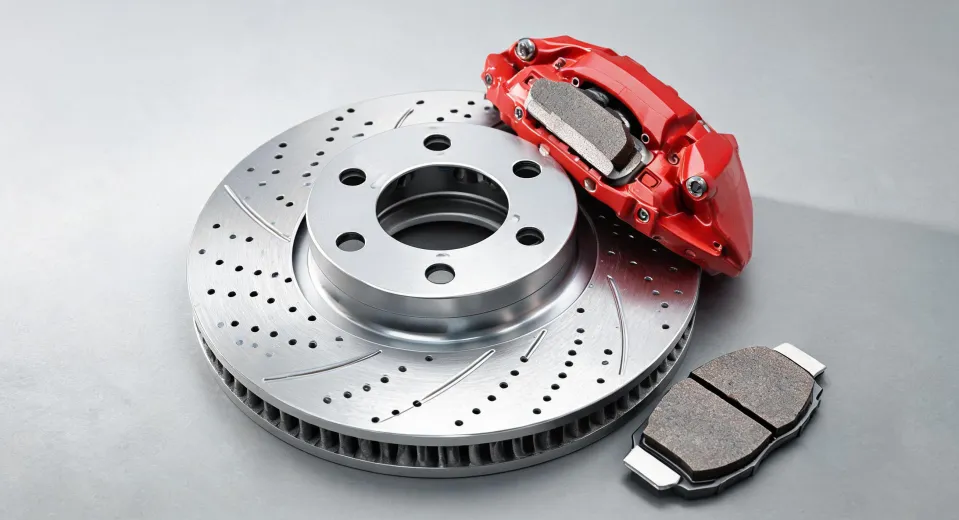
If you're not a parts person, the distinction between a caliper and a caliper kit might seem trivial. It's not. A complete caliper often comes as a loaded unit—bracket, housing, piston, and pads, ready to bolt on. A caliper repair kit (which is what the 143.42008 is) contains the internal bits: seals, boots, sometimes sliders or hardware. It's the stuff that wears out and causes a caliper to stick or leak.
I've learned this the expensive way. Early in my purchasing career, I ordered a caliper kit thinking it was the full assembly. The technician opened the box, looked at me with the kind of expression you don't forget, and said, “where's the caliper?”
The part number was correct. The interpretation wasn't.
If you're ever ordering a caliper kit, ask yourself: am I trying to fix a seized piston, or am I replacing the whole unit? Kits are great for cost-effective rebuilds when the casting is still solid. They don't do you much good when the mounting bracket is cracked or the piston bore is scored.
Mustang Brake Caliper Covers: A Lesson in Listening
I'll admit, when someone asked me about mustang brake caliper covers last year, I had to pause. Caliper covers aren't something we use in fleet maintenance. They're a cosmetic product—a way to dress up the calipers, usually on a performance car or a show build.
But we do have a couple of employees with Mustangs who occasionally use the shop for personal projects. So I looked into it.
Here's what surprises people: caliper covers are not universally loved. Some enthusiasts won't put them anywhere near their car. The common complaint is heat retention. Brakes shed heat through the caliper and rotor, and if you add a metal cover over the caliper, you're potentially trapping that heat. On a daily driver that never sees a track day, that's rarely a problem. On a car that gets driven hard, it can lead to brake fade.
I also found out the hard way that not all covers fit all calipers. You'd think a “Mustang” cover would fit a Mustang. But between GT, EcoBoost, and Shelby variants, the caliper shapes and clearances vary significantly. A cover that fits a stock GT caliper might not clear the larger Brembo units on a Performance Pack. If you're tempted by these, measure first. Check what brake package you actually have. And don't assume “for Mustang” means “for every Mustang.”
I'm not here to judge taste. If the covers make the owner happy and they're not tracking the car, fine. But I'd rather an informed customer than a disappointed one.
Leaf Spring Tie Bolts: The Part Nobody Thinks About Until It Snaps
Here's a real test of a purchasing person's character: someone asks you for a leaf spring tie bolt, and you realize you don't know what it does. That was me, about three years ago.
For those who haven't had the pleasure: leaf springs are made of multiple steel leaves stacked together. That stack has to stay aligned under massive loads. The tie bolt, also called a center bolt, is the thing that holds the stack together and locates the spring on the axle. It's a deceptively simple component—a bolt with a head that fits into the axle seat.
It's also one of those parts where “cheap” is a bad strategy. If a tie bolt shears, the leaf stack can shift. That means the axle alignment changes. That means handling goes sideways (sometimes literally) and tire wear becomes abnormal. The cost of the bolt is nothing compared to the cost of the tow truck and the alignment.
What I've learned is to pay attention to grade and material. A tie bolt is a fastener with a stressful job, and not all fasteners are created equal. If a supplier can't tell you the grade, I move on. That's not snobbery—it's self-preservation.
This also ties into a broader pattern I've seen: the less visible a part is, the more likely someone is to buy the cheapest version of it. And the more likely they are to regret it. You don't see a tie bolt. You don't take pride in it at a car show. But you feel it when it fails.
What Is DPF on a Diesel? A Quick Explanation for People Who Procure Things
Let me switch gears. One question that comes up more than you'd expect is, what is DPF on a diesel? Usually it's because a driver or a shop tech mentions it and someone in the office has to look it up.
DPF stands for Diesel Particulate Filter. It's a device in the exhaust system that traps soot and ash from the combustion process. It's a key part of how modern diesel engines meet emissions standards. The filter collects particulate matter, and periodically it gets regenerated—either passively through normal driving (which creates enough heat to burn off the soot) or actively by injecting fuel into the exhaust to raise the temperature. You've probably heard of “forced regen” if you've ever dealt with a check-engine light on a truck.
Here's the practical implication for someone like me: a clogged DPF can bring a vehicle to a stop and the fix costs real money. If you have diesel equipment, the number of short-trip or low-load cycles matters. Trucks that only do short stops don't always get enough heat for passive regen, and that's where the problems start. The warning signs can be subtle, and by the time the warning light is serious, you're looking at a forced regeneration or a cleaning bill.
If a supplier or a service shop is asking about DPF, it's worth clarifying whether they mean the filter itself, the cleaning service, or the system diagnostics. I can't tell you how many invoices I've seen where “DPF” was used interchangeably for three different things. Know what you're paying for.
The Pattern I Keep Coming Back To
If you look at all five of these topics together, there's a through-line. The brake drum that wasn't the real problem. The caliper kit that was the right part but the wrong assumption. The caliper covers with fitment nuances. The tie bolt that fails invisibly. The DPF that's a system, not a part.
The common thread is this: the part number is not the answer. The part number is the starting point.
If you're a fleet manager, a shop lead, or another office person suddenly in charge of parts, here's what I'd tell you:
- Ask what the symptom is, not just what the part is. The same part number can be the right solution for one failure mode and completely useless for another.
- Check the context. Brake components interact with other parts. A tie bolt's job depends on the entire spring assembly. A DPF's health depends on driving patterns.
- Don't be shy about asking whether a “kit” is a repair kit or a full assembly. It's a question that saves everyone time.
- Be suspicious of fitment claims. “For Mustang” is a family, not a guarantee of universal fitment.
I'm not the kind of buyer who claims to know everything. I've ordered the wrong thing, misunderstood a product category, and trusted a brand name without thinking about the surrounding system. What I've learned is that the difference between a smooth repair and a frustrating one is often a single clarifying question asked before the order is placed.
That's not a revolutionary insight. But in my world, it's worth more than an expedited shipping code.