-
1. What exactly are Centric brake pads and rotors?
-
2. Is the Centric 150.37303 rear brake hose a direct fit?
-
3. What causes a catalytic converter rattle?
-
4. Why do radiator tanks fail?
-
5. What causes an ignition coil to go bad?
-
6. Does backing plate thickness change brake noise?
-
7. What hidden cost makes metal brake or exhaust parts expensive?
-
8. Is a steel-braided brake hose always better than a rubber one?
For the past 11 years, I’ve bought stamped, forged, and CNC-machined automotive parts. I’ve personally made—and documented—31 procurement mistakes that cost roughly $94,000 in wasted budget. Now I run our team’s pre-order checklist and train new buyers. These are the questions that come up most often.
Here’s what this covers:
- Centric brake pads and rotors: what they are and what to check
- Centric 150.37303 rear brake hose fitment
- Catalytic converter rattle causes
- Radiator tank failure
- What causes an ignition coil to go bad
- Backing plate noise and the hidden cost of die wear
- Steel braided vs rubber hoses
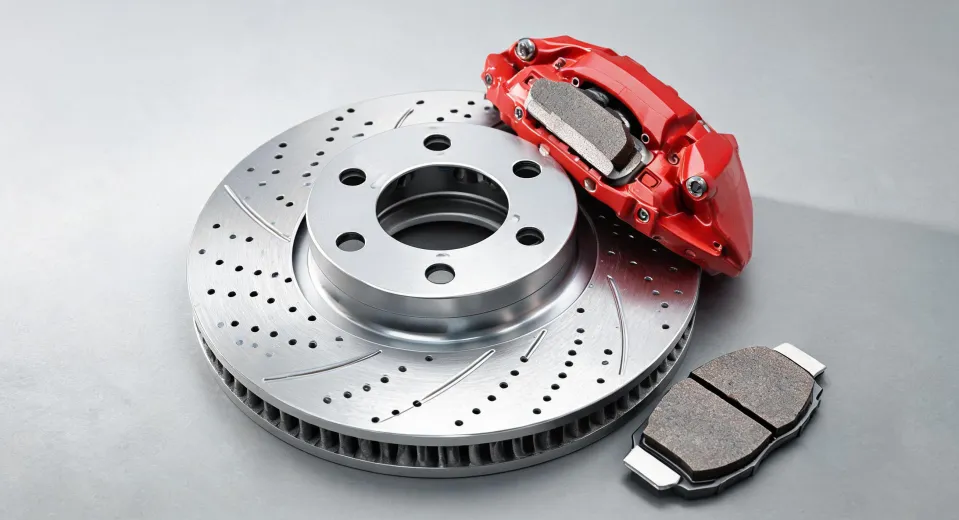
1. What exactly are Centric brake pads and rotors?
Centric brake pads and rotors are aftermarket replacement parts, not an OEM warranty part. The pads are usually ceramic or semi-metallic friction material; the rotors are cast iron with a specific vane pattern to pull heat away from the braking surface. What I care about as a metal parts guy is the backing plate. That’s a stamped steel plate with serious flatness requirements. If the progressive die is worn, you get a plate that’s a few hundredths of a millimetre off—and that’s enough to change pad contact.
I went back and forth between coated and uncoated rotors for about a week on one program. Coated cost more; uncoated looked like scrap after two days of humid storage. Ultimately we chose coated because shelf appearance matters when you deliver to an assembly line. Look, I’m not saying “branded” means flawless. I’m saying the manufacturer should be able to show a control plan for flatness and friction attachment. Under IATF 16949:2016, critical characteristics require a control plan. If they can’t show one, keep walking.
2. Is the Centric 150.37303 rear brake hose a direct fit?
Usually, but “usually” is a dangerous word in procurement. The Centric 150.37303 rear brake hose is a steel-braided PTFE hose with pre-assembled fittings and a mounting bracket. For many family and fleet models, it bolts in with the factory spring clips. But on a newer variant, the bracket hole orientation changed.
I once ordered 40 of these for a mixed-year fleet without checking the clip orientation. The result: $1,118 in parts that didn’t install correctly and a one-week delay. Now I confirm the banjo bolt thread (often M10x1.0), the fitting angle, and the bracket clip position before cutting the PO. The banjo bolt itself is usually forged then CNC-machined; the fitting style follows SAE J512 or SAE J1926 port geometry. Check those standards, because they cover most of the forms you’ll see.
3. What causes a catalytic converter rattle?
In my experience, most of what people call a catalytic converter rattle is not the converter. It’s a loose heat shield—a stamped-steel cover welded or riveted around the brick. Spot welds fatigue, a mounting tab cracks, and suddenly you hear a tinny rattle at 1,500 rpm.
The other failure mode is internal: the ceramic substrate breaks down from thermal shock or an over-fueling condition. That rattle sounds like gravel in a tin can. Tap the converter with a rubber mallet; internal damage gives you a papery, brassy sound. Loose shields clatter. We caught this on a 2,400-piece order by checking die tolerances on the stamped shield before production. The redo would have cost $5,200 and a three-week delay. (Dodged a bullet, thankfully.)
4. Why do radiator tanks fail?
A lot of modern aluminum radiators use extruded aluminum tubes and stamped tank-side plates, with plastic end tanks—usually glass-filled nylon—crimped over them. The aluminum core expands faster than the plastic tank under heat. Every heat cycle stresses the crimp area. After enough cycles, the plastic cracks right at the crimp.
A bad radiator cap makes it worse by causing over-pressurization. But one thing we see as a supplier: someone substitutes a thinner tank-side plate to save a few cents. That plate isn’t just a cover; it holds the crimp tension. If the steel gauge is off, you get pinhole leaks even with a good cap. The molded tank itself comes from an injection mold, and the mold’s cooling-line layout can create residual stress. So when a customer asks why a radiator tank cracked, my first question isn’t brand. It’s: how old is the cap and how many heat cycles did the vehicle see?
5. What causes an ignition coil to go bad?
Three things: heat, vibration, and oil contamination. In that order. Coil-on-plug units sit directly above the valve cover. Engine heat ages the epoxy and insulation; engine vibration breaks down the internal windings. Oil contamination happens when the valve cover gasket leaks into the spark plug wells. The oil fills the coil boot, and voltage finds a path to ground instead of across the plug gap.
Looking back, I should have replaced the coil when I saw an oil-soaked boot in 2018. At the time, I thought a new plug and boot would fix it. The coil died two months later. The cleaner rule: if a plug tube has oil, replace the gasket, the boot, and probably the coil while you’re in there.
6. Does backing plate thickness change brake noise?
Yes—this is the question nobody expects. The backing plates on Centric brake pads and rotors are stamped steel, usually around 4–5 mm, with a corrosion-resistant coating. If the plate is thinner on one edge due to die wear, the pad tilts slightly in the caliper. That micro-tilting changes contact pressure and causes the—ugh—rolling groan that customers blame on aftermarket quality. The fix isn’t always a thicker plate. It’s a flatter plate from a die that’s maintained to print.
What I mean is that the print tolerance matters more than the nominal thickness. A 4.8 mm plate with 0.03 mm taper is worse than a 4.5 mm plate that’s flat. That’s the kind of thing you catch only by checking the die’s maintenance log and running a CMM on samples, not by staring at the finish.
7. What hidden cost makes metal brake or exhaust parts expensive?
Die wear. A worn stamping die gives you burrs, springback, and inconsistent hole positions. I saw a bracket order where hole centers drifted by 0.5 mm over three lots. It passed visual inspection but didn’t fit the rubber isolator. We caught it when assemblers had to tap brackets into place with a mallet. That “minor” mismatch added $7,200 in assembly labor on a single project.
Here’s the thing: you can’t see die wear in a first article. You need die service records and live measurement across the batch. That’s not micromanagement; that’s APQP. Per the AIAG APQP manual, the design record and control plan should be locked before tooling kickoff, and any change after that has to be documented. If a supplier says “it’s just a minor burr,” ask to see the last six inspection reports.
8. Is a steel-braided brake hose always better than a rubber one?
No, and I’ll tell you why. A steel-braided hose resists expansion under pressure, so pedal feel is firmer. That’s great on a performance car and often an upgrade for an older vehicle. But the braid can chafe against a bracket if the routing isn’t checked. The Centric 150.37303 comes with a protective sleeve in many applications, but you still need the clips, the banjo torque spec, and the right bracket position.
For a stock commuter, a quality rubber hose is fine. The key is the inner tube, the end fitting crimp, and the DOT or SAE compliance mark. I’d rather sell a customer an OEM-spec rubber hose that fits perfectly than a braided hose that rubs against a subframe. (Not that braided is bad—just fit first, material second.)
I’d rather spend 15 minutes explaining these failure modes now than deal with a mismatched component later. An informed customer asks better questions and makes faster decisions. That’s how you keep waste out of the supply chain.