If you're here because you typed one of these phrases into a search engine, you probably want a straight answer—not a sales page. The questions below are ones I get from buyers and DIYers when they're trying to understand automotive components. I'm a quality/compliance manager at a metal stamping and machining company, and I review roughly 4,000 parts per month before they ship. In 2024, I rejected about 1.8% of first-article runs for dimensional drift. The rest of this FAQ reflects what I tell customers—and what I'd tell anyone trying to decide whether a part is good enough.
- Are Centric brake rotors good?
- What are wheel hub centric rings?
- What does a cylinder head do?
- What is a differential pressure controller?
- How is CV joint pricing determined?
- What should you ask before ordering custom auto parts?
Are Centric brake rotors good?
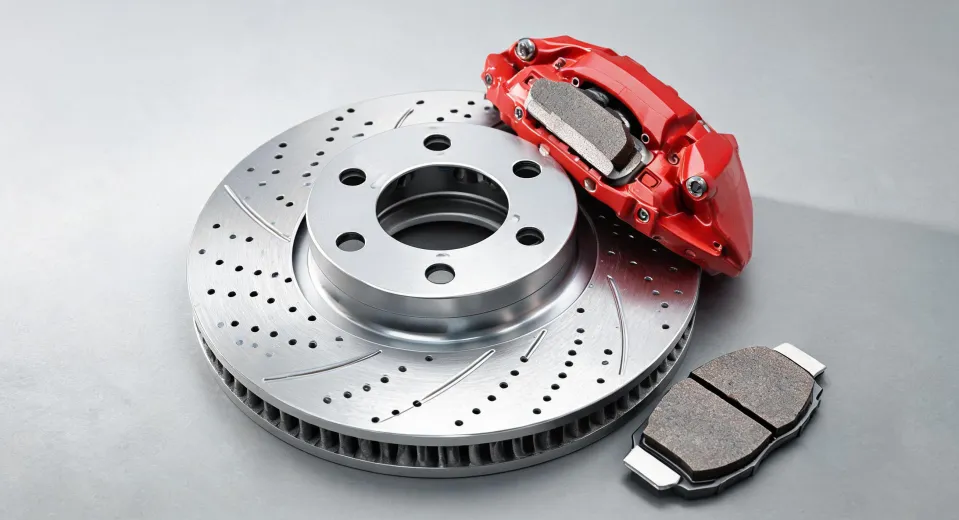
Short answer: for most daily drivers, yes—if you're asking about the Centric brake rotor brand. Centric Parts has been a consistent name in the aftermarket, and their standard rotors are generally considered decent value. The higher-tier C-Tek line uses a different alloy and coating, which handles corrosion and heat a bit better. (As of early 2025, that's still the consensus I hear from parts distributors; individual batches vary.)
I can't speak to the brake rotor company's internal manufacturing specs because we don't make brake rotors. Our company is also called Centric, but we're a metal stamping, mold, tooling, and CNC machining supplier. So if you're searching for brake rotors, make sure you're looking at the right “Centric.” If you're searching for our type of components, keep reading.
How do you evaluate any rotor brand? Check lateral runout, surface finish, and coating. A rotor can look good on the outside and still cause a pulsation if the runout is out of spec. If a brand doesn't publish a runout spec, ask why.
What are wheel hub centric rings?
Wheel hub centric rings (also called hub centric rings or centering rings) are small spacers that adapt the center bore of an aftermarket wheel to the hub diameter of your car. On most vehicles, the wheel is centered by the hub, not by the lug nuts. If the center bore is larger than the hub, the wheel can sit slightly off-center. That shows up as a vibration at highway speed, even if the wheel itself is balanced.
The ring fills that gap. A good hub centric ring matches both diameters closely—usually within 0.05 mm or better on the critical faces. At our shop, we CNC machine aluminum rings for low-volume and prototype runs. High-volume aftermarket rings are often nylon or plastic, which is fine if the material is stable and the tolerances are held. I can only speak to the metal side from direct experience.
Do you need them? If your aftermarket wheel center bore is larger than your hub, yes. If the wheel already matches your hub, no. I'd avoid the universal “one size fits many” rings—they can deform or crack if the material or fit is wrong.
What does a cylinder head do?
In an internal combustion engine, the cylinder head bolts to the top of the engine block. It seals the cylinders and contains the intake and exhaust ports, valve seats, and valve guides. On many engines, the camshafts and valvetrain also live in the head. The combustion chamber shape affects compression ratio and how efficiently the air-fuel mixture burns. The head also carries cooling passages, so it has to move heat away without warping.
Most cylinder heads are cast aluminum or cast iron, then CNC machined on the sealing surfaces, valve seats, and cam bores. We don't cast heads at our shop—that's outside our process—but we do machine steel and aluminum components where the same inspection rules apply. Flatness is the first thing I check on a sealing surface. Even a small warp can cause a head gasket leak.
So, what does a cylinder head actually do? It's the top of the combustion chamber, the airway, and the cam carrier all at once. If it isn't flat and the valve seats aren't concentric, the engine won't run correctly.
What is a differential pressure controller?
A differential pressure controller measures the difference between two pressure points and adjusts something to keep that difference at a target. You'll find them in HVAC systems, cleanrooms, and fluid power. In automotive, the version most people run into is the differential pressure sensor on a diesel particulate filter (DPF): it compares exhaust pressure before and after the filter. When the delta climbs, the filter is loading with soot and needs regeneration.
The word “controller” gets used loosely. Sometimes it's a standalone electronic device; sometimes it's just a sensor feeding a signal to the engine control unit. From my side of the factory, the metal parts around these devices are often stamped brackets or CNC machined housings. If the mounting holes are off by even 0.2 mm, the sensor can sit crooked and the readings may be inconsistent.
If you're troubleshooting one, don't automatically blame the part. A lot of DPF issues I've reviewed turn out to be a clogged pressure line, not a failed controller. Check the reference side before you spend money on replacement parts.
How is CV joint pricing determined?
CV joint pricing depends on joint type, size, material, finishing, and quantity. A front outer joint for a compact sedan will be cheaper than a heavy-duty pickup joint because there's less alloy and the machining tolerances aren't as demanding. Whether you're buying a bare joint, a complete axle shaft, or a remanufactured unit also changes the numbers.
From the outside, two axles can look identical. The reality is in the steel grade, heat treat, raceway finish, and the quality of the boot and grease. A cheaper joint with loose tolerances can create a small vibration that turns into a clicking sound when the boot tears. That's why I tell buyers to ask for the inspection report, not just a catalog picture.
For a general price range, based on listings I pulled from three aftermarket distributors in January 2025: remanufactured front CV axles for a typical FWD car run roughly $65 to $140 per side, new aftermarket axles run roughly $120 to $250 per side, and OEM axles can go from $200 to $500 per side depending on application. Don't hold me to those exact numbers—pricing moves with steel costs and tariffs—but that's a realistic starting point.
What should you ask before ordering custom auto parts?
Most buyers focus on unit price and lead time and completely miss how the part will be verified. If a supplier can't explain their inspection process, you're taking a risk. I want to know: What are the critical dimensions? Is there a PPAP (Production Part Approval Process) or first-article inspection? Do we get a dimensional report with the shipment? What happens if a dimension is out of tolerance?
I had a situation in Q1 2024 where a batch of 50,000 stamped brackets arrived with a hole position off by 0.3 mm from our print. Normal tolerance on that critical hole was ±0.15 mm. The vendor told us it was “within industry standard.” I had two hours to decide before our customer's assembly line would starve. Normally I'd wait for a full 8D (eight disciplines) corrective action report and a vendor visit, but there was no time. We rejected the batch, arranged same-day rework, and the cost came out of the vendor's pocket. In hindsight, that was an easy call: the 0.3 mm misalignment caused harness clips to clock incorrectly, and the line slowdown would have been far more expensive than the rework.
When a supplier argues that “close enough” is acceptable, ask for the engineering drawing. Then ask for the measured values. A 30-second CMM (coordinate measuring machine) report will tell you more than a salesperson's warranty pitch.