-
Questions this FAQ covers
-
Are Centric premium high carbon brake rotors worth it?
-
What is the Centric Parts 122.67021 brake drum?
-
Do brake rotor screws matter? Can you reuse them?
-
What about the 5.9 Cummins water pump?
-
How long does it take to fix a wheel bearing?
-
Should you replace brake rotors or drums in axle sets?
I'm a parts specialist who has been handling brake and chassis orders for an independent shop for eight years. I've personally made (and documented) 11 significant ordering mistakes, totaling roughly $4,700 in wasted budget. Now I maintain our team's pre-order checklist and use my own screw-ups as training material.
If you're here for Centric premium high carbon brake rotor reviews, the Centric Parts 122.67021 brake drum, brake rotor screws, a 5.9 Cummins water pump, or wheel bearing repair time, this is the version I wish someone handed me in 2017.
Questions this FAQ covers
- Are Centric premium high carbon brake rotors worth it?
- What is the Centric Parts 122.67021 brake drum?
- Do brake rotor screws matter? Can you reuse them?
- What about the 5.9 Cummins water pump?
- How long does it take to fix a wheel bearing?
- Should you replace rotors or drums in axle sets?
Are Centric premium high carbon brake rotors worth it?
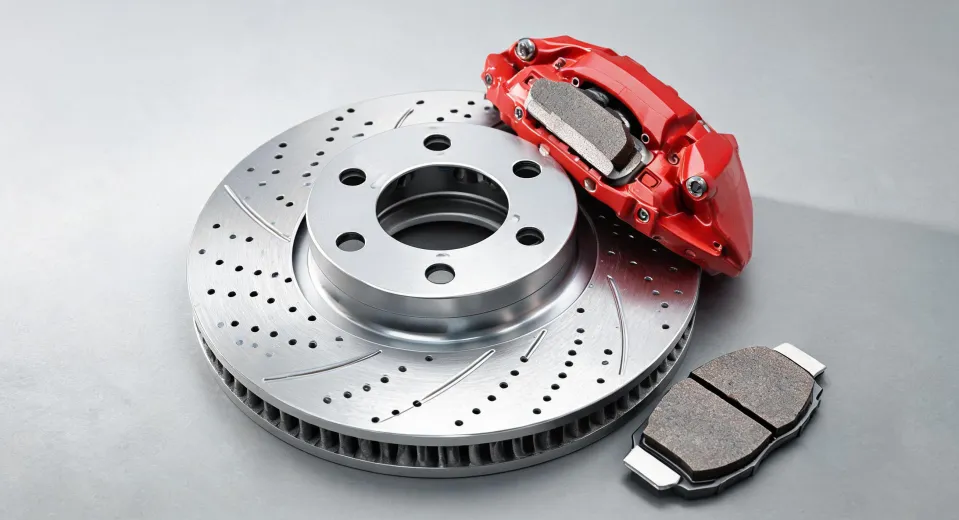
Short answer: for most daily-driven vehicles, yes, if the price difference is reasonable. If you're looking at Centric premium high carbon rotor reviews because you're tired of cheap rotors, the main point is heat management. Centric's high carbon rotors use a higher-carbon iron that resists heat checking better than basic rotors. I've seen enough heat cracks on cheap rotors after hard stops to take that seriously.
The most frustrating part of the cheap rotor experiment wasn't the $80. It was the customer's brake pedal pulsation before 10,000 miles. Your choice of rotor is basically your shop's signature. A $25 rotor that pulses makes you look careless. A Centric high carbon rotor that gives a clean first stop makes you look like you know what you're doing.
Now, are they the best rotor on the planet? Probably not. For heavy track use, you might want something else. But for normal street work and light truck duty, I think the premium high carbon line is a solid middle ground. Don't buy them for every beater. Buy them when you want a predictable, quiet brake job that doesn't come back.
What is the Centric Parts 122.67021 brake drum?
Centric 122.67021 is a brake drum in Centric's replacement catalog. As of January 2025, it's listed as a standard service replacement drum, but I don't have the complete application chart memorized, and you shouldn't trust a blog post for that either. Use Centric's online fitment lookup or your parts supplier's VIN check before ordering.
I learned that the hard way. I assumed a "same size drum" from a different brand would fit a customer's truck. It didn't. The shoes didn't seat properly, the pedal felt soft, and I looked like the problem was me, not their car. That was my reminder: part numbers and fitment data exist for a reason.
One more thing: if you're replacing one rear drum, do both sides. The parking brake adjustment on a fresh drum can feel noticeably different from the old side. That difference is enough to make a customer think something is wrong.
Do brake rotor screws matter? Can you reuse them?
Brake rotor screws, or rotor set screws, hold the rotor against the hub while assembling the brake. Once the caliper bracket and wheel are torqued, they're not really load-bearing. That said, if your vehicle uses them, put them back or install new ones.
I knew I should replace the stripped rotor screw on a customer's car, but thought, "what are the odds?" Well, the rotor shifted while I was seating the caliper, and a brand new pad got damaged. A screw is maybe $3. That pad was not. Not ideal, but workable after I took responsibility.
Can you reuse them? If they're clean and the thread is good, yes, technically. But most Centric rotors don't include new screws, so guys either reuse or buy generic. My rule: if there's any corrosion, replace it. Drilling out a stuck rotor screw is a frustrating way to spend 45 minutes.
What about the 5.9 Cummins water pump?
Honest answer: Centric doesn't make a 5.9 Cummins water pump, and you shouldn't pretend it does. If you searched that and ended up here, here's what I know.
On 5.9 Cummins engines, water pumps usually fail from the bearing or the weep hole. If you see coolant leaking under the front of the engine, don't just top it off. Check the pump shaft for play and look at the weep hole. Replacing the pump is a 2 to 4 hour job for a mechanic with the right tools, plus time to refill and bleed the cooling system. Use the proper coolant and a new gasket.
Since you're already under that truck, spend five extra minutes checking the rear brakes. If your truck has a Centric 122.67021 brake drum, the previous repair choice was reasonably solid. But check the wheel cylinders and hardware anyway.
How long does it take to fix a wheel bearing?
Book time and real time are different. A typical front wheel bearing on a sedan might be 1.5 to 3 hours per side. A rear bearing, or a bearing pressed into the knuckle, can add an hour or more. On a rust-belt pickup, that same job can eat an entire afternoon.
I once told a customer their wheel bearing would be done that evening. I assumed it would be a simple hub replacement. Then the axle nut was seized, the hub was rusted, and I needed heat, a breaker bar, and eventually a machine shop. The car stayed overnight and my timeline credibility took a hit.
So the honest answer: plan on 2 to 4 hours per wheel, and quote a range rather than a promise. That's not vague, it's realistic. If you're doing this at home, add time for a trip to the parts store when one bolt refuses to move.
Should you replace brake rotors or drums in axle sets?
Generally, yes. Replace both sides of the same axle. If one rotor is cracked and the other is old, the new side will have different friction characteristics and the brakes can pull. The same is true for drums.
To be fair, budgets are real. If you can't replace both, at least measure both sides and know what you're leaving. But I've never once said "the other side is fine" and had it feel right. There's something satisfying about a first stop after two new drums or rotors: no pull, no shudder, no noise. Just a clean pedal. That's the feeling that makes customers trust you.
So that's the list. If you skip one step, don't let it be the fitment check. That's the mistake I keep seeing, and it's the one I made enough times to build a checklist around.