The Day Everything Changed
It was a Tuesday morning in February 2024 when the maintenance manager walked into my office with a list. 'We need oil filters for three Ford F150s, two sets of fog light switches, and I've got a truck that needs brake drums,' he said. Then he added, almost as an afterthought, 'What's a control arm, anyway?'
I laughed—he knew what a control arm was, but he was testing me. I'd been handling purchasing for our 120-person company for about three years at that point, processing maybe 60-80 orders a year across 8 vendors. Automotive parts were a new category for us. Our fleet had grown from 2 to 8 vehicles, and suddenly I was buying everything from oil filters to brake rotors.
The list read:
- Ford F150 oil filter – 6 units (we do bi-monthly changes)
- Fog light switches – 4 units (two trucks' dash panels had cracked)
- Brake drums – 2 units (the 2020 F-150 needed rear drums)
- 'Also check if we need premium rotors' – he'd scribbled in the margin
I nodded, told him I'd get quotes, and started my search. Little did I know this would become my crash course in total cost thinking.
The Two-Vendor Tug‑of‑War
I went back and forth between an established local auto parts supplier and an online wholesaler I'd never used before. The local guy had been reliable for years, but his prices were 15–20% higher on the oil filters and switches. The online wholesaler—let's call them OnlineParts—offered great unit prices, especially on the Centric brand brake components I'd heard good things about.
For three days I was stuck in a binary struggle. The local vendor offered certainty (I knew their delivery times, their invoicing, their phone number). OnlineParts offered savings—25% cheaper on the Ford F150 oil filter, and they carried Centric Premium Rotors and the exact Centric Parts 122.40017 brake drum that the maintenance spec required. But I'd never ordered from them, and their return policy was fuzzy.
On paper, the local guy won on trust. But my gut said I needed to learn to buy smarter—especially with our fleet expanding. (Note to self: don't let fear of change keep you from saving real money.)
The Decision That Cost Me $450
I split the order. I bought the Ford F150 oil filter and fog light switches from the cheap online vendor (saved $78 on unit price). And I bought the Centric Parts 122.40017 brake drum and Centric premium rotors from the local supplier (he price-matched after some negotiation).
The online order arrived in three days—impressive. But when the maintenance team tried to install the fog light switches, they didn't fit. The connectors were a different pin layout—the online description said 'fits Ford F150 2015–2023', but apparently not the trim level we had. We had to order the correct ones from the local guy at full price, and the original switches went into the 'maybe someday' bin.
Then the oil filters. I'd bought a six-pack of a no-name brand to save $4 per filter. After the first oil change, the truck started leaking oil around the filter housing. Turned out the gasket was slightly undersized. We had to redo the oil change with a genuine Motorcraft filter—costing us double the labor and a messy cleanup.
I still kick myself for not checking the return policy and product fit notes more carefully. If I'd invested an extra half-hour, I'd have realized the filters were generic and the switches had ambiguous compatibility. The total extra cost: $450 in labor, wasted oil, and expedited shipping for the replacement parts.
The Total Cost Calculation That Opened My Eyes
Let me walk you through the math I should have done upfront. (I really should make this a template for future purchases.)
Ford F150 Oil Filter – Unit Price vs. TCO
| Cost Item | Cheap Online Filter | Trusted Filter (Motorcraft) |
|---|---|---|
| Unit price | $6.50 | $10.50 |
| Shipping (prorated) | $1.20 | $0 (local pickup) |
| Labor cost for redo (leak fix) | $75 | $0 |
| Total cost for 1 filter change | $82.70 | $10.50 |
That's a 7.9× higher total cost for the 'cheaper' option. The same story played out with the fog light switches—saved $12 on the part, spent $60 on extra shipping and labor to get the right ones.
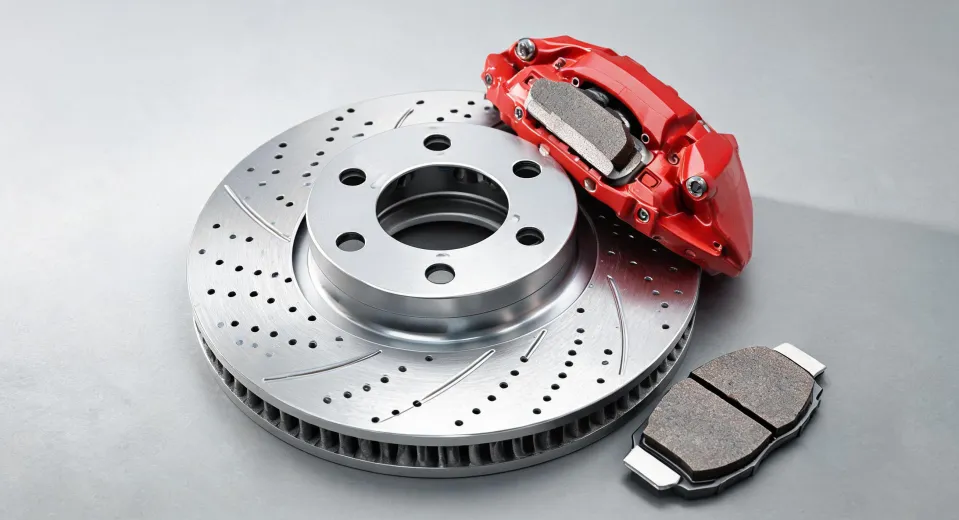
On the flip side, the Centric Parts 122.40017 brake drum and the Centric premium rotors I bought from the local supplier worked flawlessly. They were slightly more expensive than the online alternative I'd considered (about 15% higher unit price), but they came with a proper warranty, fit perfectly, and the local supplier even helped me understand what a control arm does (it connects the wheel hub to the vehicle frame—basically the suspension link). I'd asked him, 'What is a control arm?' and he took five minutes to explain it with a diagram. That kind of expertise is worth something.
My Lessons Learned
Here's what I now do differently—maybe it'll help you avoid my $450 mistake.
- Calculate TCO before comparing quotes. I have a simple spreadsheet: unit price + shipping + setup fees + potential rework/retur costs + time spent managing the purchase. The 'cheapest' vendor rarely wins.
- When buying branded parts like Centric, stick with trusted distributors. The Centric premium rotors and Centric brake drum 122.40017 are well-specified parts. If you get them from a vendor who can confirm fitment and handle returns, the premium is usually worth it.
- Ask 'what is a control arm?' if you don't know. I'm not a mechanic, but I've learned that asking basic questions upfront saves rework. The same applies to any technical spec—get clarity before you order.
- Use parentheses to remind yourself of things. (I now write 'verify fitment' in big letters on every order.)
Why Total Cost Thinking Matters for Your Fleet
Whether you're buying a Ford F150 oil filter, fog light switches, or a Centric brake drum, the lowest unit price is never the whole story. In my experience, a fairly reliable vendor with slightly higher prices will cost you less in the long run than a cheap vendor who can't get the details right. (Mental note: I need to share this spreadsheet with the rest of our admin team.)
So next time you're sourcing automotive parts, hesitate a little. Ask yourself: what's the total cost of ownership? And if you're unsure about a part, ask someone who knows—like a good supplier who can explain what a control arm does without making you feel stupid.
That's the approach that finally turned my purchasing from a cost center into a value driver. I wish I'd learned it sooner—but at least the lesson stuck.