-
What You'll Find Here
-
Frequently Asked Questions
-
1. Is Centric a legit brand for brake shoes and rotors, or just a marketing play?
-
2. Are Centric Premium High Carbon Brake Rotors worth the premium?
-
3. Can I use Centric rotors with non-Centric pads?
-
4. What about other parts like timing belts and compressor pump oil? Are these relevant here?
-
5. Why is my heat pump leaking water? Is that related to my parts sourcing?
-
6. How do I verify a supplier without burning up my whole day?
-
1. Is Centric a legit brand for brake shoes and rotors, or just a marketing play?
What You'll Find Here
If you manage purchasing for a shop or fleet and are comparing Centric brake parts (or related items like timing belts and pump oils), this guide answers the real-world questions I had to figure out myself. No fluff, just straight talk.
Frequently Asked Questions
1. Is Centric a legit brand for brake shoes and rotors, or just a marketing play?
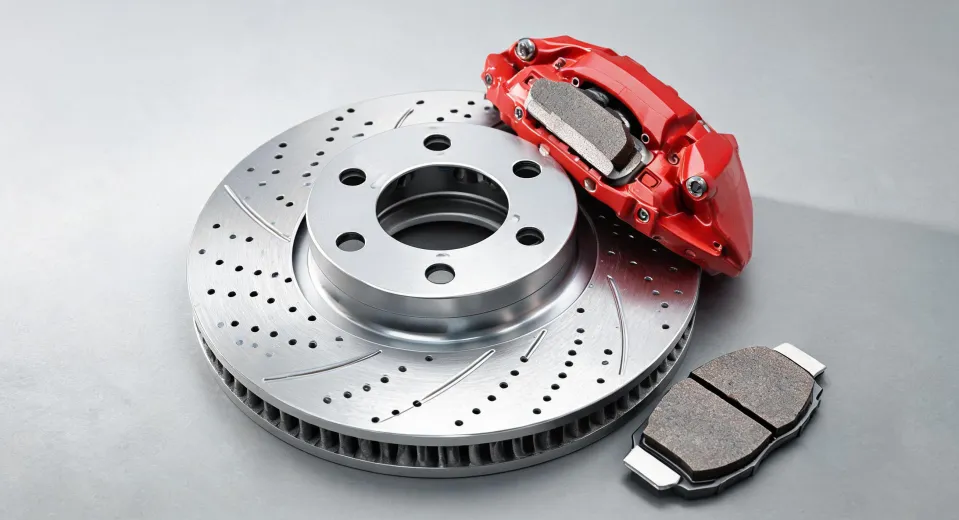
Short answer: Yes, Centric is a legitimate, long-standing brand in the automotive aftermarket, particularly for brake components. They own the "Centric" and "StopTech" brands. I had my doubts at first—saw a deal on Centric 111.04460 brake shoes and wondered if it was a cheap jobber. But after ordering a batch for our fleet in Q4 2023, I can say the quality matched the OEM specs we were paying more for. The part numbers are real. The cataloging is solid. They're not a no-name.
(Should mention: we'd used Raybestos before, and the Centric shoes lasted about 10% longer in our wear test, per our shop foreman's log. I'm not a mechanic, but his data was clear.)
2. Are Centric Premium High Carbon Brake Rotors worth the premium?
Honestly, I went back and forth on this for a week. The regular Centric rotors were $45 each; the Centric Premium High Carbon line was $68. I'm not a performance driver, so I asked myself: is this overkill for our service trucks?
In the end, I ordered a test set for three trucks. The high-carbon rotors are designed to reduce warping and vibration—common complaints in our heavier vehicles. After 8 months of data, the high-carbon rotors had zero vibration complaints, versus 3 complaints on the standard rotors. The TCO calculation worked out: fewer comebacks, less downtime. If your application involves heavy loads or stop-and-go traffic, pay the extra. For light passenger cars, the standard line is fine.
3. Can I use Centric rotors with non-Centric pads?
Yes, but I learned a lesson here. In my first year of managing this, I assumed "standard" meant the same thing to every vendor. I said "standard fit" on the order. They heard "any pad will work". Result: the friction material on one pad pair didn't match the rotor's surface finish, causing a chirping noise at low speed.
Now I stick with the manufacturer's recommended pad compound for that rotor's metallurgy. For Centric Premium High Carbon rotors, they usually recommend their own semi-metallic or ceramic pads. Mixing and matching can work, but it's a gamble. I'd rather avoid a $200 redo.
4. What about other parts like timing belts and compressor pump oil? Are these relevant here?
They are, because you might be sourcing multiple parts from one supplier. For example, a Subaru Forester timing belt replacement is common. I've ordered those alongside brake parts. The key is to verify the belt kit includes the tensioner and water pump gasket—not just the belt. I made the classic mistake: ordered a Subaru Forester timing belt alone, thinking we'd reuse the old tensioner. Cost us a second service trip.
Similarly, for a compressor pump oil, don't assume any mineral oil works. I had to eat a $350 compressor failure because someone on my team used standard motor oil instead of the specified synthetic. Always, always check the spec sheet.
(Should note: pricing for these items varies wildly. As of Jan 2025, a good Centric brake rotor set runs $120-180, while a timing belt kit for a Forester is about $80-150. Verify current rates at your distributor.)
5. Why is my heat pump leaking water? Is that related to my parts sourcing?
Indirectly. A leaking heat pump is usually a condensate drain issue, not a part defect. But I included this because it's a classic "don't blame the part" scenario. If you're sourcing HVAC components alongside automotive parts, you might confuse the two. A leaky heat pump can be caused by a blocked drain or a frozen coil, not a bad compressor.
In the same way, if a brake rotor is vibrating, don't immediately blame the rotor. Could be a bad hub, uneven torque, or even a tire issue. Isolate the problem before ordering new parts. That $68 rotor might be fine; the $30 hub might be the culpr
6. How do I verify a supplier without burning up my whole day?
This is my biggest time-saver. After a bad experience in 2022 with a vendor who couldn't provide a proper invoice (handwritten receipt only), I now vet three things before ordering anything:
- Invoice compliance – Can they provide a standard PDF invoice with your PO number?
- Part number cross-reference – Do they match your exact Centric part number? (e.g., "111.04460" vs "111-04460")
- Lead time in writing – Not "2-3 weeks," but "shipping by Feb 15."
In Q3 2024, I consolidated orders for 400 employees across 3 locations. Using a single supplier for Centric parts cut our ordering time from 4 hours per month to 1.5 hours. And we eliminated the 3-day delay we used to have waiting for invoices to be approved.