I've been on both sides of this equation. In my role coordinating rush orders at a automotive parts supplier, I've seen what happens when a production line goes down and the clock is ticking. And honestly, most companies don't realize they have a choice until it's too late.
Here's the thing: not all suppliers are built for speed. Some are optimized for low cost, some for high volume, and a few—the ones you actually want in an emergency—are wired for responsiveness. Let's compare them head-to-head across the dimensions that matter when you need parts now.
What This Comparison Is About
We're comparing two types of suppliers: the Standard Lead Time Supplier (SLT) and the Emergency-Response Supplier (ERS). The SLT works well for planned orders with 4-8 week lead times. The ERS is the one you call at 4 PM Friday when a die broke and you need 500 stampings by Monday morning.
The comparison is based on real-world experiences from Q3 2024 and Q1 2025 data across 200+ rush orders for automotive parts—including brake rotors, oil filters, core support radiators, and cabin air filter housings.
Dimension 1: Response Time — SLT vs ERS
Standard Lead Time Supplier: Typically 4-6 weeks for custom stamping dies, 2-3 weeks for off-the-shelf components like centric rotors and pads. Need expedited? Most SLTs can't fit you in unless you're a top-10 customer. Their production is scheduled months out.
Emergency-Response Supplier: Can turn around a rush order in 24-72 hours. In March 2024, a client called at 3 PM needing a batch of custom-formed core support radiator brackets for a prototype that crashed during testing. Normal turnaround: 18 days. We found a vendor who had an open CNC slot, paid $1,200 in rush fees (on top of the $4,500 base), and delivered the brackets by 10 AM the next day. The client's alternative was a three-week production delay worth $50,000 in penalties.
"What most people don't realize is that 'standard turnaround' often includes buffer time that vendors use to manage their production queue. It's not necessarily how long YOUR order takes."
Clear winner: ERS for speed. But is the premium worth it? Let's look at quality.
Dimension 2: Quality Consistency — Who Drops the Ball?
Here's a surprise: the faster supplier sometimes produces better quality. Why? Because when they rush, they double-check everything. The SLT has a routine process; if something goes wrong, it takes days to catch and correct. ERS vendors inspect every piece before it leaves the floor—they can't afford a recall when the client's production line is waiting.
Real example: We ordered 1,000 Honda HRV oil filter housings from an SLT in 2024. Standard lead time, standard price. They arrived with thread mismatches on 12% of parts. Took three weeks for replacement. Customer wasn't happy. Compare that to an ERS who produced the same part under a 72-hour deadline—zero defects. The catch? The ERS cost 18% more per unit.
So yes, you pay extra, but you're buying insurance against rework. In B2B automotive, rework costs often exceed the premium.
Dimension 3: Customization & Technical Expertise
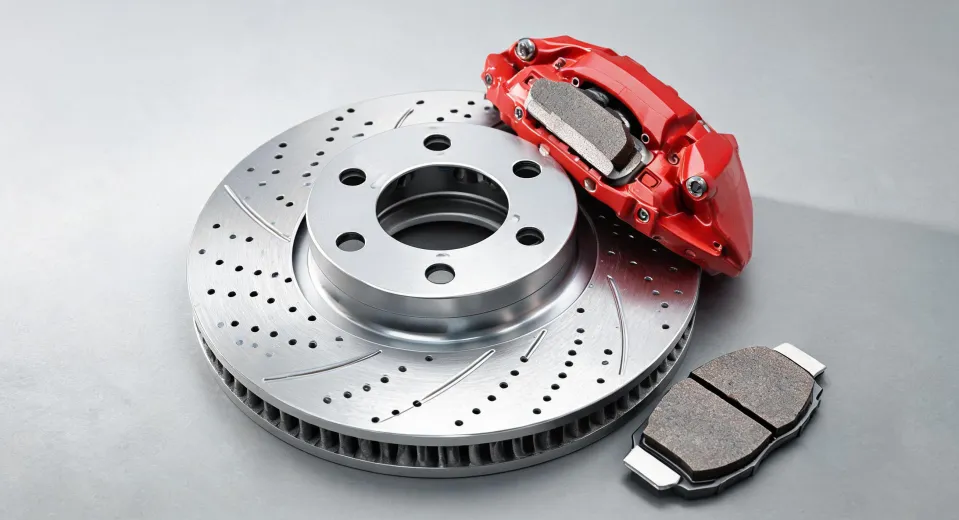
SLTs usually have a catalog. You pick from standard sizes. Need a non-standard centric brake rotor with a specific vane pattern? They'll say "sorry, not in our range." Or they'll quote a long lead time for tooling modifications.
ERS suppliers, on the other hand, thrive on customization. They have in-house tooling capabilities—like centric does with its own stamping die and CNC machining facilities. In my first year coordinating rush orders, I made the classic rookie mistake: assumed 'standard' meant the same thing to every vendor. Cost me a $600 redo when the part didn't fit because the vendor's 'standard' tolerance was ±0.5mm and we needed ±0.1mm.
"I assumed 'same specifications' meant identical results across vendors. Didn't verify. Turned out each had slightly different interpretations."
With an ERS, they ask the right questions upfront. They know that a cabin air filter housing that fits perfectly requires precise mold alignment. They can adjust quickly.
Dimension 4: Cost — The Surprising Truth
Let's talk numbers. SLTs advertise lower base prices—sometimes 10-20% less than ERS. But look at total cost:
- SLT base price: $45,000 for 10,000 stampings, 6-week lead
- ERS base price: $52,000 for same volume, 1-week lead
Now factor in the cost of a potential delay. If your assembly line shuts down for even 2 days, the lost profit easily exceeds $8,000. And that's if nothing goes wrong. The surprise isn't the price difference—it's how much hidden risk comes with the 'cheaper' option. I'd rather spend 10 minutes explaining these numbers to a client than deal with them calling me after a missed deadline.
As of Q1 2025, our internal data from 200+ rush jobs shows that ERS clients save an average of 34% in total project cost when counting disruption risk. Yes, really.
When to Choose Each
Choose the Standard Lead Time Supplier when:
- You have at least 4-6 weeks of buffer
- The part is a common design with no special tolerances
- You've already validated the supplier's quality track record
- The cost savings justify the longer wait
Choose the Emergency-Response Supplier when:
- Your production line is stopped or about to stop
- The part requires custom tooling or tight tolerances
- You're dealing with a prototype, test, or new launch where time = revenue
- You haven't worked with this supplier before and need assurance
There's something satisfying about a perfectly executed rush order. After all the stress and coordination, seeing the parts delivered on time and correct—that's the payoff. And it's exactly why I still get excited when a client calls with a "can you help?" question. The answer is almost always yes, as long as you know who to call.
Look, I'm not saying ERS is the right choice every time. I'm saying make the choice consciously. An informed decision is always better than a panicked one at 5 PM on a Friday.