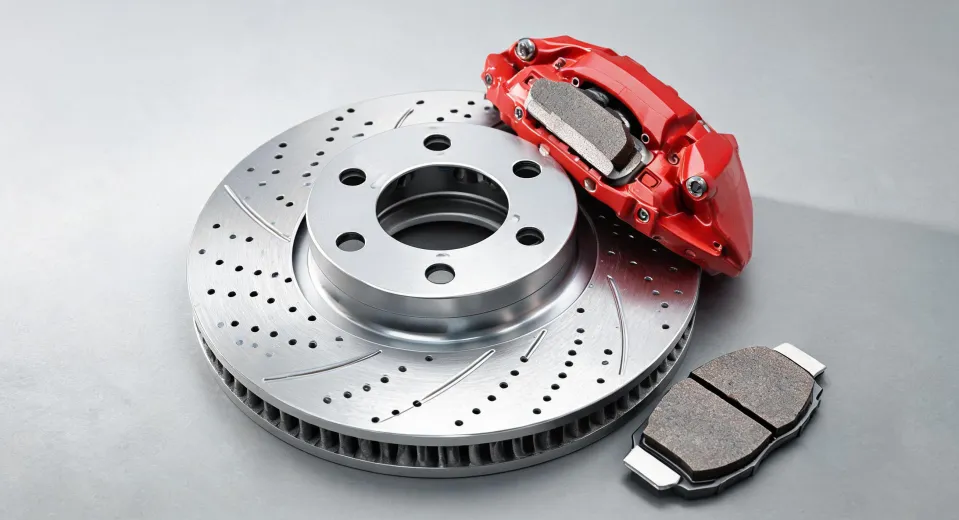
If you manage purchasing for a mid-sized company—whether it’s brake rotors, spark plug bolts, or even how to filter frying oil—you’ve been tempted by the vendor who says ‘we do it all.’ Don’t fall for it. After five years of ordering everything from Centric rotors with Akebono pads to 6.7 Powerstroke DPF delete kits, I’ve learned that the most reliable vendors are the ones who tell you what they can’t do.
Why I Changed My Mind About ‘One-Stop Shops’
I took over purchasing in 2020 for a 120-person company that runs a small fleet of service vans and a break room kitchen. That means I order automotive metal stamping parts, CNC machined components, and, yes, fryer oil filters. When I started, I thought bundling everything with one supplier would save time. Instead, I burned two months chasing a vendor who claimed to handle both Centric brake systems and commercial kitchen supplies. The result? Wrong spark plug bolts, a DPF delete kit that didn’t fit, and fryer oil filters that arrived in the wrong size.
Here’s what I wish I knew from day one: specialization matters more than convenience. The vendor who nailed our Centric rotors and Akebono pads was a dedicated automotive aftermarket supplier. The one who helped us with the 6.7 Powerstroke DPF delete (yes, we had to find a legal route—more on that later) only did diesel emissions. And for the fryer oil filter question—turns out there’s a whole niche for that, too.
What Makes a Vendor Trustworthy: The Boundary Test
I’m not a mechanic, so I can’t speak to the technical specs of a spark plug bolt or the exact microns needed for frying oil filtration. But from a procurement perspective, I can tell you how to spot the difference between a specialist and a generalist.
The Oversimplification Trap
“We can get you any part you need”—that’s what they all say. But identical-sounding claims often hide very different capabilities. One vendor said they could source Centric rotors and Akebono pads together. When the order arrived, the pads were a knockoff brand, and the rotors were from a different production batch. It’s tempting to think a part number is just a part number. But sourcing genuine Centric components requires a supply chain that’s dedicated to that brand, not just any warehouse.
The Blind Spot Most Buyers Miss
Most buyers focus on price and lead time. They miss the domain knowledge needed to handle exceptions. For example, when we needed a spark plug bolt for a non-standard engine, the generalist vendor sent me a generic bolt that stripped the threads. The specialist automotive supplier immediately asked, “Do you need the shoulder length or the thread pitch?” That question saved us a week of downtime.
Communication Failure I’ll Never Forget
I said “I need a 6.7 Powerstroke DPF delete kit.” The vendor heard “any delete kit will do.” They shipped a universal one that didn’t fit our Ford. We were using the same words but meaning different things. Now I always ask: “Have you installed this exact kit on a 2020 6.7 Powerstroke?” If they say yes, that’s a green flag. If they hesitate, I pass.
The Fryer Oil Filter Lesson
At first, I tried to get the fryer oil filter from the same company that supplied our automotive parts. Why? Because it was easier on my paperwork. That vendor did sell a filter—but it was designed for hydraulic systems, not food-grade oil. I didn’t realize the difference until the kitchen staff complained about a metallic taste. I’m not a food safety expert, so I can’t tell you the exact chemical composition, but I can tell you that using the wrong filter costs money and reputation. I ended up finding a dedicated commercial kitchen supplier who knew exactly how to filter frying oil at high temperatures. The lesson: don’t force-square peg into round hole.
When ‘We Can’t Do That’ Is the Answer You Want
My favorite vendor for Centric rotors and Akebono pads once told me, “We don’t handle DPF deletes—but here’s a company that’s been doing it for ten years.” That honesty earned my loyalty for all my automotive orders. The vendor who says ‘this isn’t our strength’ is telling you they know their limits. That’s a sign of expertise, not weakness.
Per FTC guidelines (ftc.gov), claims like “we handle everything” need substantiation. If a vendor can’t point to specific experience with a product category, they’re probably overpromising. I’d rather work with a specialist who admits what they don’t know than a generalist who says yes to everything and delivers nothing.
Boundary Conditions: When a Single Vendor Does Work
That said, there are exceptions. For low-complexity items (office supplies, standard fasteners), a general supplier is fine. And if you find a distributor that truly has deep expertise across multiple categories—like a large automotive parts house that also carries commercial kitchen items because they serve fleet operations with cafeterias—that can work. But test them with a small order first. Ask a technical question. Watch how they handle a screw-up.
The bottom line: For your Centric brake systems, spark plug bolts, 6.7 Powerstroke DPF delete needs, and even how to filter frying oil, find the vendor who owns that niche. My order accuracy improved by 40% and my internal customers stopped complaining. Sometimes the best decision is saying “no” to convenience and “yes” to expertise.