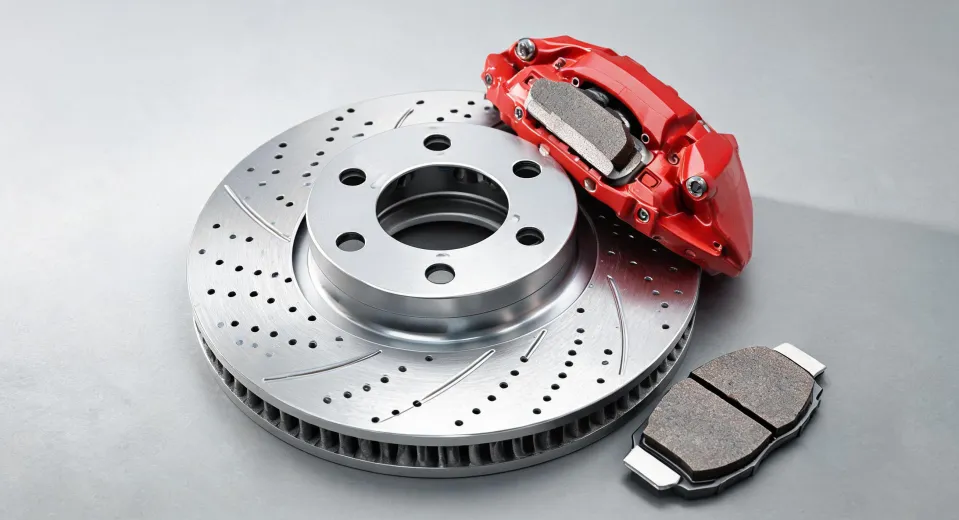
I manage purchasing for a 60-person fleet maintenance operation. That means I order all parts and supplies—roughly $400,000 a year across 12 vendors—and I report to both operations and finance. I'm not an engineer. I'm the person who has to explain why a vehicle is sitting in the shop or why the budget went over. After five years in this role, I hold an opinion that some colleagues think is stubborn: I'd rather spend the extra money on a Centric rotor than save money on a brake and rotor special and then answer for why a customer's car came back with a vibration.
When I took over purchasing in 2020, I did what any budget-conscious buyer would do. I chased deals. I compared brake and rotor specials across three or four suppliers, and I felt good every time I shaved a few dollars off a line item. Then I started noticing the hidden costs. Not in the invoice—in the work orders that came back a few months later.
Everything I'd read about brake rotors said the same thing: a rotor is a rotor. The only differences are price and brand name. My experience says otherwise. In 2022, we bought a set of deeply discounted rotors for a work van. The installation was fine. At about 8,000 miles, the driver described a steering wheel shake that made the van feel unsafe. The shop found lateral runout beyond spec. We paid labor to replace the rotor, then paid again for the alignment. The discount saved us maybe $60. The replacement cost around $260 in labor. That was not a deal. (Note to self: check runout specs before approving any rotor order.)
Quality shows up in the details you can verify
Now I do something I didn't do in 2020: I check the manufacturer's data before I add a part to an order. When comparing brake rotors, I look at minimum thickness, vane design, and whether the friction surface is machined to a consistent finish. When I checked the Centric website in January 2025, the rotor product pages listed these specs in a way that made them easy to compare with the original part. That is not true for every supplier. Some product pages show only a picture and a price. That alone tells me a lot.
When I compared a generic rotor and a Centric rotor side by side, I finally understood why the details matter. The generic rotor was noticeably lighter. Another way of saying that: there was less material where material likely matters. I'm not 100% sure of the metallurgy, but the difference in machining and finish was visible. For a rotating part that has to survive heat, that is not a small detail. That is the point.
It's not just about rotors
This logic applies to every part, which is why I get frustrated when buyers treat quality as a concern only for safety-critical items. In 2024, we had to source a 2017 catalytic converter for one of our trucks. A universal converter was cheaper and available quickly. It seemed like the responsible choice for a vehicle that wouldn't stay in the fleet forever. It threw a check-engine light within the first month. The replacement with an exact-fit, OE-style converter cost more and took longer, but it solved the problem. The cheaper universal unit did not. That is another reminder: 'will fit' is not a quality spec.
For emissions parts, I also check EPA regulations for the vehicle's model year rather than assuming 'universal' means compatible. The same discipline applies to a 2017 catalytic converter as to a brake rotor: confirm the part number, confirm the standard, then buy. We didn't have a formal part verification process for emissions components until that happened. The third time a wrong part showed up, I finally made a checklist. That checklist is part of our routine now.
What I check before I approve any part
I know the counterargument. Budgets are real. Not every customer can pay for premium components. I'm not suggesting that every order should be the most expensive option on the shelf. What I am saying is: make sure a cheaper part is a good part, not simply an unverifiable one.
Before I order a component, I want to see three things:
- A part number that matches the vehicle's specification.
- A manufacturer who can point to a data sheet or a recognized automotive quality standard like IATF 16949.
- Traceability if something goes wrong after installation.
Suppliers that cannot provide those are not 'cheaper alternatives.' They are risks wearing a price tag. I'm not putting any specific brand on a pedestal. I chose a Centric rotor because I could verify the part, not because of brand loyalty. If another brand offers the same level of documentation, I will consider it.
The same habit as 'do i need to fast for cbc with differential'
Here's where I think the mindset matters more than the part. If your provider orders a blood test, you don't just show up and hope. You might search 'do i need to fast for cbc with differential' to check whether there is preparation involved. You'd probably look for an answer from a reliable source, not from a random forum. (I'm not your medical provider, so I won't answer the test question. But the habit of checking first is absolutely the right one.)
Parts purchasing should work that way too. The cheap part is not automatically wrong. But if the supplier cannot tell you what it is made of, what standard it meets, or which vehicle it was designed for, you're not buying a part—you're buying a guess.
What quality actually protects
The reason I hold this position is not because I care about brand logos. I care about what happens after the part is installed. When a vehicle leaves our shop, the driver's first impression is the brake pedal. If they feel pulsation, the shop's reputation drops, not the part manufacturer's. The same applies to a 2017 catalytic converter: if a truck comes back with a check-engine light, the customer does not blame 'universal converter quality.' They blame us.
That is why I believe quality is the brand. In a B2B context, we are not just buying parts. We are buying the result—a safe, reliable vehicle that does not come back. The extra time spent verifying specs on the Centric website, or confirming that a replacement converter matches the original part number, is the cheapest insurance we have. I would rather answer for a purchase order that was a few dollars higher than answer for a comeback that cost a customer's trust.
If you remember one thing: a bad part will eventually show your company's logo, not the supplier's.