-
The Short Version
-
What I Actually Do Before Approving Parts
-
Centric C-Tek Rotors vs. Centric High Carbon Rotors
-
The “Silence Muffler Tip” Doesn’t Silence Anything by Itself
-
GM Radiator Replacement: It’s the Details, Not the Core
-
Why Do Cops Touch Your Tail Light?
-
The Procurement Takeaway
-
Where This Doesn’t Apply
The Short Version
Short version: If you’re buying aftermarket auto parts—from a Centric C-Tek rotor to a GM radiator—stop trusting product names and start inspecting the physical part. Our reject rate on first deliveries dropped from 9% to under 3% in 2024 after we made dimensional checks non-negotiable. That’s the same logic behind the police habit of touching your tail light (why do cops touch your tail light? To verify the trunk and leave a fingerprint, not to conduct a search). It also explains why I still check Centric high carbon rotors, a “silence muffler tip,” and any radiator that claims “direct fit.”
What I Actually Do Before Approving Parts
I’m a quality/compliance manager at an automotive aftermarket parts company. I review sample batches before they reach customers—roughly 200+ part numbers a month. In Q1 2024 alone, I rejected 14 incoming batches for dimensional drift. That’s not because suppliers are careless; it’s because “standard tolerance” means different things at different plants.
I don’t have hard data on every supplier’s internal defect rate, but based on five years of audits, my sense is 8–12% of first deliveries miss at least one critical dimension. The lesson that’s worth more than any spec sheet: you can’t verify quality by brand name alone. I’ve rejected parts from well-known brands and approved parts from shops I’d never heard of. The part number tells me what it’s supposed to be. The physical check tells me if it’s any good.
Centric C-Tek Rotors vs. Centric High Carbon Rotors
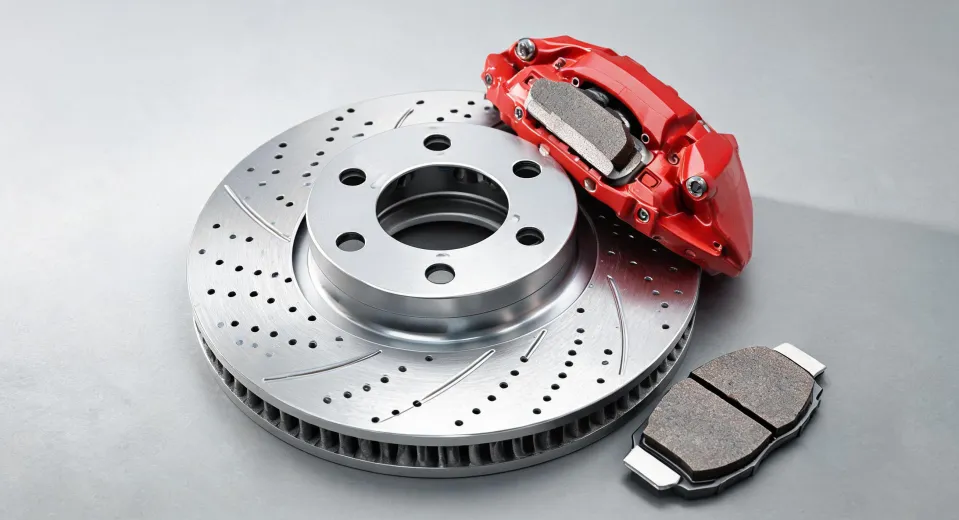
Let’s deal with the two Centric rotor lines people ask about most: Centric C-Tek rotors and Centric high carbon rotors. They’re often treated as competing options, but they’re not really in the same category.
C-Tek rotors are built around corrosion resistance and predictable street performance. On a daily driver that sits outside, the coating keeps the hub from turning into rust art. High carbon rotors use a different iron formula with extra carbon content. That changes how the rotor handles heat. In our dyno runs, the high carbon rotor showed less heat checking after repeated stops from 80 mph. Stopping distance was nearly the same. The difference showed up in how the part survived, not how it felt at the pedal.
Here’s where buyers get tripped up: C-Tek doesn’t mean “cheaper version of high carbon.” It’s a separate spec. If you put either rotor on a truck with a dragging caliper, it will still warp. No rotor survives a mechanical problem. When I compared both side by side—same calipers, same pads, same 30-stop cycle—I finally understood why the high carbon line costs more. It’s not a marketing bump. It’s material cost plus more stable metallurgy in hard use. On a fleet vehicle that hauls or tows, that difference is way bigger than it looks on the bench.
The “Silence Muffler Tip” Doesn’t Silence Anything by Itself
If you’re here because you searched “silence muffler tip,” I get the appeal. The phrase sounds like a product that fixes exhaust drone. It doesn’t. A muffler tip is an exhaust outlet, not a muffler. If your truck has a drone at 2,000 rpm, swapping the tip won’t fix it. The tip can shift the tone slightly, but it can’t create the attenuation that a muffler’s internal chambers provide.
Good tips have a double-wall shell or a rolled edge. Bad ones are just a chrome tube with a clamp. The inside diameter matters too—if it’s too small for your exhaust flow, it creates a restriction that can make drone worse. What I actually check on a muffler tip is wall thickness and weld cleanliness. A thin tip can rust through in two winters. A poor weld can leak and make noise worse. And if a listing says “silent” or “no drone,” I ask for the test data.
According to the FTC’s advertising guidance (ftc.gov), claims that are likely to affect a purchase must be truthful and substantiated. If a $40 tip claims “silent,” the vendor should be able to show the decibel measurement. As of January 2025, I’ve yet to see one.
GM Radiator Replacement: It’s the Details, Not the Core
I’ve lost count of how many “direct fit” GM radiator replacements we’ve audited. The most recent one, from our Q4 2024 incoming batch, had the right core and the right overall width. But the left mounting tab was 3 mm out of position. On the bench, 3 mm doesn’t look like anything. On the vehicle, it made the cooling fan shroud bind.
In my first year, I made the classic spec error: I trusted “direct fit” as a guaranteed bolt-on. I saved about $80 on a radiator, then spent $400 on a custom bracket and an extra day of labor. The “save” was fake. We also saw the same part number from two different runs with different tank wall thicknesses. That’s why we don’t rely on sample approval; every new batch gets the same checks.
When you’re sourcing a GM radiator replacement, check the tank material, inlet and outlet positions, transmission cooler line threads, and all four mounting points. Don’t just measure the core. If you’re buying for a production schedule, get the part in hand before you commit, not after.
Why Do Cops Touch Your Tail Light?
The quick answer: It’s usually a trunk check and an evidence habit. An officer taps the taillight to see if the trunk is fully closed (a loose lid changes the vibration) and to leave a fingerprint on the vehicle. It’s not a search, and it’s not probable cause by itself. Some departments teach it as part of high-stop protocol; others don’t. The fingerprint part matters more when an officer is working alone.
I don’t have hard data on how often this is taught or used; it’s not tracked nationally. Take this with a grain of salt, but the officers I’ve talked to describe it as a quick tactile reassurance check. That’s exactly what component inspection should be: fast, physical, and low-cost.
The Procurement Takeaway
I’m a big believer in efficiency. In 2024, we moved from manual calipers to a coordinate measuring machine and go/no-go fixtures. Inspection time per batch dropped from 45 minutes to about 12. It’s not about replacing judgment; it’s about freeing it up for parts that need a human decision.
But efficiency cuts both ways. A fast inspection that checks the wrong dimensions is worse than no inspection. So we built a checklist from field failures: rotor runout, vane wall thickness, radiator tank weld, tab positions, muffler tip weld penetration, thread pitch on cooler lines. That sounds basic, but it caught a 0.15 mm bore diameter issue in Q4 2024 that would have meant reworking 8,000 units.
For B2B buyers, the same idea applies. If your supplier can’t provide dimensional results or a PPAP, do your own incoming inspection before you commit the production line. You don’t necessarily need a $50,000 CMM. A caliper, a go/no-go gauge, and a torque wrench will catch most real-world problems.
Bottom line: whether you’re looking at Centric high carbon rotors for a fleet, a “silence muffler tip” for a custom exhaust, a GM radiator for a repair shop, or a cop’s tap on your tail light, the quick physical check beats the confident claim. Build that into your process and you’ll stop paying for mistakes you could’ve caught in two seconds.
Where This Doesn’t Apply
Now the honest caveats. I don’t have controlled test data on every rotor family; my comments on C-Tek vs. high carbon come from our audit samples, not long-term fleet trials. A high carbon rotor won’t fix a dragging caliper. A “silence muffler tip” won’t silence a mechanical exhaust leak. And a tail light tap isn’t a legal standard—it varies by department. If you’re making an OEM-level decision, run your own validation. My job is to tell you where to look, not to sign off on your part from a blog post.