It was 7:10 on a Tuesday morning in March 2024 when my phone rang. A fleet manager I'd worked with for years opened with a line that still makes me cringe: "Your high powered alternator just tore a belt off our van. We need it back on the road by Friday."
I didn't know yet whether it was the alternator. I also didn't want to find out, because I was the one who'd sourced it at a bargain price.
Here's what led up to that call.
The Order That Started It
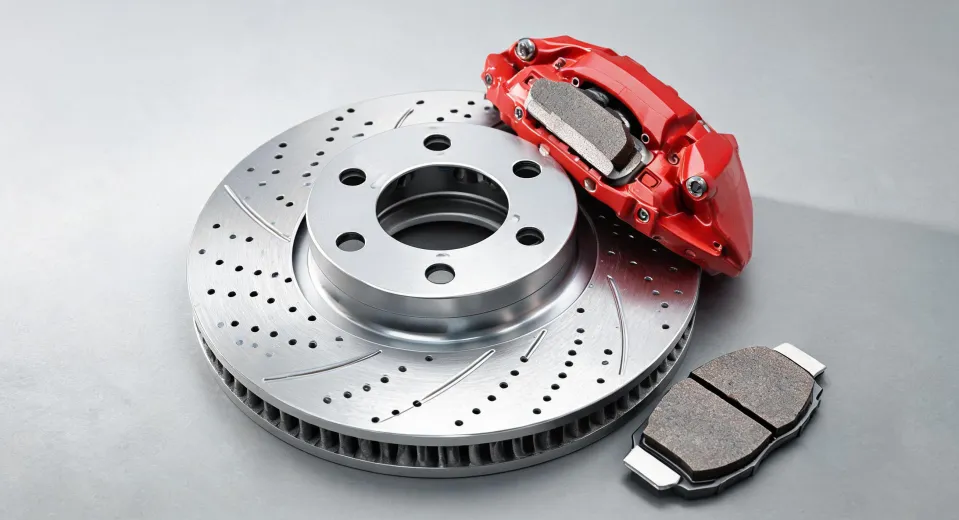
In late February, our shop got an order from that same fleet: brake shoes for a set of their vans, plus an alternator and a water pump for one high-mileage unit. On the brake shoes, I didn't hesitate. Centric 111.02820. Centric brake shoes have been a reliable choice for years. They're not the cheapest shoe on the shelf, but they install right and stop a van the way it should. Consistency is the whole game in fleet work.
For the alternator and the water pump, though, I let budget pressure talk me into a different decision. The customer said they were "shopping around." My manager said, "See if you can sharpen the invoice." I searched, compared, and found a no-name high powered alternator listed for about 30% less than the rebuilt unit we usually sold. I also found a transfer water pump that was 25% cheaper than the OEM-style pump we normally used. I remember thinking: a high powered alternator is a high powered alternator, right? A pump moves coolant. How risky can it be?
I ignored a couple of red flags in the reviews. One review on the alternator said, "Fit okay but check pulley alignment." Another on the pump said, "Works, but shipped with a cheap gasket." I told myself those were installer issues.
I placed the Centric brake shoe order first. I can still picture the screen: open my Centric login, add part numbers, submit. The login worked fine. The order confirmed. Then I went to the other supplier's site and placed the "bargain" order. It felt like I was doing my job — saving money while keeping quality where it mattered.
The Failed Belt
Three weeks later, the van came back. The serpentine belt was shredded into what our technician called "black spaghetti." There was coolant sprayed across the engine bay, and the high powered alternator was covered in it. The obvious suspect was the alternator. At least, that's what I wanted to believe.
Here's where I almost made a second expensive mistake.
The technician started a normal failure inspection instead of listening to my theory. He checked the belt, then the tensioner, then the idler pulleys, then the alignment. And then he found it.
The transfer water pump — the cheap pump I'd ordered — had a casting flash on the mounting face. Not enough to notice during installation. Just enough to let the pump pulley sit out of plane by maybe 2 mm. That small offset made the belt run at an angle. Every time the engine accelerated, the belt walked toward the edge of the pump pulley. The high powered alternator was just sitting there, doing its job. The pump was slowly killing the belt.
Oh, and the coolant spray? That was from the cheap pump's gasket, which had already started weeping. The belt got wet, lost grip, and then a chunk of it caught and tore everything apart.
So, What Causes a Serpentine Belt to Break?
I keep a list now. If you're in charge of a fleet or a shop, this is the part I'd want you to write down.
- A bad tensioner. The most common cause in our shop. If the spring is weak or the pulley is rough, the belt can't stay tight and starts to slip. Slipping builds heat, and heat destroys belts.
- A seized or misaligned pulley. Alternators, water pumps, idlers — any accessory pulley that can't spin freely puts a huge load on the belt. A seized water pump can break a belt within minutes. A 2 mm misalignment can destroy one in days.
- Age and heat. Belt manufacturers generally recommend replacement somewhere in that 60,000 to 100,000 mile range. Heat from exhaust components makes belts harden and crack. We replace them on time, not just when they look bad.
- Fluid contamination. Oil, coolant, or power steering fluid soaking into the belt makes it swell, soften, and fail. In our case, the cheap pump's gasket added coolant to the list.
- A damaged belt path. A crankshaft pulley that's been knocked out of alignment, or a harmonic balancer with a torn ring, can cause vibration that kills belts fast.
The high powered alternator wasn't the problem. A cheap transfer water pump and a gasket I dismissed as a minor detail were the problem.
The Real Cost of the "Savings"
Let me be specific with numbers, because this is the part that changed how I buy parts.
- The cheap transfer water pump: $79
- The discounted high powered alternator: $158
- The difference between those and the parts we normally sold: about $130
- What the belt failure cost: one new serpentine belt, one tow, two extra labor hours, a second water pump, and a full coolant flush. Total: $1,124.
So we saved $130 and spent $1,124. That math is not a close call. It isn't even a ballpark business decision. It's a mistake.
The Centric brake shoes, by comparison, were "expensive." A no-name brake shoe set cost $15 less per axle. But we never had a brake shoe failure from Centric. We never had a pull, a noise complaint, or a comeback. The extra $15 was basically insurance. The $79 water pump was a liability.
Look, I'm not saying every budget part is bad. Some are fine, especially for low-stress applications. But a part in the accessory drive / serpentine belt path is not where I want to pinch pennies. A brake rotor can fail noisy. A belt failure can leave a driver stranded or worse.
The Checklist That I Now Use
After that March disaster, I made a simple checklist. It's pinned next to my monitor. Our shop has used it to catch 47 potential issues in the past eighteen months.
- Belt condition: cracks, glazing, fraying? If replaced, check the tensioner at the same time.
- Tensioner movement: smooth through the whole range, no sticking, no metal shavings.
- Idler pulley bearings: spin by hand, listen for grinding.
- Pulley alignment: use a straightedge across all accessory pulleys. If you can see daylight under one edge, fix it before it becomes a call.
- Fluid leaks: if any seal or gasket is weeping, it's not "normal." Replace it and clean the belt path.
- Paperwork: record the part number and supplier. If it fails again, we know who was responsible.
This failure happened in early 2024. Part prices may have changed since then, but the failure math won't. The checklist has saved us a lot more than $1,124 since.
Bottom Line
I'm still the guy who places the orders. I still use my Centric login when it's time for brake shoes, and I still recommend Centric 111.02820 brake shoes to the same fleet. The brake part of the order never caused a headache.
But I no longer buy an alternator or a transfer water pump based on a price tag. I buy based on the total cost of a failure. Here's the thing worth remembering: the cheapest part is only cheap until it breaks. And in a serpentine belt system, breaking something can mean breaking the whole drive.
So if you're asking what causes a serpentine belt to break, start with the tensioner, check the belt path, and don't trust a discount part just because it looks new. Ask me how I know. Actually, don't. It's a $1,124 story.