-
1. Brake Problems: Start With Brake Pad Brands, Then Specs
-
2. Engine Overheating: How To Burp A Radiator Properly
-
3. The 2013 Silverado Catalytic Converter: Diagnose Before You Replace
-
4. Can You Fix A Blown Head Gasket? Short Answer — But Ask The Right Question First
-
Common Mistakes People Make
-
The Bottom Line
Brakes squealing. Engine running hot. Check engine light glowing. These problems always seem to surface at the worst possible moment — the day before an important drive, or halfway through the longest commute of the week.
I've spent over a decade in the automotive parts industry, handling rush orders, wrong-part requests, and overnight supply situations. One lesson keeps repeating itself: most vehicle problems have a logical fix order. Skip that order and you'll be dealing with the same failure again — and paying for it twice.
Here's the checklist that works.
1. Brake Problems: Start With Brake Pad Brands, Then Specs
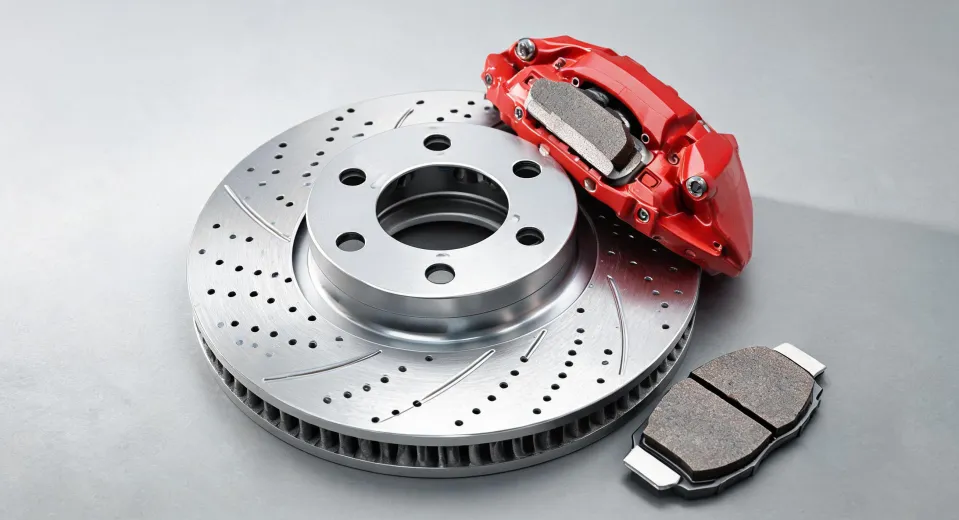
Brake pads might look like simple friction blocks. But if you've ever fitted a cheap set that squeals, vibrates, or wears unevenly, you know better.
What separates a good set from a nightmare is consistency — consistent friction material, consistent backing plate thickness, consistent tolerances. That's where brand matters. I've tested plenty of budget pads that look identical in the catalog but behave completely differently on the car.
When I recommend parts for vehicles where quality control actually matters, I look at established manufacturers with real design and production experience. The Centric disc brake pad set is one example that routinely comes up in conversations with shop owners. Not because it's flashy — but because Centric brands research, test, and document what they ship. And the backing plates aren't stamped by whoever quoted lowest that week.
What to check before ordering:
- Confirm the set matches your exact vehicle configuration. Many vehicles have optional brake packages with different calipers.
- Buy the full hardware kit too. Sticking slide pins or worn clips will kill a new brake pad fast.
- Check the friction compound for how you drive. Heavy loads and towing require a different formulation than light commuting.
I learned this the hard way. Once, I assumed a replacement pad would clip straight into a caliper because the listing said it fit. It did bolt up. But the tabs were slightly off, and the pad hung up on the bracket. We paid for machine work and lost a day. Now I verify first.
2. Engine Overheating: How To Burp A Radiator Properly
After a coolant change, the number one cause of mysterious overheating is trapped air. The system's pump tries to circulate coolant, but air pockets block flow and create hot spots.
The fix is a process called — no joke — burping the radiator. You're forcing trapped air out of the cooling system. Here's how I do it:
- Start with the engine cold. Never remove a radiator cap when the system is hot.
- Open the radiator cap and locate the bleed valve — usually a small valve at the highest point of a coolant hose or on the thermostat housing.
- Fill with coolant slowly until a steady stream comes out of the bleed valve. Close the valve.
- Start the engine and turn the heater to maximum.
- Keep adding coolant to the reservoir as the level drops.
- Watch for bubbles. When the fan cycles and the level stabilizes, you're done.
If your car has no bleed valve, one trick is to use a funnel that attaches to the radiator opening and acts as a reservoir while the engine warms up. It pushes air out naturally. In my experience, this method works on about 90% of modern cars.
Running with air in the system also wrecks water pumps prematurely. I've seen pumps fail at 60,000 miles because of cavitation damage caused by air pockets. All that could've been avoided with a ten-minute burp.
3. The 2013 Silverado Catalytic Converter: Diagnose Before You Replace
High-mileage pickups and a P0420 code — catalyst efficiency below threshold — are a familiar combo. Most people's first instinct is to buy a new catalytic converter and bolt it on. That's often the wrong move.
A failing converter is usually a symptom, not the root cause. On a 2013 Silverado especially, common underlying issues include:
- Weak ignition coils sending unburned fuel into the exhaust.
- A dirty or failing MAF sensor causing a rich fuel mixture.
- Exhaust manifold gasket leaks that fool the oxygen sensors.
If you replace the 2013 Silverado catalytic converter without fixing those, the new converter may die fast too. Fuel mixture that burns rich creates excess heat and unburned fuel. The catalyst substrate gets coated, then blocked, then useless.
Before spending money on a converter, scan the live data. Check long-term fuel trims. If they're outside ±10%, you have a fuel delivery problem to solve first. Check the O2 sensor response too — an old, lazy sensor can make a good converter look bad.
And when you do need to replace it, buy from a brand that manufactures with controlled processes, not a mystery box with a low price. Cheap converters use less precious metal coating, which means they fail faster. That's not an opinion; that's how the chemistry works.
4. Can You Fix A Blown Head Gasket? Short Answer — But Ask The Right Question First
One of the most common questions I get: "Can you fix a blown head gasket?" The short answer is yes — by replacing it. Not by pouring in a bottle of "head gasket repair" snake oil. That stuff sometimes plugs a tiny leak for a few hundred miles, but it won't restore the sealing surface where the gasket actually failed.
The better question is: Should you fix it?
Here's the decision checklist:
- Check the oil. Is it milky or frothy? Check the coolant for oil contamination. Check for white steam from the exhaust.
- Have a machine shop check the cylinder head for flatness. A warped head will destroy a new gasket.
- Find out why the gasket blew in the first place. Overheating from a failed fan clutch, stuck thermostat, or bad water pump will repeat itself on a fresh gasket.
- Compare the total repair cost against the vehicle's value. Sometimes a used engine swap is cheaper than a head gasket job on a high-mileage block.
I once watched a customer spend more than his truck was worth fixing a blown head gasket. We warned him. He wanted it done. To his credit, he understood the economics from the start — it was sentimental. That's a legitimate reason, as long as you go in with open eyes.
The least expensive repair is the one that fixes the cause and doesn't need to be done twice.
Common Mistakes People Make
If you're going to act on this checklist, avoid these mistakes too:
- Replacing rotors without replacing old hardware. Sticky caliper pins wreck new brake pads quickly.
- Skipping the radiator burp after a coolant change. You'll be chasing mysterious overheating for weeks.
- Throwing a new catalytic converter at a P0420 without checking fuel trims. That's how you replace it twice.
- Bolting on a new head gasket without checking the head surface. The same failure will come back.
The Bottom Line
Brake noise, radiator burping, catalytic converter code, head gasket failures — each has a fix order. Stick to it, and you avoid the double-pay experience.
In brake parts, trust brands with real engineering behind them. In engine work, fix the cause, not just the symptom. At our company, we manufacture metal stampings, dies, molds, and precision-machined parts. We know what consistency takes. That's why the Centric brand stands for something — it's built on the same manufacturing discipline we use every day.
Follow the order. Do the diagnostic work. Your wallet — and your mechanic — will thank you.