The Part You Don't See Is the Part People Remember
Here's my unpopular opinion: cheap parts are a decision you make with your hands behind your back. You don't realize what you agreed to until it's too late.
I've been an office administrator for a 40-person logistics company since 2020. I manage roughly $150,000 of annual vehicle parts and maintenance spending across 8 vendors. I report to operations on uptime and finance on cost. I'm not a mechanic. I don't turn wrenches. But I sign the purchase orders, and I'm the one who looks bad when a parts order goes sideways.
Maybe you're here because you searched for a specific part, like Centric plain 120 series rotors or a 2007 F150 catalytic converter. Or you're searching "how to fix headlight in car" because that burn-out light is starting to irritate you. Different searches, same question: what part should I trust?
Quality Is Not a Premium Option. It's a Brand Message.
Let's say the thing nobody wants to say: the part underneath the vehicle is part of your promise. If you sell service, a cheap replacement part can undo everything. If your company's truck pulls right because of rotor runout, or a customer's car fails emissions because of a catalytic converter, that's not "brand X is bad." That's you being judged by the company you keep.
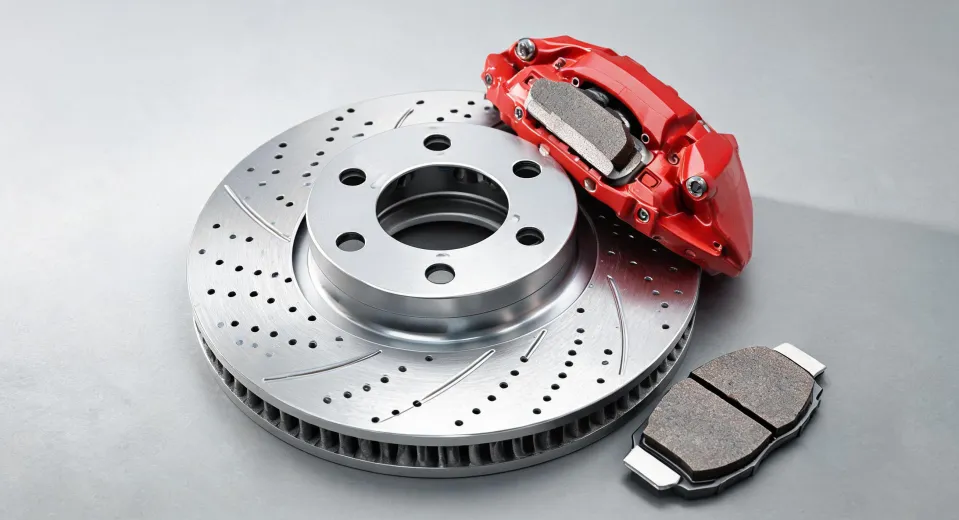
Consider the Centric plain 120 series rotors. They're not flashy. No drilled holes, no slotted edges. They are a plain face rotor for normal driving. But "plain" doesn't mean loose tolerance. The friction surface is machined, the balance is decent, and the box has a part number that crosses over without a guessing game. When I see a fleet truck stop straight, I don't point to the rotor. I point to the decision to use a part made by someone who treats brake material like a specification, not a commodity.
That's what usually happens with quality-first parts: you don't notice it because nothing goes wrong.
Cost Isn't the Price. It's the Phone Call You Don't Want to Make.
In 2022, I said to myself "I know I should buy from the established supplier, but this new vendor is 30% cheaper. What are the odds?" Well, the odds caught up with me. We ordered a batch of differential carrier assemblies for a maintenance cycle. The first installation sounded like someone put a rock in a coffee can.
Let's back up. A differential carrier assembly sits in the middle of the axle. It carries the ring-and-pinion gear and maintains the mesh depth. If that housing is off by a few thousandths, the gear teeth don't align. They whine. They overheat. They eventually fail.
The cheap unit failed in under 200 miles. The part cost was maybe $90. The cost of the truck sitting idle, plus the tow and the second differential labor, was around $740. And I had to explain to my VP why we went with the cheaper supplier. I still remember that phrase: "supply chain savings." Ugh.
Now I verify before ordering. Does the supplier have a spec sheet? Is there a traceable part number? Does the packaging match the industry standard? If not, the "good deal" becomes the expensive email chain.
Three Parts That Show the Real Difference
Brake Rotors
Everyone knows brake rotors wear out. But not everyone knows why a small imbalance changes the driving experience. Rotor thickness variation creates a pulse. A good rotor—the type you get from a brand that lists its material standard—will meet the SAE gray iron specification that brake discs have used for decades. A mystery rotor might not. It may look shiny on the surface and warp a month later.
That's why the Centric plain 120 series rotors earn a spot in this story. They're not the most expensive. They're not trying to be. They're consistent.
Catalytic Converters
A 2007 F150 catalytic converter is another case. This isn't just a pipe with some honeycomb. It has to work with the oxygen sensors and keep the engine computer happy. The EPA requires aftermarket converters to be labeled and compliant; in California you often need an EO number. A cheap "looks right" unit can trigger a check engine light, fail an emissions test, or both.
For a business owner, an emissions inspection failure means a skipped revenue day. For a homeowner with one car, it means a Saturday ruined under a car with a code scanner.
Differential Carrier Assembly
I already mentioned differential carrier assemblies. Let me add this: if you're buying one, do not assume all castings are created equal. "Same model" in the catalog doesn't mean same bearing bore alignment. Ask for a spec. If the seller says "don't worry about it," worry about it.
What About Headlights?
Then there's the search for "how to fix headlight in car." Sometimes the fix is a bulb. Sometimes it's a housing, a wiring pigtail, or a cracked bracket. A headlight seems low-stakes compared to brakes or emissions. But think about what it does: it lets a driver see and be seen.
When a customer picks up their car at night and the beam pattern points at the trees, they don't blame the bulb. They blame the shop that chose the bulb. And they're right to. Every part you choose is a piece of your brand.
But Is "Premium" Always Worth It?
Here's where I have mixed feelings. Part of me wants to say "buy quality first, price later." Another part knows budget is a real constraint. A fleet cannot swap every component for the most expensive option and survive.
So let me be more precise: quality means verified tolerance, not luxury packaging.
You don't need to buy the newest, the most drilled, or most coated product. You need the part that meets the original specification and comes from a supplier who can say so. Sometimes that means OEM. Sometimes it means a proven aftermarket brand. The point is not to be the most expensive; it's to avoid being the least dependable.
Modern parts buying is home centric. People are sitting at home, doing research on laptops, ordering parts for vehicles parked in their driveways. I'm one of them. But the fact that you can buy a part in your pajamas doesn't mean you should treat quality like a couch cushion. The wrong part has a way of coming back.
Final Word
I'm not saying cheap parts always fail. I am saying that when they fail, the damage to your brand is bigger than the cost difference.
What changed my mind? For me, it wasn't one disaster. It was the accumulated phone calls: a check engine light, a diff whine, a customer asking why there's a pool of coolant on the floor. Each one had the same root cause—someone, often me, chose to save a few dollars in the wrong place.
So if you are comparing Centric plain 120 series rotors, a 2007 F150 catalytic converter, a differential carrier assembly, or just learning how to fix headlight in car, ask the same questions a buyer should ask in any industry: Who made this? What's the spec? What happens if it's wrong? If you can't answer, it's not a great part. It's a gamble.
And your brand doesn't need more gambles. Period. Because in the end, the question is never "what costs less?" The question is "what can we trust?" And trust is centric to every order I write.