-
The Questions I Get Most Often
-
1. Is the Centric 130.33425 brake master cylinder a direct replacement?
-
2. What makes a Centric rotor different from a cheap rotor?
-
3. How often should I replace the Acura TL timing belt?
-
4. Diesel fuel filter vs oil filter: what's actually different?
-
5. What should I look for in a Hazel Dell muffler shop or replacement muffler?
-
6. What's the one thing people forget when replacing a brake master cylinder?
-
1. Is the Centric 130.33425 brake master cylinder a direct replacement?
Before we get to the questions, quick context: I'm a quality and brand compliance manager at an automotive parts company. I review every detail of roughly 200 part numbers before they reach customers—maybe 700 individual items a month. In Q3 2024, I rejected 1.8% of first deliveries because of spec mismatches. So when you're asking about a Centric brake master cylinder or a rotor, I'll answer the way I'd review a shipment.
This FAQ covers:
- Centric 130.33425 brake master cylinder replacement
- Centric rotor quality
- Acura TL timing belt intervals
- Hazel Dell muffler choices
- Diesel fuel filter vs oil filter
Here's the short version: the specifics matter more than the brand. That's true no matter which parts you're comparing.
The Questions I Get Most Often
1. Is the Centric 130.33425 brake master cylinder a direct replacement?
I can't tell you yes without checking your VIN and the application notes, but here's how to verify it quickly. The Centric 130.33425 is a brake master cylinder with a specific bore size, port configuration, and stroke. The part number tells you it's a Centric replacement, but it doesn't tell you whether your vehicle's original setup has different port threads or an internal ABS sensor. That's the blind spot: most buyers focus on brand name and price, then completely miss the port layout and flange spacing.
As of the January 2025 Centric catalog, this part is listed for a narrow set of applications. Check the catalog or call a parts supplier with your VIN. If you're ordering for a fleet, request the dimensional drawing before you buy in quantity. We do that on every master cylinder order now (note to self: I should have made that policy years earlier).
2. What makes a Centric rotor different from a cheap rotor?
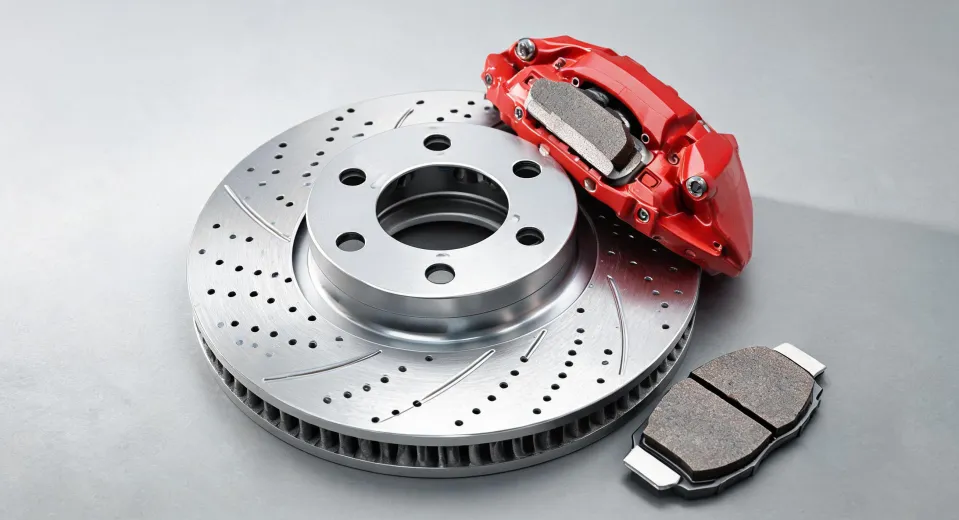
I've measured cheap rotors that were perfectly fine, and name-brand rotors that didn't meet spec. So I'm not going to claim the brand alone guarantees quality. What separates a Centric rotor from many budget rotors is more consistent machining and surface finish. Centric specifies runout and thickness variation tolerances, and those matter. The surface finish also affects how the pads bed in. You can't see that by looking at a box.
Most people ask, is it drilled or slotted? They should be asking, what are the runout tolerances, and who is responsible if the part doesn't meet them? On new rotors, I typically look for lateral runout of 0.002 inch or less. That's not a spec you can verify with the naked eye. The fundamentals haven't changed—rotors need to dissipate heat and provide a stable friction surface—but the execution has transformed. Machining tolerances are tighter, coatings are better, and supply chains are more complicated.
Before installing a Centric rotor, clean any anti-corrosion coating off the friction surface. I've seen brand-new rotors pulse after 500 miles because nobody removed the coating (ugh, that's a frustrating warranty claim).
3. How often should I replace the Acura TL timing belt?
Most Acura TL owners know the mileage interval—usually around 90,000 to 105,000 miles, depending on the engine. What I see overlooked is the time interval. A timing belt can look fine at 40,000 miles but be six years old and cracking. Heat and age make the rubber brittle. The question everyone asks is how many miles are left. The better question is how many years has it been.
For most 3.2L and 3.5L TL engines with a belt-driven cam setup, I'd start planning the job by the seven-year mark if the mileage is unclear. The fundamentals haven't changed: it's an interference engine, so a broken belt usually means bent valves. And while you're in there, the water pump is often a smart add-on. I've seen a water pump seize a month after a timing belt job because someone skipped it to save money. Looking back, I should have made replace all driven components the default recommendation for every customer. If you're not sure about your Acura TL timing belt's history, treat the unknown as the due date.
4. Diesel fuel filter vs oil filter: what's actually different?
They're both round cylinders with filter media, but that's where the similarity ends. A diesel fuel filter is designed to handle fuel pressure and separate water from diesel. It's usually located on the fuel line or near the injection pump, and many have a water drain at the bottom. An oil filter sits on the engine's lubrication circuit, handles different pressure ranges, and has a bypass valve so oil can flow if the filter clogs. Swapping them is a recipe for trouble.
I once flagged a communication issue on a service order: we said replace both filters, and the tech heard oil filter and air filter. Nobody ordered the fuel filter. The truck died on the test drive because the old fuel filter wasn't letting enough fuel through. The correct response isn't complicated—read the part numbers—but it's easy to shortcut when things are busy.
So if you're looking at a diesel fuel filter vs oil filter comparison, the answer is: they are not interchangeable. One protects the injection system. The other protects rotating components. Both are cheap compared to the damage a wrong filter can cause.
5. What should I look for in a Hazel Dell muffler shop or replacement muffler?
When you search for a Hazel Dell muffler, you might mean a shop in Hazel Dell, Washington, or a specific muffler that needs replacing. Either way, the answer is the same: material and fitment quality matter more than the name on the part. The first thing I inspect on an exhaust component is steel grade and weld penetration. A muffler made from 409 stainless steel is different from aluminized steel, and both differ from the pre-made mufflers on auto parts shelves. If a shop recommends a custom muffler, ask what material they're using and how they handle rust-prone connections.
Most buyers focus on sound and completely miss backpressure and hanger placement. A muffler that doesn't fit the hangers will knock around. A muffler with the wrong internal design can hurt engine performance. That's not a brand issue; it's a spec and installation issue. If you buy an online muffler and have a local shop install it, get a quote first—online prices don't include fitment adjustments or new clamps. That applies whether the shop is in Hazel Dell or anywhere else.
6. What's the one thing people forget when replacing a brake master cylinder?
This is the question nobody asks, but it's often why a new master cylinder seems defective. Before installing a Centric 130.33425 brake master cylinder, you need to bench bleed it—not install it dry and hope. Bench bleeding removes air from the internal passages and ensures the pressure chamber is full of fluid. In my inspection years, I've seen more bad master cylinder warranty claims than I can count that were actually installation errors. The piston worked fine; the fluid level or bleeding procedure was wrong.
Also, if the brake fluid has ever run completely low, the ABS module may need bleeding with a scan tool. Otherwise you can have a perfectly good Centric master cylinder and still have a soft pedal. That's not a part defect. It's a process issue. Add it to your checklist if it isn't already there.