A few weeks ago, I was standing in the inspection bay with a digital caliper and a freshly machined wheel hub centric ring in my hand. It was a small aluminum part—nothing dramatic. But that little ring changed how I think about fitment.
I'm the quality and brand compliance manager at Centric Manufacturing. That title sounds more official than my day-to-day job. I review every metal stamping, die, CNC-machined part, forging, and aluminum extrusion we ship. That's roughly 210 different part numbers a year. In 2024, I rejected about 3.6% of first-off deliveries for dimensional issues. The wheel hub centric ring in my hand wasn't one of them. That was the problem.
When I first started in this role, I assumed that if a part matched the CAD model, it was a good part. Tolerance is tolerance. You hit it, you ship it. I don't believe that anymore.
The Part That Wouldn't Sit Still
We got the hub-ring order from an aftermarket wheel distributor. The application was a Toyota Highlander with aftermarket wheels. The ring is supposed to fill the gap between the wheel's center bore and the vehicle hub, so the wheel is centered by the hub instead of by the lug nuts. It's a simple part, but it's also one of those small metal rings that can make or break a ride.
The math looked clean. The ring's inside diameter matched the customer's hub spec. The outside diameter matched the wheel bore spec. Our internal tolerance was tighter than the drawing required. Then the customer mounted a test wheel and felt a vibration at highway speed.
The drawings said every dimension was right. The vehicle said something else. When we measured the wheel bore, there was a chamfer at the seating surface that wasn't on the supplied drawing. Our ring was 'within spec,' but the wheel wasn't a perfect cylinder at the contact point. It was sitting on a tiny edge instead of seating flat. That was enough to create play under load.
We ended up reworking about 1,800 rings. We also changed our first-article process. Now, if any part is described as a centering or mounting feature, we ask the customer for the actual mating component before we authorize production. That seems obvious after the fact. It wasn't obvious before the fact.
The Same Lesson, Different Parts
I thought the hub-ring incident was a one-off. Then, in the same quarter, three separate conversations reminded me why it wasn't.
First, a buyer asked us about a Toyota Highlander catalytic converter. Not the converter itself—the stamped heat shield and mounting bracket around it. Actually, their concern was that a previous aftermarket converter had a bracket that didn't line up. It had good welding and good materials, but the stamped bracket was off by about 2 mm. On the workbench, 2 mm is nothing. Under the car, it's a bolt that won't start.
As of January 2025, an aftermarket Toyota Highlander catalytic converter also has to meet EPA requirements under 40 CFR Part 85. That's the sort of thing we remind customers to check. Fitment isn't just about bolt holes; it's also about emissions certification and model-year coverage.
Second, there was a fuel pump repair kit. A fuel pump repair kit usually includes a stamped lock ring, a bracket, and some seals. The stamping part doesn't get much attention. But the lock ring has to be flat and the teeth have to be formed at the right angle. If the die wears down, the ring can look fine and seat poorly. Then you get noise, a leak, or a pump that moves around inside the tank.
Third, someone called and asked: How much does muffler delete cost? I have mixed feelings about that question. On one hand, it's exactly the kind of search query the internet is for. On the other, the answer is never just a price. As of January 2025, I've seen independent shops quote between $150 and $400 for labor and pipe work, plus $30 to $120 for tips or hangers. Dealerships and custom fabrication shops can go higher. That's not a formal survey—I haven't polled every shop in the country. It's what I've seen in real estimates over the last few months.
What most people don't realize is that a muffler delete changes the exhaust system's weight and heat path. The hangers and brackets around the muffler weren't designed for the new setup. We stamp those brackets. I've seen a perfectly good exhaust job fail because the wrong hanger bracket let the pipe move too much.
Centric Isn't Just a Name
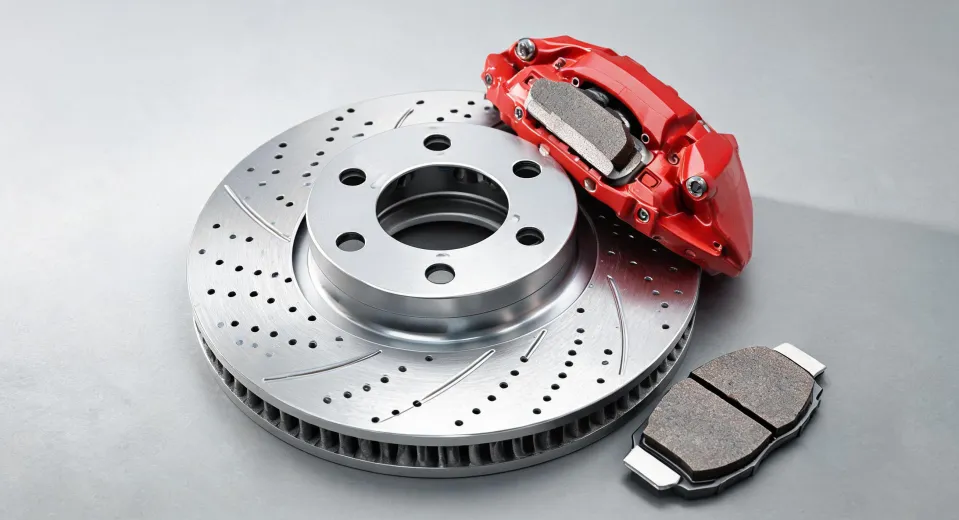
You might have searched for Centric rotors and pads and ended up here. The brake brand shares our name, and it comes up in our shop a lot. Rotor and pad manufacturers spend a lot of engineering effort on friction and heat transfer. But none of that matters if the rotor isn't centered on the hub or the pad isn't seated square in the caliper. Centering is not just a brand name. It's the whole point.
The same is true for the metal parts we make. A stamped bracket doesn't have to be beautiful. It has to put one thing in the right position relative to another thing. If the interface surfaces aren't understood, the part can be perfectly manufactured and still fail in service.
What We Changed
After the hub-ring incident and those three conversations, we didn't just tighten a tolerance. We changed the conversation with customers. In Q4 2024, we started classifying parts as either dimensional-only or assembly-critical. Assembly-critical parts now require a fit check with a sample mating part before first article. That costs a little more time upfront, and it saves a lot of time later.
We also wrote the rule into our contracts. If a part is marked assembly-critical, the customer provides a representative mating component, or we ask for a version of their drawing that includes the interface surfaces. It's not as simple as it sounds. Some customers don't have the mating component in-house. But when they don't, we'd rather find out before the press cycle starts.
The Takeaway
I don't want to oversell this. We still make mistakes. There will always be a tolerance stack we didn't predict, or a customer specification that changes after the first article. But I've started telling customers something I used to keep to myself: if the part doesn't fit the way it behaves on the car, it doesn't matter how well it matches the print.
So whether you're looking for a wheel hub centric ring, Centric rotors and pads, a Toyota Highlander catalytic converter, a fuel pump repair kit, or an answer to how much muffler delete costs, ask the fitment question first. What does the part actually seat against? What's the mating surface's tolerance? Is the mounting bracket stamped and formed to match the real assembly? If the seller can't answer that, that's a red flag. If they can, you're probably in the right place.