In early 2020, I became the office administrator for a company running a 15-vehicle service fleet. That means I manage all the purchases—brake pads, coolant, headlights, even spark plugs—with a budget that spans multiple vendors. In the beginning, I had one rule: pick the cheapest quote. It took three budget overruns and one nearly overheated engine for me to realize that auto parts purchases don't have a single best answer.
Instead, the right choice depends on your situation. Here's what I've learned about three common scenarios.
Scenario 1: Emergency Repairs – Cracked Radiator and G37 Headlight
Let's start with the stress case: something is leaking or broken and the vehicle has to be back on the road by tomorrow. The first thing any fleet buyer should know is what does a cracked radiator look like. Common signs are:
- Coolant pooling under the front of the vehicle—usually green, orange, or pink.
- Visible cracks in the plastic end tanks, where most radiator failures start.
- A sweet, syrupy smell under the hood, often followed by steam after shutdown.
If you see any of those, replace the radiator. I know the temptation to dump in a bottle of sealant and hope for the best—I tried that once. It bought us 200 miles before the same crack opened up again. In my opinion, sealants are for emergencies only, not for vehicles you actually rely on.
When you order a replacement, don't assume the quoted price is the final price. I've had suppliers add core charges, freight fees, and even a "missing petcock" surcharge after the fact. That's why I now ask one question before anything else: “What's NOT included?” The vendor who lists every fee upfront—even if the total looks higher—usually costs less in the end.
G37 Headlight Replacement
Headlights fall into the same emergency category when a driver can't see at night. If you're dealing with a G37 headlight, the choice is usually a bulb-only swap or a full assembly replacement. If the lens is cloudy or the bracket has cracks, go with the assembly—it's more reliable long-term. But don't assume the assembly comes with ballasts or LEDs included. I learned that the hard way: bought a "complete" unit and still needed adapter connectors. The extra $80 I saved upfront was eaten by $120 in additional parts and labor.
Scenario 2: Planned Maintenance – My Centric Brake Pads Review
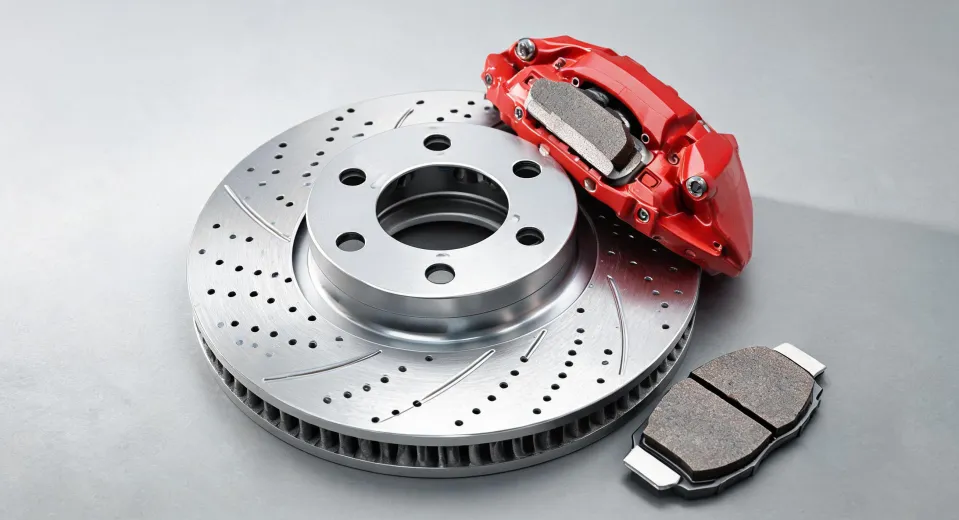
Scheduled brake jobs are a completely different decision. This is where I've become a repeat buyer of Centric brake pads. Actually, let me rephrase that—I'm a fan of their value for our lighter vehicles. I ordered through the Centric store online in 2023, and we've run their pads on a few vans ever since.
In my experience, Centric pads offer a solid balance of price and performance. The ceramic compounds keep wheels cleaner, which matters more than you'd think when drivers complain about brake dust. For our heavier trucks, I usually stick with semi-metallic pads because they handle heat better under load. There is no universal "best" pad—what works on a cargo van may not work on a box truck.
Before I approve any brake pad order, I check three things:
- Friction material and temperature rating—matching the pad to the vehicle weight.
- Hardware included—shims and clips are sometimes sold separately, and that adds $15–25 per axle.
- Rotor condition—if the rotors are scored or under minimum thickness, fresh pads alone won't stop the vibration.
All brake pads sold in the U.S. must meet FMVSS 135 standards, but that's just a baseline. I still kick myself for not checking a part number once and ordering the wrong shape—cost me $350 in restocking and expedite fees. That was a rookie mistake, and it's why I now test a single set of Centric pads on our own trucks before rolling them out across the fleet.
“Always ask what’s not included before you ask the price.”
Scenario 3: Performance Upgrades – Coil Spring Conversion Kit
Now let's talk about upgrades. If you're looking to change the character of a vehicle—not just restore it—the conversation shifts. A coil spring conversion kit is a great example. This swap replaces an older torsion-bar suspension with coil springs, usually giving a smoother ride and better handling.
But "better" depends on what you want. When I approved a coil spring conversion kit for one of our vehicles, I assumed stiffer springs meant sportier handling. That was wrong. I mean, handling did improve, but the ride got so harsh that the driver complained for weeks. The right choice for a comfort-focused daily driver is a progressive-rate spring, not a linear-rate one.
Another thing: ask what the manufacturer calls a "kit." Some include springs and shocks; others are just springs. You might also need bump stops, bushings, or even lower control arms. From my perspective, the upfront quote is rarely the final total. That doesn't mean you skip the upgrade—just make sure the supplier gives you a complete parts list before you commit.
How to Tell Which Scenario You're In
This sounds simple, but it solves a lot of confusion:
- If you have a safety or drivability issue right now, treat it as an emergency. Look for symptoms like what a cracked radiator looks like, and prioritize a replacement that includes all necessary hardware.
- If it's a scheduled service item, take your time to compare total cost of ownership. Read or write a Centric brake pads review, but base your final decision on your own fleet data, not hearsay.
- If you want to improve performance or comfort, treat it as a project. Define the goal clearly, list every component you need—including a coil spring conversion kit and compatible shocks—and verify fitment for your exact model.
One final thought: I used to chase the cheapest quote. Then I learned to chase the most transparent one. A supplier who lists every fee upfront—even if the total looks higher—usually saves you money and stress. That's the standard I use for everything from brake pads to headlights. It took me a few expensive mistakes to get here, but it works.