-
The Choice Nobody Wants to Make in a Hurry
-
Brake Drums: VIN Matching vs. Measuring
-
Caliper Kits: Complete Kit vs. Component Roulette
-
Piston Compression Height: The Spec That Dictates Engine Life
-
Head Gasket Diagnosis: Symptoms vs. Proof
-
Tail Lights: Aftermarket vs. OE
-
Putting the Framework into Practice
-
The Bottom Line
The Choice Nobody Wants to Make in a Hurry
I've spent eight years coordinating replacement parts for automotive repair shops, fleets, and manufacturers. That includes 200-plus rush orders—everything from "the caliper kit was supposed to be here yesterday" to "the truck leaves in six hours and there's coolant in the oil."
When time is tight, I see two patterns. Order first, verify later. Or verify first, then order. The first pattern looks faster. It isn't—and I can show you exactly where it falls apart.
This is a comparison of those two approaches across four categories: brake drums, caliper kits, engine internals, and tail lights. By the end, you'll have a clear framework for what to do when your vehicle—or your customer's vehicle—is down and the clock is running.
Brake Drums: VIN Matching vs. Measuring
Phone calls like this come in constantly: "I need a Centric Parts 123.40014 brake drum. Can you get it here by tomorrow morning?"
The 123.40014 is a quality piece. Centric's drums are centrifugally cast, machined to OE specifications, and computer-balanced. They're known for consistent quality. But here's the thing I've learned from shipping parts to desperate shops: the part number only matters if it matches the actual component on the vehicle.
VIN-based lookup is the speed-first way. It takes 30 seconds and usually gets the right result. "Usually" is doing a lot of work in that sentence.
The verify-first way takes fifteen minutes with a pair of calipers. You measure the original drum's offset, brake surface width, and pilot diameter. Then you confirm the replacement matches those measurements. What most people don't realize is that two vehicles on the same VIN platform can have different brake hardware due to towing packages, axle swaps, or prior upgrades.
In November 2024, a shop called me at 4 p.m. needing a 123.40014 for a truck that was supposed to leave the next evening. I asked them to measure the old drum. The owner said,
"It's the right part, I order these all the time."He ordered from another supplier who could deliver by 9 a.m. At 11 a.m. the next day, he called me back. The drum was wrong—brake surface width was off by 0.2 inches. The truck left two days late, and the freight cost him $300.
I'm not sharing that to feel superior. I made the same mistake myself. I knew I should have insisted on written confirmation of the measurements. I thought "we've done this before, what are the odds?" Well, the odds caught up with me. That $300 mistake is the reason I now ask every customer for measurements, even when they're frustrated.
Honestly, I'm not sure why so many experienced techs trust VIN-based lookups over physical measurements. My best guess is that in most cases, the part number does work—so the failures get ignored until a deadline eats the cost.
The conclusion here: for brake drums, always measure before you order.
Caliper Kits: Complete Kit vs. Component Roulette
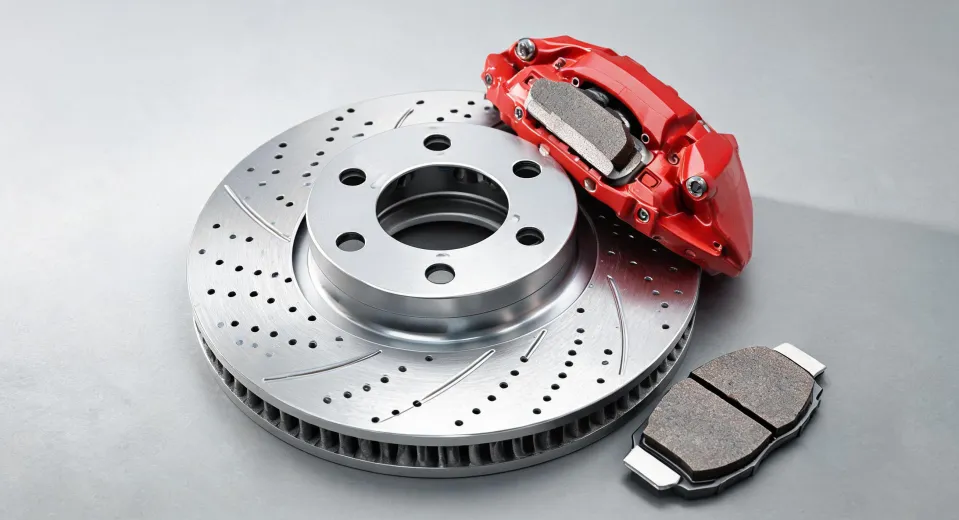
Now let's talk about the Centric Parts 143.42017 caliper kit—a complete kit that includes calipers, brackets, mounting hardware, bleed screws, and bushings.
The speed-first approach: "I only need the calipers. I've got old brackets and hardware that can be reused."
The verify-first approach: "Order the complete kit so every seal, screw, and bushing in the caliper system is new."
Here's what the speed-first approach actually costs. Reusing old mounting hardware means you're betting that 5-year-old bushings are still soft, 5-year-old bleed screws still seal, and 5-year-old bracket shims haven't corroded thin. That's a bet that fails exactly when the job is half-done and the part isn't available anywhere nearby. And then it costs you two hours of a technician's time, not just the $80 difference between a bare caliper and the kit.
I tracked 47 rush orders last quarter. The 43 kit-based orders were done in a single visit. Of the four that weren't, two needed follow-up hardware, and one came back entirely. What most people don't realize is that the little stuff—bleed screws, banjo bolts, shims—is exactly what's corroded on an old caliper. You can't reuse it with a straight face.
The verdict: for caliper replacement, use the complete kit. A $30 hardware pack is cheaper than a second visit from a technician.
Piston Compression Height: The Spec That Dictates Engine Life
The third category is engine internals. When a head gasket failure has allowed coolant into a cylinder, the pistons may be part of your parts list. And the most underrated specification when ordering pistons is piston compression height.
Piston compression height is the distance from the centerline of the piston pin to the top of the piston crown. It determines how far the piston sits below the deck at top dead center—and therefore the compression ratio, valve clearance, and whether the engine runs without detonation.
- Stock replacement pistons match the factory compression height. Drop-in, predictable, correct.
- Modified or performance pistons may have a different compression height. A 0.5-millimeter difference can shift piston position enough to raise compression by half a point. That's how you get a "rebuild" that pings under load.
Most buyers focus on bore size and completely miss compression height. The question everyone asks is "is this standard or oversized?" The question they should ask is "what's the compression height relative to this block's deck after machining?"
Here's the nuance that catches people: even a VIN-matched piston recommendation doesn't guarantee the compression height is right. If the block deck was surfaced during the rebuild, the effective deck clearance changes. The machinist compensates, but the piston has to be correct for the new geometry. A three-minute conversation with your machine shop will confirm the numbers. That conversation is cheaper than a second teardown.
The conclusion: when buying pistons, verify compression height numerically, not just by part number.
Head Gasket Diagnosis: Symptoms vs. Proof
Now, the question everyone asks: "How can you tell if a head gasket is blown?"
Let me give you the symptoms first, because they're important:
- White or gray smoke from the exhaust
- Milky oil on the dipstick or under the oil cap
- Bubbles in the radiator or overflow tank
- Overheating with no visible coolant leak
- Coolant disappearing without a puddle under the vehicle
Those are all signs of a potential head gasket failure. But a potential failure is not a confirmed failure. The symptom-based approach orders a head gasket set immediately. That's the speed-first approach, and it's a gamble. A cracked block, a warped head, a leaky injector, or a porous casting can produce the same symptoms.
The proof-based approach takes under an hour:
- Compression test — tells you which cylinder is low on pressure.
- Leak-down test — shows where that pressure goes: into the cooling system, the oil pan, or the exhaust.
- Chemical block tester — detects combustion gas in the coolant. If the fluid changes color, the gasket is blown. That's a definitive yes.
The proof-based approach isn't just more accurate. It's cheaper. A compression tester costs less than the head gasket set you might otherwise buy on a guess. And if the real issue turns out to be a cracked block, you've just avoided tearing down the top end for nothing.
I'll be blunt: I don't understand why some shops will spend two hours diagnosing a check-engine light but won't spend thirty minutes testing for combustion leaks. My best guess is they're worried the customer won't pay for diagnostic time. But a wrong head gasket replacement costs way more than an hour of diagnosis.
My verdict: confirm the diagnosis with a pressure test before committing any replacement parts. An informed customer asks better questions and makes faster decisions. The uninformed one calls back angry when the "quick fix" doesn't fix it.
Tail Lights: Aftermarket vs. OE
And now the dimension that usually surprises people. Tail lights.
When a vehicle needs a tail light in a hurry, I compare a factory OE unit to an aftermarket replacement like the ETM RTR tail light.
The OE advantage is certain: exact fit, exact output, no questions about quality. The OE disadvantages are price and availability. Dealer stock isn't guaranteed, and some factory lamps are surprisingly expensive for what they are.
The ETM RTR aftermarket unit often brings LED lighting at a lower price point. It's a legitimate choice—especially when the customer needs a light today. But quality varies between aftermarket manufacturers, so I recommend inspecting the unit physically before installation. Check the gasket, dry-fit the connector, and confirm the housing mates cleanly with the body panel. That's ten minutes that prevents a return call.
Counterintuitive conclusion: in this category, a quality aftermarket unit is defensible and often the better value. The failure mode is self-announcing—if a tail light leaks or stops working, you'll know immediately. That's different from an internal engine part, where a silent failure costs you the whole engine.
Putting the Framework into Practice
Here's how I apply these comparisons when I'm triaging a rush order:
- Brake drum replacement? Measure the original first. Confirm dimensional readings against the spec for the Centric Parts 123.40014—or whichever drum is listed for your application. Then order.
- Caliper replacement? Order the complete kit, like the Centric Parts 143.42017. Don't reuse old brackets or hardware.
- Engine rebuild after a head gasket failure? Verify piston compression height with the machine shop before selecting pistons. Do not trust a VIN alone.
- Head gasket diagnosis? Use a compression test, leak-down test, and block tester. Symptoms are clues, not conclusions.
- Tail light replacement? A quality aftermarket option like the ETM RTR is worth considering for value and LED performance—provided you inspect it first.
One more thing. When any supplier claims "better than OE" or "best in class," ask for the data. Per FTC guidelines (ftc.gov), performance claims need substantiation. If a brand can't show you a test result, you've likely got marketing, not engineering.
Specifications and part numbers are current as of January 2025. Always verify fitment, dimensions, and availability with your supplier before placing orders on tight deadlines.
The Bottom Line
Speed and rigor are not opposites. The most efficient part order I've ever placed started with a measurement, a compression test, and a clear conversation about what the vehicle actually needed. The slowest orders were the ones where someone guessed, ordered overnight, and paid freight both ways.
I'd rather spend 10 minutes explaining options than dealing with mismatched expectations later. That's not just a nice philosophy—it's the pattern in every rush job I've handled successfully.
Your turn: measure before you order, test before you diagnose, and verify before you commit. The clock will still be ticking. It just won't be ticking against you.