I manage parts buying for a 14-person independent repair shop. Over the past six years, I've handled a $420,000 annual parts budget, negotiated with more than 80 vendors, and tracked every order in our procurement system. If you're looking for direct answers about Centric disc brake rotors, Centric brake shoes, CV joint prices, or headlight restoration kit reviews, this is the FAQ I'd hand a new buyer. It's not a catalog. It's the set of questions I get from shop owners and fleet buyers before they approve a purchase.
- Are Centric disc brake rotors worth the price?
- How do Centric brake shoes compare for rear drum brakes?
- What's a fair CV joint price?
- Which headlight restoration kit reviews should I trust?
- Should I pay extra for guaranteed delivery?
- What should I ask before placing an order?
Are Centric disc brake rotors worth the price?
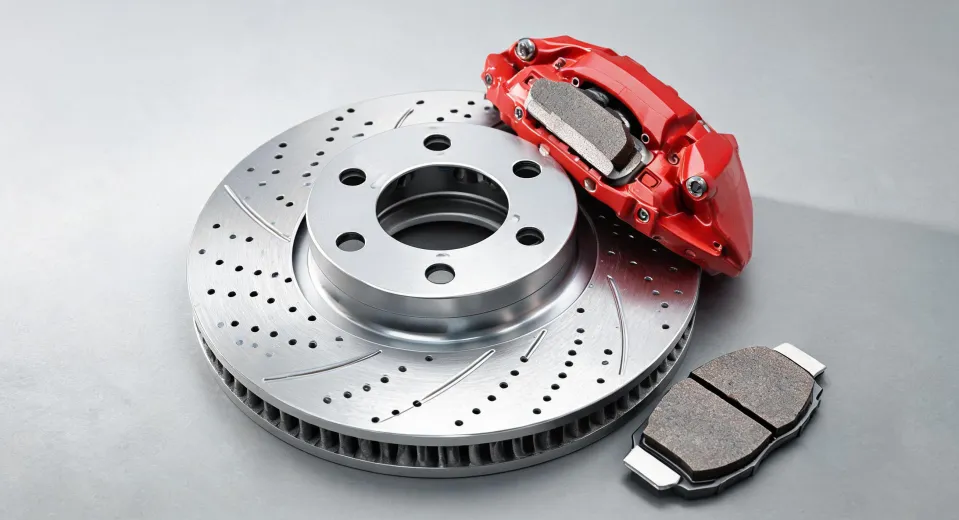
Short answer: yes, but only after I check the spec sheet. I do not buy a rotor because of the brand name. I buy it when the part has the right runout target, minimum thickness, and rust coating for the vehicle. Centric publishes the runout and minimum thickness for its rotors, and I use that page before ordering. It's faster than relying on a listing photo.
Why does this matter? Because the total cost of a brake job includes labor for re-doing a vibration complaint, not just the price of the rotor. In Q2 2024, we lined up four rotor brands for a fleet of ten work vans. The Centric disc brake rotor averaged about 14% less lateral runout, measured with a dial indicator, than the lowest-priced rotor we tested. That's not a lab study—it's the kind of shop-floor number that tells me whether I'm going to see the same truck back in two weeks.
I'm not saying the low-priced rotor is always bad. I am saying that a rotor spec is not the place for guesswork. If the job calls for a Centric disc brake rotor, I order that part number, write it down, and confirm delivery before I schedule the customer.
How do Centric brake shoes compare for rear drum brakes?
Brake shoes are the part I don't skimp on. Centric brake shoes get specified because the friction material matches the application, and the attached shims help control noise. But I learned to be exact about material codes.
In Q2 2024, I told a supplier 'semi-metallic,' meaning the Centric brake shoes for two work vans. They heard 'ceramic.' Result: twelve wrong boxes sitting in the back room for three weeks. The part number was right, but the material code was not. We were using the same words and meaning different product lines.
Now I put the full part number in writing and read it back. It feels slow, but it's faster than returning twelve boxes and moving two jobs to another shop. I also check drum hardware when I order shoes. If the adjuster or springs are worn, new shoes won't fix the pedal height.
What's a fair CV joint price?
A 'CV joint price' in a catalog search is usually for a complete axle shaft, not a bare joint. That distinction matters because the quoted price can look cheap until you find out it doesn't include the axle, the ABS tone ring, or the axle nut.
As of January 2025, a quality aftermarket CV axle for common vehicles runs about $35 to $90 for the part, with labor around $150 to $350 per side depending on local shop rates (Source: RepairPal, accessed January 2025; verify current pricing). If you see a very low price, ask what's in the box.
We didn't have a formal verification process for CV axle orders a few years ago. It cost us when the wrong axle arrived on a Friday and a customer's truck needed to run Monday. The third time we ordered the wrong quantity, I finally created a sign-off sheet. Should have done that after the first. Verify axle length, ABS tone ring, and whether the order can wait before you hit approve.
Which headlight restoration kit reviews should I trust?
Headlight restoration kit reviews are most useful when they show the sanding grit sequence, not just before-and-after photos. I've tested four kits for our fleet since 2023. The only one that lasted past nine months had three sanding stages and a UV clear coat.
The review that impresses me is the one with a close-up after six months, not a photo taken in a dark garage. Real talk: a headlight restoration kit is a temporary fix. A $22 kit that lasts one season is normal. A $45 kit that lasts two years is a better deal if your vehicles stay outdoors.
I'm not saying two-step kits are useless. I am saying you cannot skip the sanding step and expect factory clarity. Why does this matter? Because the labor time to do the job properly is the same whether the kit costs $20 or $50.
Should I pay extra for guaranteed delivery?
Yes, when the deadline is real. In March 2024, we paid $400 extra for guaranteed two-day delivery of a pair of Centric rotors. The alternative was missing a $15,000 fleet job because the customer's vans had to be ready by Friday. That $400 bought certainty, not just speed.
Even after approving the rush fee, I kept second-guessing. What if I could have negotiated? The next 48 hours were stressful. But the rotors landed Thursday, the vans were done Friday, and the invoice matched the quote. So glad I paid it. Almost went with standard shipping and a vague 'should arrive by Friday'—that would have meant a broker fee and a lost customer.
Uncertainty is a cost. The cheapest part is only cheap if it arrives on time and works the first time.
What should I ask before placing an order?
Ask for the exact part number in writing. Ask for the lead time in writing. Ask what the return process looks like if the part is wrong or damaged. Those three questions have saved me more money than any coupon code. If the supplier cannot give a written lead time, that's a red flag. As for part quality, ask for the OEM cross-reference and inspect one unit before committing to a batch.
Pricing references are as of January 2025; verify current rates with your supplier. If you reached this page while searching for medical terms such as tachycardia differential diagnosis, that topic is outside the scope of this article. Please talk to a qualified clinician.