If I can't be sure a part will fit the first time, I don't buy it. And when there's a deadline attached to a job, the cheapest option doesn't even make it into the conversation.
I'm the office administrator for a 12-person independent auto service shop. I took over parts purchasing in 2020, and I manage roughly $140,000 a year in orders across six to eight vendors. I'm not a technician. I can't explain how a piston behaves at high heat or how an exhaust manifold gasket seals in detail. What I can tell you from a purchasing perspective is what a wrong part costs: labor, downtime, expedited shipping, unhappy customers and the awkward conversation with the owner.
After five years of buying parts, I've stopped looking for the cheapest part and started looking for the most certain part. That's why I'll pay more for something like a Centric wheel cylinder when I know it's the right piece for the job.
The cheapest quote is usually hiding a cost
From the outside, ordering a replacement part looks like a price comparison. Two listings, same part description, choose the lower price. The reality is that the lower price often means someone else absorbs the risk later. When the part is going into a brake system, I don't want to be that someone.
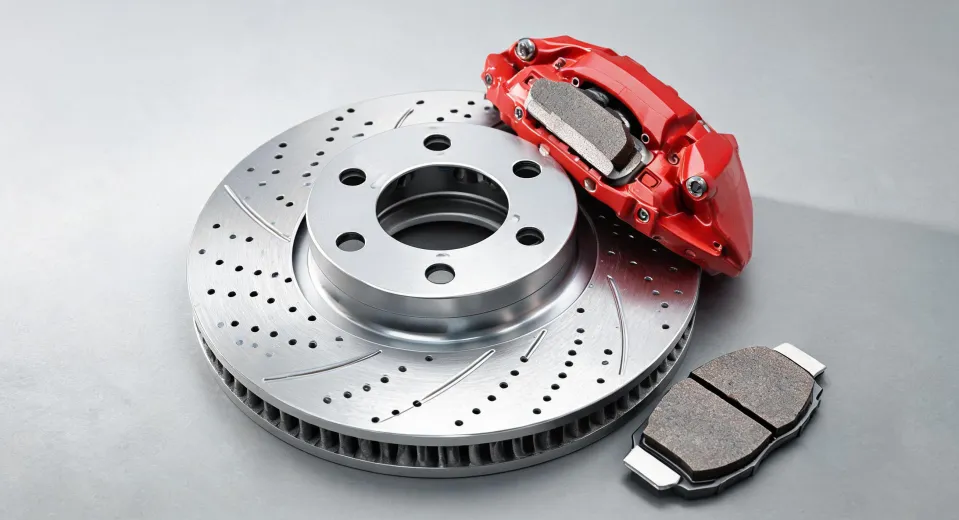
In 2021, I bought a low-cost wheel cylinder from a new supplier to test whether it could save our shop money. It looked right in the box. After the tech installed it, the bleeder screw wouldn't seal. The car came back, we ate the labor, and the customer missed another day of work. The $30 I thought we saved ended up costing about $240 in rework and goodwill. We changed to Centric wheel cylinders after that. Not because they can't fail—any supplier can have a bad part—but because the packaging, the catalog data and the return process are consistent enough for a small shop to plan around.
A part number is a starting point, not a guarantee
People assume that if a catalog shows a match, it's a match. It isn't. The same description can mean different things depending on who wrote it. I've learned to verify critical dimensions before installation, not just trust the number on the listing.
Take the Centric (145.48006) brake caliper piston. That's a part I order for caliper repair jobs. It sits in a family of Centric piston numbers, and the unit can look similar to other pistons if you don't check the diameter. The piston diameter and seal area have to match the caliper bore. We once received a piston that looked right but did not slide into the bore. I said 'same application,' the supplier heard 'same visual appearance.' We discovered the difference when the caliper wouldn't go back together. Now any caliper piston order gets measured before it goes on the workbench.
What is low beam headlight? Words are part of the spec
One customer question that comes up is what is low beam headlight? It sounds basic, but it's a useful reminder. Low beam is the normal nighttime driving setting; it lights the road ahead without blinding oncoming traffic. High beam is the brighter setting for dark, empty roads. If the customer doesn't know the difference, they can't tell me the right bulb. If the counter person doesn't ask which function they're replacing, the order can be wrong. The same fuzzy language causes problems in parts purchasing every day.
I use the same test outside the Centric catalog
This mindset doesn't stop with brake parts. Our shop HVAC system uses a 30x36x2 air filter. The cheap filter I bought once had the right dimensions, but the frame flexed and let air go around it instead of through it. That filter saved me maybe $15. The service call to correct the airflow issue cost $160. Now I ask three questions on any purchase: What exactly is the specification? How does the supplier know? What happens if it's wrong?
Those questions also apply to a Honda Civic exhaust manifold. I don't pretend to be an exhaust engineer, but I know that a manifold needs to line up with the cylinder head and the downpipe. If a supplier can show me fitment data, I'm interested. If the answer is 'it should probably fit,' I'm out. A leaking exhaust manifold means the car is back in the bay, the gasket is ruined, and the job loses money.
Rush delivery is about control, not speed
Emergency jobs make the point even clearer. In March 2024, we needed brake parts for a fleet customer by Friday. One supplier had the part for $18 more and had it in stock across town. Another option was $18 less, but the delivery estimate was 'likely Friday.' I paid the extra $18. If the cheaper order arrived late or wrong, the customer would have needed rental vans and we would have lost a $1,800 job. The certainty was worth more than the part price.
I'm not saying every part has to be Centric
Let me answer the objection before you make it. This is not brand loyalty. I buy plenty of parts that don't carry the Centric name. What I pay for is evidence. Per FTC advertising guidelines (ftc.gov), claims about products should be truthful and backed by evidence. When a supplier calls a part a replacement, I want the same standard applied. The part number should match, the fitment should be stated, and the supplier should stand behind it.
If that means choosing a Centric wheel cylinder for a brake job, then yes. If it means asking better questions about a Honda Civic exhaust manifold, then yes. The name on the box matters far less than the information on the box and the fallback if the part doesn't work.
Bottom line: In parts procurement, certainty is not a premium feature. It's the product. A lower price only helps if the part is right the first time and arrives when the schedule needs it. After enough same-day emergency orders and comebacks, I'll gladly pay a fair price for confidence. The part that doesn't make me guess is the cheapest part I buy.