-
1. Is the Centric Premium OE Style Drilled Brake Rotor worth it?
-
2. When should I replace a Centric wheel cylinder?
-
3. What is an alternator voltage regulator IC, and can it be fixed?
-
4. What is differential levelling on a brake rotor?
-
5. How do you bleed a radiator?
-
6. What else should I check before ordering Centric parts?
Five years ago, I took over purchasing for a 40-person logistics company with 11 delivery vans and a small maintenance bay. I'm not a mechanic. I'm the office administrator who orders the parts, chases invoices, and takes the blame when a wrong rotor holds up a van. I manage roughly $120,000 a year in parts and office supplies across nine vendors. This FAQ is based on what I've actually bought and what our techs have told me after the fact. If you're searching for Centric brake parts, trying to diagnose an alternator voltage regulator IC, or wondering how to bleed a radiator, this is the article I wish I'd had.
Here's what I'll cover:
- Is the Centric Premium OE Style Drilled Brake Rotor worth it?
- When should I replace a Centric wheel cylinder?
- What is an alternator voltage regulator IC, and can it be fixed?
- What is differential levelling on a brake rotor?
- How do you bleed a radiator?
- What else should I check before ordering brake parts?
1. Is the Centric Premium OE Style Drilled Brake Rotor worth it?
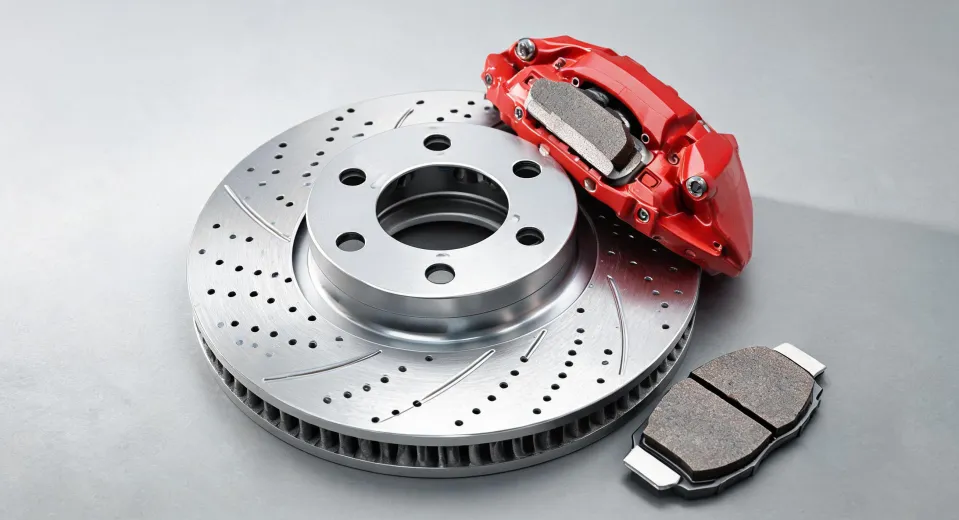
For light-duty street use, yes. We installed Centric Premium OE Style Drilled Brake Rotors on two of our management cars last year. The 'OE style' means the dimensions match the vehicle's original rotor, not that it's the same OEM part. The fit was exact, the finish was clean, and the drilled pattern helped with pad dust and wet-weather wiping. The surprise wasn't the braking itself—it was how easy the install went. The hub bore and lug holes were right the first time. That's not something I can say for every brand we've used.
But I have to be honest about the limitation. Our delivery vans and tow vehicles do not get drilled rotors. Drilling removes a little thermal mass, and if you're making heavy repeated stops, the holes can become crack starting points over time. That's not a defect; it's the wrong tool for that job. If you have a daily driver or a weekend car, I'd recommend this rotor. If you're pulling a 9,000-pound trailer through mountain passes, buy a quality blank or slotted rotor instead.
One more thing: when I read product listings, I look for claims that can be backed up. Per FTC advertising guidance (ftc.gov), 'premium' should mean something concrete. Centric's own catalog lists dimensions and applications, so I can verify before ordering. That's the kind of substantiation I need when spending the company's money.
2. When should I replace a Centric wheel cylinder?
A wheel cylinder sits inside a drum brake assembly. When you press the brake pedal, brake fluid pushes two pistons outward, moving the brake shoes against the drum. A Centric wheel cylinder is a direct replacement unit, usually with a cast-iron body and a plated or hardened bore.
We replace them when a tech finds a leak or the rear brakes feel soft. Common signs:
- Brake fluid inside the drum or on the backing plate
- Low pedal, especially after the car has sat overnight
- The vehicle pulls to one side under heavy braking
If you're replacing one wheel cylinder, do both sides. I learned this the expensive way in 2023. The tech said the driver side was fine, so I ordered one. Three months later it was leaking, and the shop lost half a day. Looking back, I should have ordered the pair. The part cost is small; the labor isn't.
3. What is an alternator voltage regulator IC, and can it be fixed?
An alternator voltage regulator IC is the small integrated circuit that controls the alternator's output voltage. It usually keeps the system between 13.5 and 14.5 volts while the engine runs. When it starts failing, you may see flickering headlights, an alternator warning light, or a battery that is either overcharged or undercharged.
Can you replace just the IC? Sometimes. On some alternators, it's a separate part under a small cover. On others, it's embedded with the brush holder or soldered to a circuit board, so by the time the IC fails, the alternator isn't far behind. Our shop has done both. If a customer has a simple alternator and an external style regulator, a $30 IC swap can solve the problem. On a modern sealed alternator, we usually price the whole alternator because the labor to dig out the IC makes it a false economy. There's no universal answer, and any shop that promises one is guessing.
4. What is differential levelling on a brake rotor?
This sounds like a surveying term, and the principle is the same. Differential levelling compares the height difference between points. On a brake rotor, it's lateral runout—how much the rotor face moves side to side as it rotates. To measure it, clamp a dial indicator to a fixed point, put the tip on the rotor face, and slowly turn the rotor by hand. The needle movement is the differential levelling across the friction surface.
Our rule of thumb: after cleaning the hub face and torquing the wheel in the correct sequence, runout over 0.002 inch (about 0.05 mm) is worth addressing. Sometimes the problem isn't the rotor; it's a rusted hub or a bad wheel bearing. That's why we always measure before ordering a replacement. For Centric rotors, the catalog includes runout limits and installation notes. It's saved us from returning a lot of good parts.
5. How do you bleed a radiator?
Let me separate two things. If you're asking about a house radiator, you bleed it by opening the small valve at the top until air stops hissing and a little water comes out. If you're asking about a car radiator, the process is about purging air from the coolant system.
As of January 2025, this is the procedure we use before every coolant job: with the engine cold, remove the radiator cap, set the heater to full heat, and start the engine. Let it idle. As the thermostat opens, coolant moves and air bubbles surface in the radiator or overflow jug. Squeeze the upper radiator hose now and then to push trapped air out. Keep topping off until the upper hose feels hot and the coolant level stabilizes. Then install the cap and check the reservoir. If your car has a bleed screw near the thermostat, open it until coolant comes out with no bubbles, then close it. Never open a cooling system when the engine is hot. The pressure can send boiling coolant over you. That's non-negotiable.
6. What else should I check before ordering Centric parts?
Verify the exact part number by VIN or build date. It sounds obvious, but in 2024 we ordered Centric Premium OE Style Drilled Brake Rotors for a 2022 vehicle and a 2023 vehicle in the same generation. The listing said both fit. They did not. The 2023 had a different wheel hub design, and the rotor didn't seat properly. That $380 mistake taught me to never order by year alone. Should mention: the vendor accepted the return, but the van was down an extra day.
I can only speak to our fleet context—mid-size vehicles, normal street use, a few work trucks. If you're running a commercial fleet with heavy loads or unusual wheel configurations, your calculus may be different. That's okay. The more you can tell the supplier about your actual use case, the better they can help.