-
My Biggest Misjudgment: I Thought “Ceramic” Was Enough
-
What “Posi Quiet” Actually Means—and What It Doesn’t
-
The Flat Mount Disc Brake Order That Made Me Cringe
-
The Question I Once Laughed At: What is the difference between an alternator and a generator?
- Radiators, Raleigh, and the Same “System” Mistake
-
But Isn’t a Cheap Pad Good Enough for a Daily Driver?
-
What I Want You to Take From This
I’ll say it plainly: brake pads are not commodity parts. I know because I used to treat them like commodities, and our production log still has the receipts.
My name isn’t important. I’m the person who handles aftermarket brake and chassis orders at Centric, and I keep our team’s mistake log. In seven years, I’ve personally documented 23 significant errors that totaled roughly $17,000 in wasted material, redo labor, and customer goodwill. Some were small. Some made me want to hide in the die shop.
My Biggest Misjudgment: I Thought “Ceramic” Was Enough
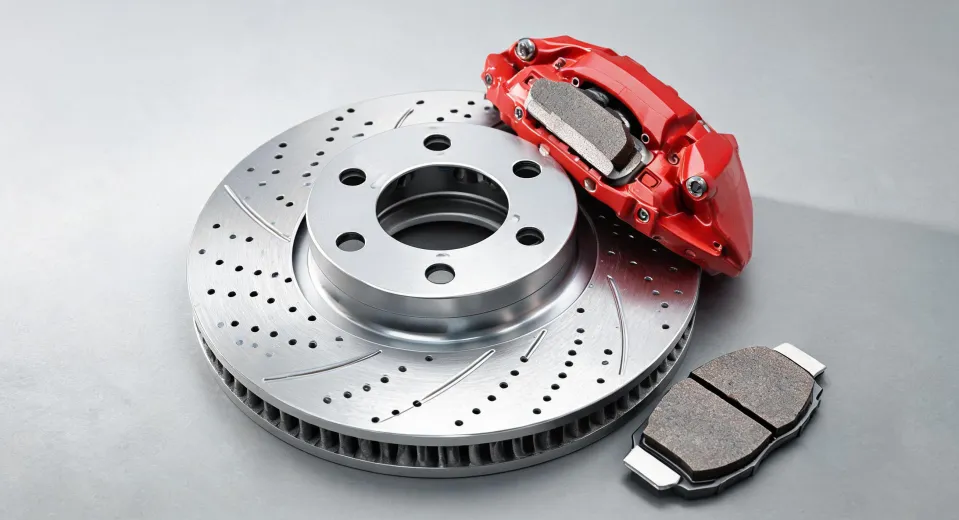
When I first started in 2017, I assumed “ceramic” meant the same recipe in a different box. A pad with the right bolt holes, a flat backing plate, and a low price was a good pad. That assumption failed almost immediately. A customer asked for Centric Posi Quiet brake pads, but I didn’t know the product line, so I ordered the cheapest ceramic alternative I could find. Same dimensions, I thought. What could go wrong? The answer came on the first test stop of a loaded van: the brake pedal was inconsistent, the van pulled to one side, and the customer looked at me the way you look at a repair estimate you didn’t want.
Here is what I didn’t understand: a ceramic brake pad is not one formula. The friction material, chamfer geometry, and shim stack all affect pedal feel and noise. Centric Posi Quiet ceramic brake pads use a specific friction formulation designed for controlled wear and reduced vibration. The two-letter friction code on the edge of the backing plate matters. It’s based on SAE J866, and it tells you the coefficient category across temperature ranges. I didn’t check any of that. I just saw “ceramic” and stopped thinking.
That mistake cost about $890 in rework and a one-week delivery delay. I still have the part number in my notes as a reminder that names like “Posi Quiet” are not magic. They’re engineered behavior.
What “Posi Quiet” Actually Means—and What It Doesn’t
Let’s be even more specific about Centric Posi Quiet brake pads. The name tells you the design goal: positive brake response and quiet operation. It does not promise silence on a worn-out rotor, air in the lines, or a caliper that mounts crooked. I’ve seen brand-name pads get blamed for noise problems that were really rotor and installation problems. And I’ve seen people search for Centric Posi Quiet ceramic brake pads, install them, skip the bed-in procedure, and then complain about a “wobble” that was pad transfer left by a previous pad.
So here’s your checklist for any pad, especially a ceramic one: measure rotor thickness against the minimum cast into the hat; check runout; clean the hub face; torque the caliper bracket to spec; and follow the bed-in process from the manufacturer. If you skip those steps, you aren’t testing the pad. You’re testing your luck.
The Flat Mount Disc Brake Order That Made Me Cringe
The second lesson arrived in September 2022. We received a request for stamped brackets used with a flat mount disc brake caliper. I assumed it was close to a post mount layout: two bolts, a caliper, a rotor. How different could it be? Different enough. We produced 47 brackets with a slot that was 1.2 mm too short. The caliper bolts started, but the caliper sat crooked. It looked fine on my screen. It didn’t fit on the vehicle.
I had checked the drawing myself, approved it, and processed it. Nobody caught the issue until installation day. We scrapped 47 brackets—$1,450 in material plus a two-day production delay. I keep one of those brackets on my desk. Flat mount disc brake systems are common on modern vehicles and bicycles because they keep the caliper tighter to the rotor, but that only works when the bracket, bolts, and caliper center are engineered as a set. You can’t treat mounting standards as interchangeable.
The Question I Once Laughed At: What is the difference between an alternator and a generator?
I also learned this the hard way: the difference between an alternator and a generator is not just “old vs. new.” I once spent an hour testing a charging system with a generator regulator procedure in mind. The car had an alternator. My regulator logic made no sense.
Here’s the simple answer. An alternator produces alternating current inside its windings and converts it to direct current with diodes. That design is lighter, more efficient, and better at charging at low engine rpm. A traditional automotive generator uses a commutator to produce direct current directly. Same job, different electric topology, different test methods. If you check a charging system, look for a stable battery voltage around 13.8 to 14.4 volts with the engine running, then add a load and watch for voltage collapse. If the output drops, now you can start blaming diodes, brushes, or a bad regulator—after you know which part you’re actually testing.
Radiators, Raleigh, and the Same “System” Mistake
I would love to say the charging incident cured me of one-part-at-a-time thinking. It didn’t. Last summer, I watched a customer in Raleigh order a new radiator after one warm-running symptom. If you’ve searched “1800 Radiator Raleigh” because your temperature gauge is creeping up, I get it. But in that customer’s case, the thermostat was barely opening at operating speed, and the cooling fan wasn’t pulling enough air. The radiator wasn’t the problem.
This is the same pattern I fell into with brake pads: replacing the visible part without diagnosing the system. Before you call 1800 Radiator Raleigh or any shop, check the thermostat opening temperature, radiator cap pressure, coolant level, and fan operation. A radiator replacement is sometimes the fix, but it should be a conclusion, not a guess.
Why I Don’t Dismiss Small Orders—Even for Brake Pad Kits
Let me end with something that changed my attitude more than any technical mistake. A year ago, a two-person shop ordered one set of Centric Posi Quiet ceramic brake pads and one rotor from us. The order was small, the margin was tiny, and it would have been easy to treat it like a nuisance. But I remembered when I was the one placing that kind of order. The vendors who took my small orders seriously are the ones I still call for big ones.
Small orders are how people test suppliers. When someone asks for a flat mount disc brake bracket or a single alternator test, they might be checking whether you’ll give them real guidance or just a quote. Even if the order is one brake pad set, treat the customer like a long-term account. That is not just good manners. It’s good strategy.
But Isn’t a Cheap Pad Good Enough for a Daily Driver?
You might be thinking: “I don’t race, I don’t tow, and I just need the car to stop. A basic ceramic pad is fine.” I won’t argue with the general idea. A standard ceramic pad can work fine for normal commuting if the rotor is in spec, the caliper moves freely, and the fluid is fresh. The problem is not that budget pads exist. The problem is choosing a pad without checking whether it belongs to the system around it.
If you don’t know the friction code, don’t buy the pad yet. If you don’t know the rotor thickness, don’t quote the brake job yet. If you don’t know whether your car has an alternator or generator, don’t test it with the wrong tool. And if your only symptom is a hot engine, don’t start with a radiator purchase. Start with a diagnosis.
What I Want You to Take From This
I was wrong about brake pads. I was wrong about flat mount disc brake brackets. I was wrong about the difference between an alternator and a generator. I was even wrong about how people should approach radiator replacement in Raleigh. But I was finally right about one thing: components fail in systems, not in isolation.
Here’s the checklist I use now before every brake quote and every charging system claim:
- Confirm the friction code on the backing plate—not just the word “ceramic.”
- Measure rotor thickness, runout, and friction surface condition before quoting.
- Check the caliper mounting standard, brackets, bolts, and torque specs.
- Test battery voltage and load behavior before replacing alternators or generators.
- Diagnose cooling symptoms with thermostat, cap, fan, and coolant checks before ordering a radiator.
- Respect small orders. They are tests.
If someone asks you what the difference is between an alternator and a generator, don’t laugh. Ask whether they have a test light. If someone looks for Centric Posi Quiet ceramic brake pads, ask for the friction code. If someone needs a flat mount disc brake bracket, verify the geometry. If someone is searching for 1800 Radiator Raleigh, encourage them to get the cooling data first. And if someone orders a single part, treat them like a real customer.
Because parts are easy. Systems are hard. And the people who respect the systems are the ones who don’t end up with 47 brackets in a box labeled “not quite.”