When I took over purchasing for our fleet in 2022, I assumed the dealership was the safer default. It wasn't until the 2024 vendor review that I started putting every service invoice next to an independent estimate. I'm not a mechanic. I'm an office administrator who handles parts and maintenance for a 40-person company with 12 light-duty vehicles. I manage roughly $150,000 a year in vehicle service spend. That doesn't make me an expert on friction compounds or HID igniters. It makes me an expert at spotting patterns in invoices, delays, and repeat visits.
Here's the thing: there is no single dealership vs. aftermarket answer. The useful comparison is about whether a supplier knows exactly what they can handle. A good dealership can handle a lot. A good specialist can handle one thing better. The question I now ask is: which one owns the result?
What this comparison actually measures
Every decision below compares two paths. Option A is the one-stop route: take the vehicle to a dealership or general service shop, use OE parts, and let one advisor coordinate everything. Option B is the specialist route: order a well-defined aftermarket part, use a shop that sees this specific component every day, and handle simple maintenance in-house.
I do not mean the one-stop route is dishonest. Some of our fleet work still goes to a dealer. But I'd rather work with a specialist who knows their limits than a generalist who overpromises. When a supplier says, 'this isn't our strength—here's who does it better,' I trust them for everything else.
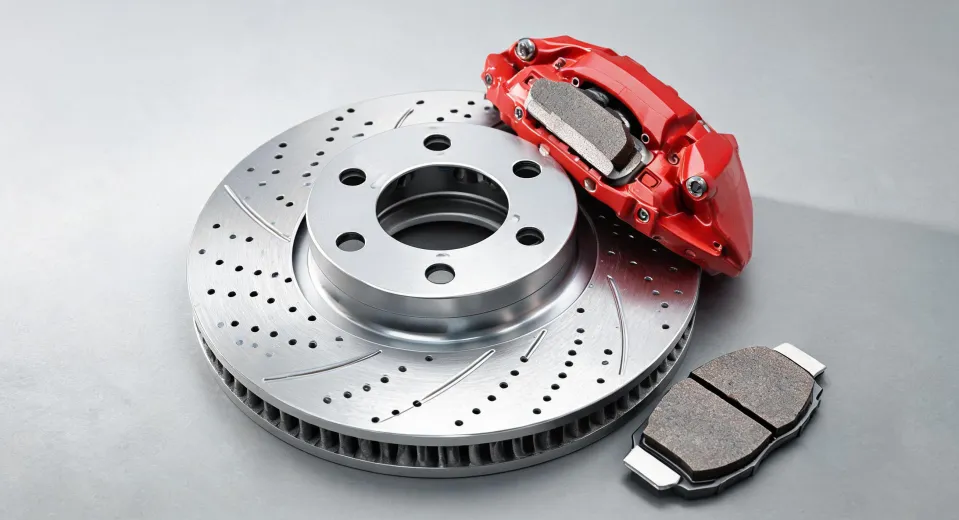
Centric premium ceramic brake pads vs. dealer OE pads
Last spring one of our Transit 250s needed front pads. The dealer quoted OE pads, labor, and a recommendation to resurface the rotors. That is a normal quote, not an unfair one. A local supplier that carries Centric as a core brand asked a different question first: 'What does this vehicle do all day?' That question is why the comparison changed.
I had searched for a Centric store earlier and expected one central site or chain. The reality is a network of authorized distributors and local shops. The value is not the store name; it's the catalog access. The local supplier pulled the Centric application by VIN and matched Centric premium ceramic brake pads to our delivery route.
I'm not a brake engineer, so I won't claim ceramic is universally superior. What I can tell you from a purchasing perspective is that the dealer's recommendation did not include the load profile. The Centric catalog split pads into categories by duty cycle, and for a light route van, the premium ceramic compound was appropriate. The price on our 2024 quote was about 18% lower per axle than the dealer's OE estimate, with no quality scare attached.
What sold me was the boundary comment. When I asked about the same pad for a heavier cutaway van, the supplier said, 'not that one; ceramic isn't the best choice for sustained loaded use.' That answer cost them a sale on that pad but earned our brake work for the year.
Verdict for this dimension: for normal-duty route vans, Centric premium ceramic brake pads won on application match and cost. For a heavy, loaded vehicle, the specialist route still won—because they told us to buy something else.
D2S headlight bulb replacement: dealer service vs. a nearby lighting specialist
When one van lost a headlight, the first question from the driver was where to find a D2S headlight bulb nearby. That search matters more than it sounds. D2S is not a universal bulb; the base and arc tube length vary by housing. An online order might save money, but downtime can cancel the saving.
The dealership could order the bulb and install it, with a diagnostic fee and an estimate that bundled bulb, labor, and 'aiming.' The local lighting specialist had the bulb in stock and asked a better set of questions: Does the ignitor look old? Was the old bulb flickering? Do you want us to inspect the ballast connections while the housing is open? That type of question is hard to deliver without a genuine specialty.
I still kick myself for a 2023 D2S replacement that skipped the last step. The bulb worked, but the beam was too high; our own safety check caught it before the van left the yard. Rework cost more than the bulb itself. Now I treat headlight aiming as a non-negotiable line item after any HID bulb replacement.
Headlight aiming: the difference between a bulb swap and a repair
A D2S projector has a designed cutoff. If the new bulb is seated incorrectly or the housing is turned even a little, the beam can glare like a high beam. Some shops say they 'aligned the headlights' but that's not the same as checking the actual cutoff pattern. For a commercial vehicle, an unaimed headlight is both a safety issue and a roadside inspection failure risk.
Verdict for this dimension: for a simple burned-out D2S bulb, the nearby lighting specialist won. They had the bulb, they understood the ignitor side of the system, and they charged for the headlight aiming step instead of treating it as an add-on.
Engine air filter: dealership full service vs. ten minutes in the lot
This is the dimension where the comparison flips. An engine air filter is one of the few maintenance items that does not require a specialist. It also does not require a dealership. But that doesn't mean every driver should grab a filter and start pulling hoses.
How to change an engine air filter without turning it into a service appointment
On our Transit-style vans, the method is simple. Find the filter housing near the engine, release the two clips or unscrew the fasteners, lift the cover, remove the old filter. Vacuum out any leaves or dirt, compare the old filter with the new one, then drop the new filter into place with the same orientation. Make sure the soft rubber edge seats evenly; close the cover until the clips click. That's it.
If I remember correctly, the last dealer package we saw charged nearly double the cost of the filter itself. The extra cost was not inspection—it was labor and a service-bay visit for a job that took us about nine minutes. But there is a catch: some modern filters are buried. If the housing requires removing a strut brace or prying connectors, stop. That's the moment to call a shop.
Many buyers focus on whether the filter looks dirty and completely miss whether it's seated correctly. A mis-seated filter can let unfiltered air pass, and that failure won't show up until later. The advantage of doing this job yourself is that you see the seal before you close the box.
Verdict for this dimension: dealership or general shop loses on engine air filters when access is simple. For filters behind braces or electronic modules, a shop is the safer choice, and that boundary is fine.
Scenario recommendation: what should you do?
After that fleet review, our maintenance policy looks more like a triage than a brand loyalty statement:
- Warranty-sensitive or electronic-heavy diagnostic work: dealer or factory-trained specialist. This is not the place to save money.
- Everyday brake pads for route vehicles: Centric premium ceramic brake pads through a local authorized distributor that can verify application and duty cycle.
- D2S headlight bulb failure without other symptoms: find a D2S headlight bulb nearby from a lighting specialist and include headlight aiming in the work order.
- Simple filter service: learn how to change an engine air filter for your exact vehicle; if it's an easy housing, do it yourself.
None of these recommendations means 'dealerships are always bad' or 'aftermarket always wins.' It means matching the supplier to the job.
The most trustworthy line a vendor can give is an honest boundary. I'd rather hear 'this isn't what we do best' than a promise that they can handle anything. That is the same standard I apply to us in purchasing: know what you don't know, and the right part source becomes obvious.