Most parts budgets are lost on the second transaction, not the first. The first transaction is the invoice. The second transaction is the labor, the downtime, and the redo that follow a part chosen for price alone. That second transaction is where I do most of my work now.
I am a purchasing manager for a 47-person automotive service company with twelve bays and a small exhaust fabrication bench. For the past six years, I have managed a parts and tooling budget of roughly $430,000 per year. I have negotiated with more than 60 vendors, and I log every order in a cost-tracking spreadsheet that I built after getting burned on hidden fees twice. The spreadsheet did not make me cheaper. It made me slower to approve the lowest quote, and that is exactly why we started spending less.
The Caliper Lesson I Should Not Have Needed
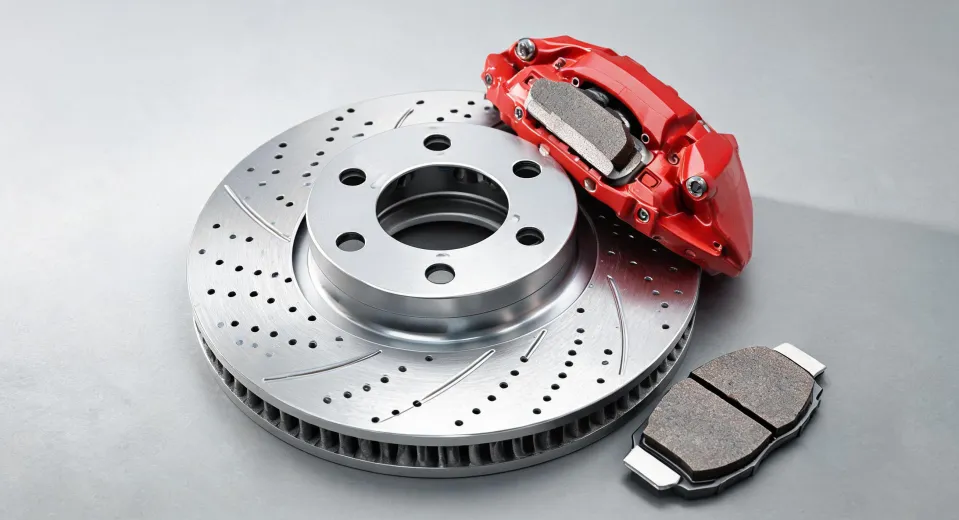
In mid-2023, we needed a rear caliper for a fleet customer's sedan. The technician recommended a Centric 141.65040 semi loaded caliper, which is what we use on most high-mileage fleet work. The term semi loaded means it shows up with the bracket, guide pins, and clips, but not the brake pads. That is how our shop likes it, because we match pad friction material to the vehicle instead of accepting whatever pads come in a loaded box.
The Centric 141.65040 semi loaded caliper was priced at $115 from our normal supplier. A no-name remanufactured caliper from a discounter was $84. We had a deadline, the customer wanted the car back, and I approved the $84 unit. I ignored the technician's warning because the math looked obvious: $31 less, same function, money saved.
Eleven months later, the $84 caliper was weeping fluid past the piston seal. The replacement part was covered under warranty, but the replacement labor was not. We paid $185 in labor, $18 in fluid, and about $10 in shop supplies. Total after the first purchase: $84 plus $213 in redo costs. The Centric caliper that would have needed one installation cost $115. We spent $297 for a worse outcome. That is not a $31 difference. That is a $182 mistake.
I only believed the technician's advice after ignoring it. That is how I learned the difference between a price and a cost.
The Centric brake hose on the same repair order came from the same mindset. The no-name hose was $7 cheaper. The Centric brake hose had a stamped DOT code and traceable packaging, which matters if there is ever a recall question. A brake hose failure is not a coupon problem; it is a safety problem. We do not save $7 on the part that stops the vehicle.
New Timing Belt Cost: The Question Nobody Answers Correctly
A new timing belt cost is one of the most misleading numbers in automotive repair because it depends entirely on what is included in the quote. In Q3 2024, I asked four independent shops to quote timing belt replacement on one of our 2.4L work vans. The prices ranged from $650 to $1,150. The $650 shop was not a steal. It was a teaser.
The $650 quote listed belt kit only. The $760 quote included the belt kit but said nothing about the water pump. The $980 quote included the water pump, a new tensioner, fresh coolant, and the drive belt. The $1,150 quote included the same items plus a pressure test and a written warranty that covered labor for 24 months.
None of those shops was trying to trick me. They were quoting the same words, "timing belt replacement," and assuming different scopes. On an interference engine, the water pump is driven by the same belt. If the water pump seizes at 50,000 miles, it does not care that the belt was replaced. The engine does. So the correct answer to "what should a new timing belt cost" in our area, as of January 2025, was roughly $980 to $1,150 for a job that included the water pump. The $650 price was the price of an argument we would have had later.
Now our quote templates for customers list every component by name: belt, tensioner, idler pulleys, water pump, coolant, and labor. We lose some jobs to shops that quote lower. We also stopped doing timing belt redo jobs for people who trusted the lower number.
AC Condenser vs Compressor: The Car Question That Saves or Wastes $800
The most expensive AC mistake is not choosing the wrong brand. It is replacing the wrong component. Every shop hears the ac condenser vs compressor car question in some form: "Is it the condenser or the compressor?" The compressor is the scary part because it is expensive. A compressor replacement on a modern light truck can run $900 or more with labor and refrigerant. A condenser is usually less than half of that. The mistake happens when a technician assumes the compressor is dead because the clutch is cycling.
Last year, a work van came in with warm air. The compressor clutch engaged, ran for a few seconds, and kicked off. That pattern is often caused by low refrigerant pressure, not a broken compressor. I almost approved a compressor replacement because the shop foreman recommended it. Then I asked for the pressure readings before placing the order. High side was around 145 psi, low side was around 22 psi, and the compressor was cycling on the low-pressure switch. There was no compressor diagnostic code. The real failure was a hairline leak at the condenser inlet tank. We replaced the condenser and the receiver-drier, vacuumed the system, recharged it, and the van is still cooling two seasons later.
Had we replaced the compressor, the condenser leak would still have been there. The system would have lost refrigerant again, and the customer would have paid twice. There are cases where a compressor failure contaminates the entire system and the condenser must be replaced at the same time because debris lodges in its small tubes. But that is a diagnosis. It is not a default.
The rule I now enforce is simple: no AC compressor goes on a purchase order until the repair order includes pressure readings, a leak test result, and a note explaining why the compressor itself is the failed part. That one rule saved us roughly $1,100 in 2024.
Exhaust Pipe Bender Dies Belong in the Same Conversation
Tooling does not get enough attention from cost-focused buyers because it does not fail in a dramatic way. It fails quietly, in the middle of production. When we expanded into custom exhaust work in early 2024, I bought two exhaust pipe bender dies from an online seller because they were cheaper. The price was right. The engineering data was not.
The dies arrived with a radius that did not match the tube size spec. On the first serious run, they left score marks on the stainless tubing and produced a bend that wobbled out of tolerance. Our fabricator stopped the job, we checked the die against the print, and the print was not even included in the box. We lost half a day and scrapped two pieces of material. The replacement dies from a proper tooling shop cost about two and a half times more per die. They also came with a material certificate, a dimensional report, and a phone number we could call.
I can only speak to our application. We bend enough exhaust tubing that tooling quality directly affects whether we hit a deadline. If you bend a dozen pieces a year, the calculus might be different. But the principle is the same as the caliper: the die price showed up on the invoice, while the die cost showed up on the scrap bin and the labor clock.
The Objection I Keep Hearing
Whenever I present this purchasing data, somebody says I am just arguing for premium parts. That is not what the spreadsheet says. The spreadsheet says that price and total cost are different numbers, and the gap between them appears when a part fails, a quote excludes necessary work, or a wrong component is installed. To be fair, there are cheap calipers and cheap hoses that work fine in low-use applications. I get why people buy them. Budgets are real, and not every part decision deserves a week of analysis.
That said, the cheapest option is only rational if you also capture the cost of being wrong. Most small shops do not. They compare quotes at the counter and never record what happens after installation. That is not efficiency. Efficiency is having a repeatable process that prevents the second transaction from ever happening.
Our process is not complicated. We standardized the quote form, we log every parts failure back to the purchase order, and we review the log quarterly. That is the entire secret. There is no formula and no magical spreadsheet tab. We just stopped pretending that the invoice was the end of the cost story.
Part price is a number. Part cost is the story that comes after it. The shops and buyers who track the whole story will usually beat the ones who only compare the first page.
Pricing noted in this article reflects quotes and invoices from our region between 2023 and January 2025. Actual market pricing varies by location, supplier, and order date. Verify current pricing before making a purchasing decision.