A Routine Brake Job
On a Tuesday morning in March, I was standing in a local AAA Muffler Shop holding a brake hose that was two inches too short. I had ordered the wrong part. Not because I didn't check anything—I checked the year, make, and model. I just didn't check the fitment notes. That turned a $27 hose into a $340 mistake.
I'm not a mechanic. I'm the office administrator for a 185-person logistics company. I manage the maintenance purchasing for our light-duty vehicles—roughly $60,000 a year across eight vendors, and I report to both operations and finance. In 2024, during our vendor consolidation project, I took over brake parts sourcing. I'm not sponsored by Centric or any parts supplier; I just buy parts and hope I got them right.
We have two Ford Transit 250 vans for airport transfers. They run all day, mostly stop-and-go, and they were due for front brakes. One van also had a cracked rear brake hose. The operations manager wanted both vans done before the spring travel rush. No pressure.
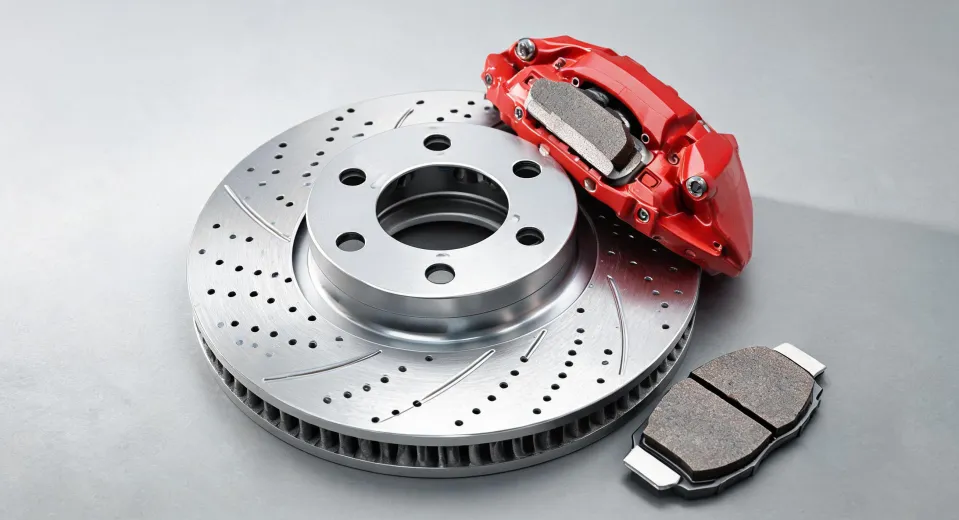
When I compared rotor options, the numbers pointed to a cheaper rotor that was about $40 less per rotor. The specs looked almost identical—same diameter, same vane count. My gut said stay with Centric. The part number I chose was the Centric 120.47011 premium brake rotor, a coated rotor that had held up well on our vans in Michigan winters. I ordered two. That part of the order was fine. The next part wasn't.
The Part Number Trap
The shop tech flagged the rear brake hose and asked if I could bring one when I dropped off the rotors. I pulled up a listing for the Centric Parts 150.44362 brake hose. It said it fit a 2019 Ford Transit 250. I clicked order.
Here's the part I keep replaying: under the fitment table, there was a note I didn't expand. It said the hose did not fit models with rear disc brakes. Our van had rear disc brakes. The listing was accurate. I was the problem.
The next morning, the tech held the new hose next to the old one. "Two inches short." I remember thinking this was gonna be a long conversation. I pulled out my phone and read the note out loud. It was kind of embarrassing. No—it was a lot embarrassing. But it also made me realize how often procurement mistakes come from assuming the compatibility filter knows more than you do.
The most frustrating part wasn't the delay. It was that the fix was so obvious. You'd think "fits a 2019 Ford Transit 250" would be enough. But the same vehicle can have different brake packages depending on options and payload. Written specifications are a clue, not a promise.
Per FTC advertising guidance, a claim like "fits your vehicle" has to be truthful and not misleading. That's a floor, not a safety net. It doesn't mean the seller has to put every exception in bold. It means the buyer has to verify. I used to think a fitment table was a guarantee. Now I think of it as the start of a conversation.
The Tail Light That Went Right
The same trip had a small win, and it proved the point. While I was waiting for the replacement hose, the tech pointed out a cracked tail light on the second van. He said it needed an LED tail light because the van had the factory LED package. I almost ordered the first one that popped up. But something about the harness connector felt off, so I told him to hold off.
When I found the right kit later that day, the listing included a close-up photo of the connector. I compared it to the photo the tech had texted me. Match. That order got approved, shipped, and installed with zero phone calls.
I never expected the tail light to be the easy part. Turns out the easy part was the one I didn't rush.
The Head Gasket Question
A few days later, a friend at a courier company asked me, "Is replacing a head gasket hard?" I don't have a mechanic's answer. But I told him the question I'd been asking myself all week: what else are you going to check while the engine is apart?
Replacing a head gasket isn't just swapping the part. It's checking the deck surface, measuring the bolts, and figuring out why the gasket failed in the first place. If you skip those checks, the new gasket can fail faster than the old one. Same principle as my brake hose: prevention is cheaper than correction. Except with a head gasket, the correction can cost thousands.
I'd argue that the "hard" part of that job isn't the mechanical work. It's the discipline to stop and verify before you bolt everything back together. That's a procurement lesson, a mechanic's lesson, and honestly, a life lesson.
What I Do Now
Looking back, I should have expanded every fitment note before I sent the purchase order. At the time, I trusted the "frequently bought together" suggestion and moved on. That was probably the same reason most bad orders happen: I was already thinking about the next task. If I could redo that decision, I'd spend five minutes reading the details instead of thirty seconds adding to cart. The replacement hose ended up being another Centric part, and I verified every note before ordering. It was correct. I didn't fight the return. I just paid for the mistake and moved on.
Here's the checklist I use now. It's not a 47-step process.
- Verify the exact part number against the old part.
- Read every note under the fitment table.
- Confirm the brake package: disc or drum, front axle or rear.
- Take a photo of the old part before it's removed.
I do not mean every order needs a QA meeting. I mean the difference between "fits a Transit 250" and "fits this Transit 250" is where purchasing mistakes live. And those mistakes cost more than the part. They cost shop time, trust, and a phone call that starts with "so, the good news is..."
The Real Lesson
The irony is that I almost didn't write this down because I was busy. That's exactly when mistakes happen. The next time you see "Fits: 2019 Ford Transit 250" on a brake hose, a rotor, or anything else, take five minutes and read the notes. It's the cheapest insurance you'll ever buy.
Check the notes before you click. The part number you choose is only as good as the fitment details you verify.
And if someone asks you whether replacing a head gasket is hard, tell them it's not about the gasket. It's about everything you're willing to check before you trust it. That lesson cost me a brake hose, a couple of days, and a substantial piece of my pride. Hopefully it saves you the same.